 Saturday, October 24, 2026
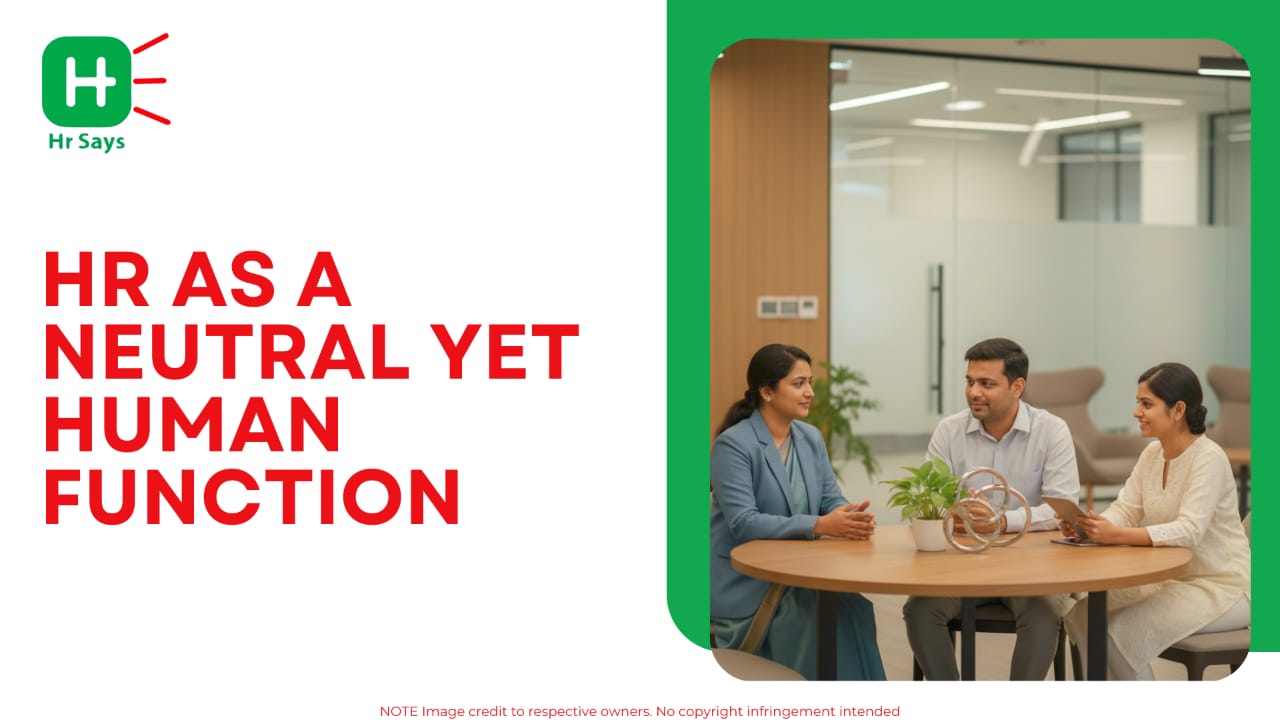
 HR functions best when neutrality and humanity coexist. By balancing policy with empathy, trust
is built, conflicts are handled fairly, and workplaces remain ethical, stable, and people-focused
without losing structure.
HR functions best when neutrality and humanity coexist. By balancing policy with empathy, trust
is built, conflicts are handled fairly, and workplaces remain ethical, stable, and people-focused
without losing structure.




There is a silence in the air which surrounds HR. It is perceived to be mighty, process, remote. However, in actual workplaces, HR is in between people and policy. Defiance of emotion and form. Such balance is not always straightforward, and it has never been more important than it is now.
The Space HR Quietly Occupies
HR is not meant to take sides. Meanwhile, it is not deprived of emotion. This twofold position puts the HR in an awkward situation of being unbiased, yet humane is needed.
Policies are disseminated to permit equity. There are processes that are followed in order to minimize bias. Nevertheless, behind each shape, there is a human being. That fact is something that cannot be disregarded. Trust in an HR is established silently. In case of its failure, distance extends rapidly.
Neutrality, in this sense, is not coldness. It is consistency.
Why Neutrality Is Often Misunderstood
Neutral HR is sometimes perceived as detached HR. This perception usually forms when communication is unclear or empathy is missing.
What neutrality actually looks like in practice:
● Decisions are guided by policy, not preference
● All voices are heard before conclusions are drawn
● Language is careful, respectful, and measured
● Outcomes are explained, even when they disappoint
Employees may not always agree with decisions. However, fairness becomes visible when processes are transparent and evenly applied.
The Human Side That Cannot Be Automated
Workplaces are changing rapidly. Remote work, mental health awareness, and employee experience have reshaped expectations. HR can no longer exist only as an administrative function.
Human elements are now essential:
Listening Without Reacting
Not every concern requires an immediate solution. Sometimes, space is needed. When employees feel heard without judgment, psychological safety is slowly created.
Responding Without Bias
Emotions are often intense during workplace conflicts. HR must remain steady. Personal opinions are set aside. What remains is clarity, patience, and balance.
Supporting Without Overpromising
Support does not mean guarantees. It means guidance, resources, and honest communication. Trust is damaged more by false hope than by difficult truths.
Where Policy And Empathy Meet
Strong HR practices are built where structure and sensitivity intersect. Policies provide the framework. Empathy determines how that framework is experienced.
Trending HR priorities such as employee wellbeing, inclusive workplaces, ethical leadership, and people-first culture depend on this balance. Without neutrality, favoritism creeps in. Without humanity, disengagement follows.
HR becomes effective when:
● Rules are applied consistently
● Conversations are handled with care
● Boundaries are respected
● Dignity is preserved on all sides
The Quiet Impact Of Balanced HR
Good HR work is rarely dramatic. It shows up in small, steady ways. Conflicts are resolved before they escalate. Employees feel safe enough to speak. Leaders are guided, not confronted.
Over time, a culture is shaped. Not through loud interventions, but through quiet reliability. That is where HR’s real influence lives.