Saturday, October 24, 2026
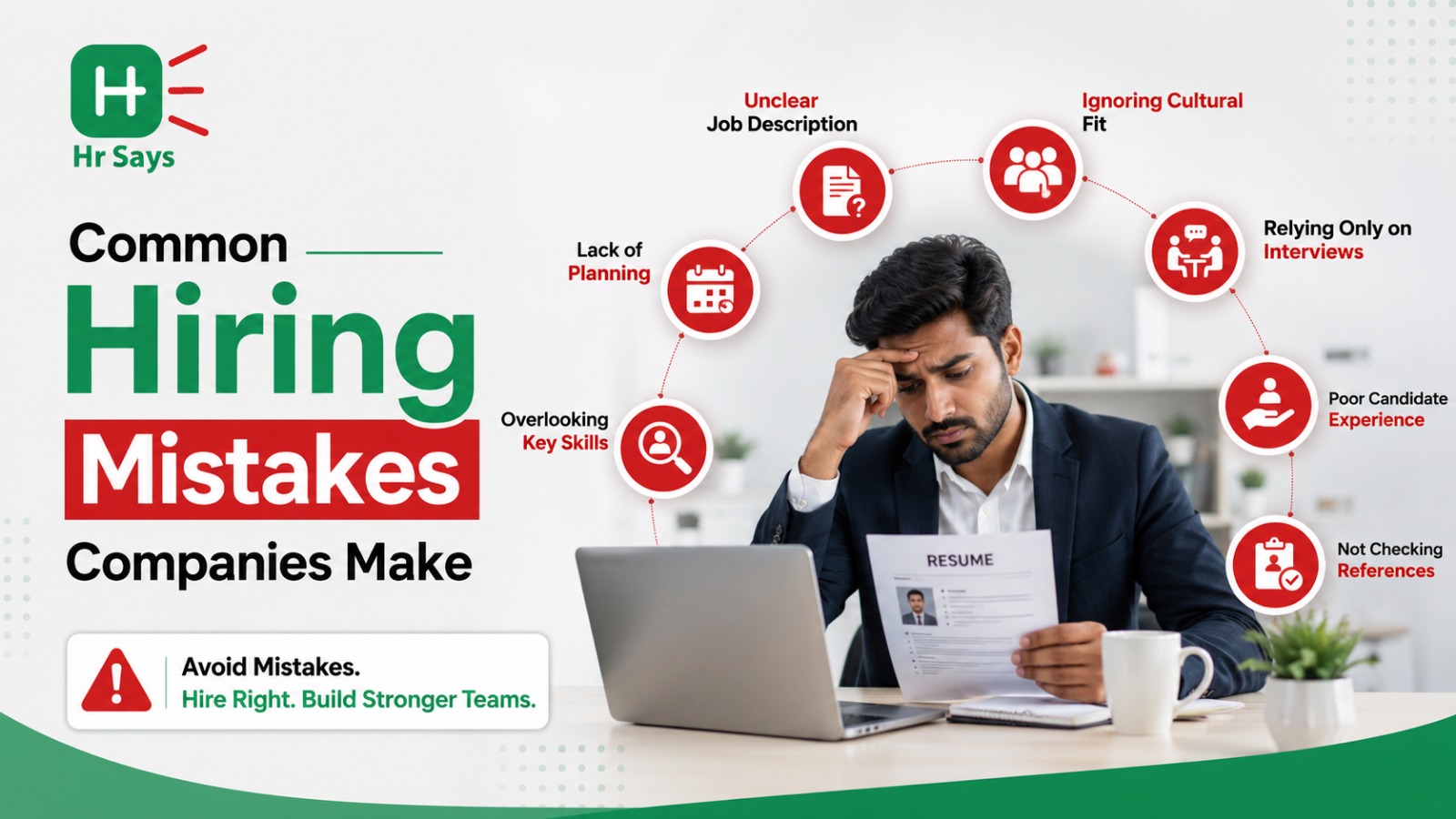
 Understanding hiring mistakes requires deeper insight into recruitment behavior, workplace compatibility, and modern hiring systems. Avoiding recruiting mistakes through structured evaluation, communication clarity, and smarter hiring strategies helps businesses build sustainable long-term growth.





Hiring is no longer just about filling an empty position. One poor hiring decision can affect productivity, team morale, customer experience, and even company culture for years. Yet many organizations continue repeating the same hiring mistakes, often without realizing how deeply these decisions impact long-term business growth.
The challenge is not simply finding candidates. The real issue is understanding how modern hiring works in real-world situations. From rushed recruitment decisions to unrealistic expectations, many companies unintentionally create problems during the hiring process itself. Recognizing these common hiring mistakes early helps businesses build stronger teams and avoid expensive setbacks later.
Why Companies Often Misjudge Talent During Hiring
Many businesses assume hiring is straightforward. A resume looks impressive, the interview goes smoothly, and the candidate seems confident. But hiring decisions are rarely that simple in practice.
One of the biggest recruiting mistakes companies make is confusing presentation skills with actual capability. Some candidates perform extremely well in interviews but struggle in collaborative work environments. Others may not communicate perfectly during interviews yet perform exceptionally once hired. This mismatch happens because interviews often measure confidence more than consistency or adaptability.
Modern workplaces have also changed rapidly. Remote work, digital collaboration, and global hiring have altered what makes an employee effective. A candidate who succeeds in one environment may struggle in another due to communication style, self-management ability, or cultural fit.
Another issue is emotional urgency. Businesses under pressure often prioritize speed over evaluation quality. Managers want positions filled quickly, especially during growth periods or staffing shortages. As a result, organizations unintentionally lower hiring standards or overlook warning signs.
This becomes especially common in startups and fast-growing companies where leaders focus heavily on immediate output rather than long-term compatibility. The result is often hiring the wrong employee, which creates hidden costs beyond salary alone. Productivity slows, team confidence weakens, and managers spend additional time correcting mistakes rather than growing the business.
The Real Cost of Hiring the Wrong Employee
The consequences of poor hiring decisions are often underestimated. Most businesses calculate only the financial cost of replacing an employee, but the deeper impact usually spreads across multiple departments and processes.
When organizations end up hiring the wrong employee, workflow disruptions begin almost immediately. Existing employees may need to absorb additional responsibilities, which increases stress and reduces morale. Team trust also weakens when coworkers repeatedly compensate for someone who lacks accountability or skills.
In customer-facing industries, poor hiring decisions directly affect brand perception. A single employee with weak communication skills or inconsistent behavior can damage customer confidence. This is especially important in modern service-based businesses where reputation spreads quickly through reviews and online feedback.
Poor hiring also creates leadership strain. Managers spend more time correcting behavior, retraining employees, or resolving interpersonal conflicts. This reduces focus on strategic planning and long-term growth.
Several patterns usually appear when companies repeatedly struggle with poor hiring outcomes:
- The organization hires based only on technical ability without evaluating adaptability
Many businesses focus entirely on certifications or previous experience while ignoring problem-solving ability, communication style, and emotional intelligence. In real workplace situations, adaptability often matters more than technical perfection because roles constantly evolve. - Recruitment decisions become reactive instead of strategic
Companies under hiring pressure often rush interviews and shorten evaluation stages. While this may temporarily solve staffing shortages, it increases the likelihood of long-term instability and repeated turnover cycles. - The hiring process lacks alignment between departments and leadership
Managers, HR teams, and leadership may all expect different things from the same role. This confusion creates inconsistent evaluations and increases the risk of selecting candidates who only satisfy partial expectations.
These challenges explain why hiring mistakes to avoid are not just HR concerns. They are business stability concerns.
How Poor Job Descriptions Create Recruitment Problems
One overlooked reason behind many common hiring mistakes is unclear job descriptions. Businesses often write listings focused on generic responsibilities instead of actual operational needs.
Candidates then apply with incomplete understanding of the role. Once hired, expectations suddenly change, leading to frustration on both sides. This issue becomes even more common in industries where roles evolve quickly due to technology and changing customer behavior.
Some organizations unintentionally create unrealistic expectations by combining multiple specialized responsibilities into one role. They expect candidates to manage strategy, execution, communication, analytics, and leadership simultaneously without realistic support systems.
This creates two major problems. First, qualified candidates may avoid applying because the role appears unreasonable. Second, companies attract applicants who overestimate their ability to handle the workload.
Strong hiring processes begin with realistic role clarity. Businesses that clearly define priorities, expectations, and work environments generally make better long-term hiring decisions.
Why Cultural Fit Is Often Misunderstood
Cultural fit is one of the most misunderstood concepts in hiring. Many organizations interpret it as personality similarity rather than professional compatibility.
This creates bias in hiring decisions. Leaders may unconsciously prefer candidates who behave similarly to existing team members instead of focusing on diversity of thinking and problem-solving approaches.
Healthy workplace culture is not about identical personalities. It is about shared accountability, communication standards, and professional values.
For example, highly collaborative workplaces require employees who communicate openly and adapt quickly to team-based decision-making. Meanwhile, independent work environments may prioritize self-management and initiative.
Businesses that misunderstand culture often repeat the same recruiting mistakes by prioritizing comfort over capability. Over time, this limits innovation and reduces organizational flexibility.
The Hidden Risks of Overvaluing Experience
Experience matters, but experience alone does not guarantee performance. Some companies automatically assume candidates with longer resumes are safer choices. In reality, workplace success depends on relevance, adaptability, and learning ability.
Modern industries evolve rapidly. Someone with fewer years of experience but stronger adaptability may outperform candidates who rely heavily on outdated methods.
This is particularly important in digital industries where tools, workflows, and customer expectations change constantly. Businesses that rely only on traditional experience metrics may miss high-potential candidates capable of long-term growth.
Another issue appears when companies ignore transferable skills. Communication, problem-solving, leadership, and emotional intelligence often influence workplace success more than technical expertise alone.
Organizations that balance practical skills with growth potential generally avoid many hiring mistakes to avoid that slow long-term development.
Why Fast Hiring Processes Often Backfire
Speed is important in recruitment, especially in competitive industries. However, rushing the hiring process frequently creates larger problems later.
Fast hiring usually reduces evaluation depth. Interviewers skip behavioral analysis, reference checks become superficial, and decision-making becomes emotional rather than strategic.
This issue became more common after remote hiring increased globally. Virtual interviews made recruitment faster but sometimes reduced the ability to evaluate interpersonal dynamics accurately.
Several warning signs often appear in rushed recruitment systems:
- Interviews focus more on immediate availability than long-term fit
Businesses facing staffing shortages sometimes prioritize convenience over compatibility. While this solves short-term pressure, it often creates repeated turnover problems. - Decision-makers rely heavily on first impressions
Confidence and communication style can create strong early impressions, but sustainable workplace performance requires consistency, adaptability, and accountability over time. - There is little assessment of work style or team interaction
Employees rarely work in isolation. Ignoring collaboration style and communication behavior increases the chances of future conflict within teams.
The goal is not slow hiring. The goal is thoughtful hiring with enough evaluation to reduce unnecessary risk.
How Modern Hiring Trends Are Changing Recruitment Decisions
The hiring landscape has changed significantly over the past few years. Remote work, global talent access, AI screening systems, and flexible work expectations have reshaped recruitment priorities.
Today, many employees value flexibility, growth opportunities, and workplace stability as much as salary. Companies that ignore these shifts often struggle with retention after hiring.
Modern candidates also evaluate employers more carefully. Employer reputation, leadership transparency, and workplace culture now influence recruitment success heavily.
Businesses that adapt to these changes tend to avoid many top 10 hiring mistakes that traditional systems still repeat. They invest more in onboarding, communication clarity, and realistic expectation setting.
At the same time, technology creates new hiring challenges. Automated screening tools sometimes eliminate strong candidates due to keyword mismatches rather than actual capability. Over-reliance on automation may reduce human judgment in critical decisions.
Successful hiring today requires balancing technology efficiency with human evaluation.
Building Smarter and More Sustainable Hiring Systems
Improving recruitment quality requires more than better interviews. Companies need systems that consistently evaluate skills, behavior, adaptability, and long-term compatibility.
Clear communication during recruitment is essential. Candidates should understand expectations, work style, growth opportunities, and performance standards before joining.
Businesses also benefit from structured evaluation methods. Instead of relying only on conversational interviews, organizations can assess problem-solving ability, collaboration patterns, and situational judgment.
Training hiring managers is equally important. Many leaders understand operational work but lack interviewing expertise. This increases the likelihood of unconscious bias and inconsistent decision-making.
Strong hiring systems also recognize that recruitment is connected to retention. Employees who feel aligned with their role and workplace expectations generally stay longer and perform more consistently.
Conclusion
Most common hiring mistakes happen long before an employee officially joins a company. They begin with rushed decisions, unclear expectations, unrealistic role definitions, and misunderstanding of what modern workplaces truly require.
Businesses that improve hiring outcomes focus less on quick fixes and more on sustainable evaluation systems. Understanding human behavior, communication patterns, adaptability, and workplace compatibility helps organizations avoid hiring the wrong employee and build stronger long-term teams.
Frequently Asked Questions (FAQs)
1. Why do companies make hiring mistakes even after multiple interview rounds?Many organizations still make hiring mistakes because interviews often focus more on confidence and communication rather than actual work behavior. In real workplace situations, adaptability, collaboration, and decision-making matter more than polished answers. Improving candidate evaluation strategies and understanding workplace compatibility patterns helps businesses make more accurate hiring decisions.
2. What are the early signs of hiring the wrong employee?Early signs of hiring the wrong employee usually include communication gaps, low accountability, poor adaptability, and difficulty integrating into team workflows. These issues often appear within the first few months when real responsibilities begin. Stronger employee onboarding systems and better behavioral hiring assessments can help identify problems earlier.
3. How do unclear job descriptions affect recruitment quality?Unclear job descriptions create confusion about expectations, responsibilities, and required skills. This increases the chances of attracting mismatched candidates and leads to more recruiting mistakes later. Better role clarity practices and realistic talent acquisition planning improve hiring accuracy significantly.
4. Why do businesses struggle with long-term employee retention after hiring?Retention problems often begin during recruitment itself. When companies oversell roles or fail to explain workplace realities clearly, employees become disengaged quickly. Stronger work culture alignment and transparent employee experience management help reduce early turnover.
5. What is the biggest mistake companies make while hiring fast?One major issue in fast recruitment is prioritizing immediate availability over long-term suitability. Businesses under pressure sometimes skip deeper evaluations, which increases the risk of common hiring mistakes. Balanced recruitment process optimization and structured interviews help reduce rushed decisions.
6. How does company culture influence hiring success?Company culture affects communication, teamwork, accountability, and employee satisfaction. Businesses that misunderstand culture often hire people who look impressive individually but struggle within team environments. Better organizational behavior understanding and stronger team compatibility evaluation improve hiring outcomes.
7. Can technology and AI create recruiting mistakes?Yes, over-reliance on automation can sometimes eliminate strong candidates unfairly. AI systems often prioritize keywords instead of human potential or adaptability. Combining AI recruitment tools with proper human-centered hiring strategies creates more balanced decision-making.
8. Why do experienced candidates sometimes fail after getting hired?Experience alone does not guarantee workplace success. Some candidates perform well in previous environments but struggle with new systems, communication styles, or expectations. Stronger adaptability assessments and realistic performance evaluation methods help businesses avoid these situations.
9. How can small businesses avoid common hiring mistakes?Small businesses benefit from clear role definitions, structured interviews, and realistic expectations. Instead of rushing recruitment, focusing on communication style, accountability, and learning ability improves hiring quality. Better small business recruitment planning and stronger employee fit analysis reduce long-term hiring risks.
10. What makes a modern hiring process more effective today?Modern hiring systems focus on adaptability, communication, emotional intelligence, and long-term compatibility instead of resumes alone. Businesses that combine technology with human judgment generally make better decisions. Stronger modern recruitment systems and practical workforce planning strategies help organizations build sustainable teams.