Thursday, October 01, 2026
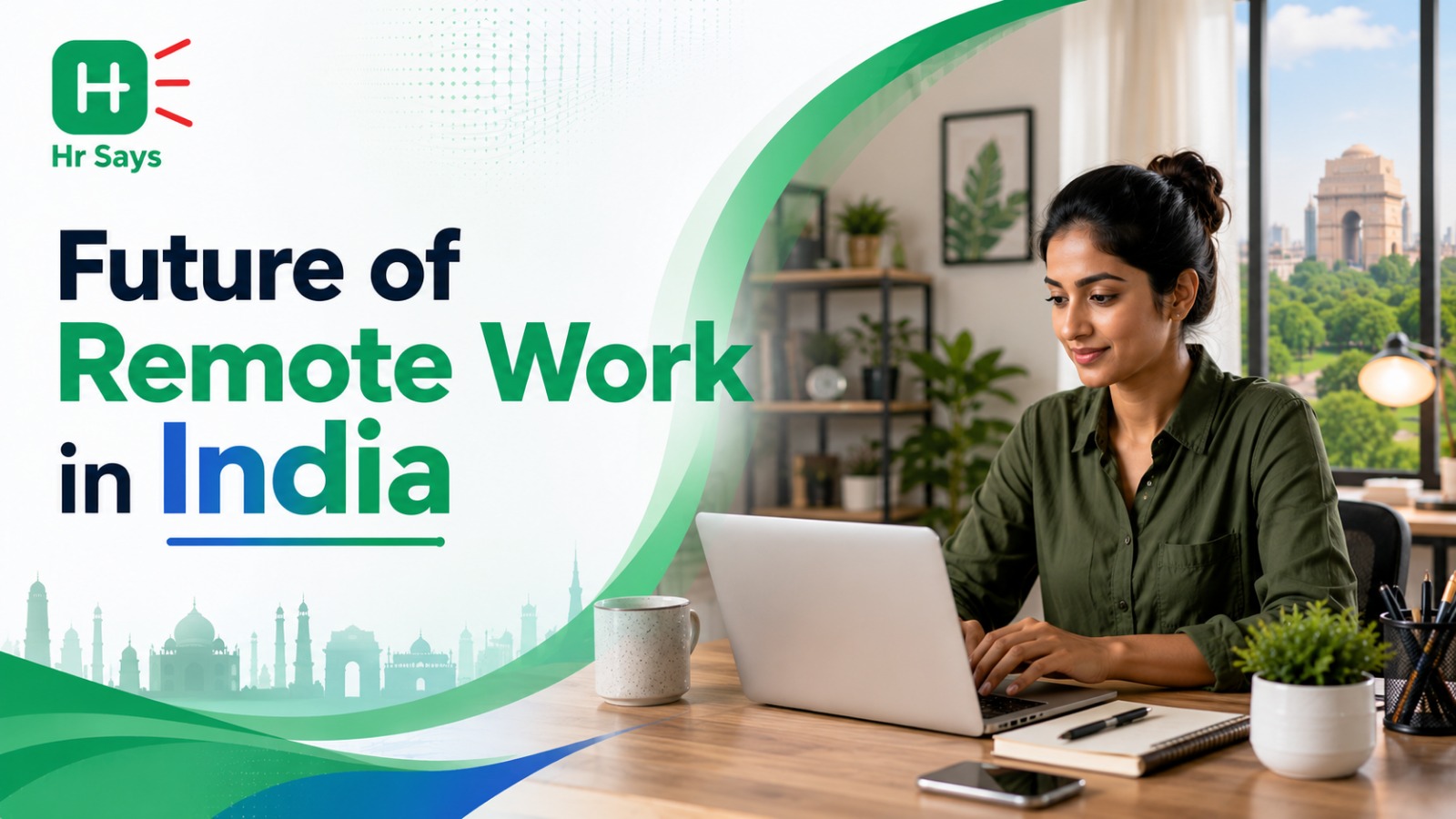
 The future of remote work in India is being shaped by digital infrastructure, flexible work culture, and evolving industries connected to AI and automation. Emerging ecosystems related to health ai, medical artificial intelligence, and remote digital collaboration are redefining how modern professionals work and grow.





The conversation around the future of remote work is no longer limited to startups or tech companies. It has become part of a larger shift in how people view productivity, careers, business growth, and work-life balance. In India, this transformation is happening at multiple levels at once. Students are preparing for jobs that may never require traditional offices, businesses are redesigning operations around distributed teams, and professionals are rethinking what stability and career growth truly mean.
The remote work future is not simply about working from home. It reflects a deeper change in how work itself is structured, managed, and valued.
Why Remote Work Became More Than a Temporary Trend
At first, remote work was viewed as a practical adjustment during uncertain times. However, many organizations soon realized that productivity did not always depend on physical office presence. This changed long-standing assumptions about management, collaboration, and employee efficiency.
In India, the shift became especially noticeable because of urban work pressure. Long commute hours in cities, rising living expenses, and increasing digital accessibility created an environment where remote work started making practical sense. Employees discovered that flexibility improved focus in many cases, while employers realized operational costs could be reduced significantly.
The future of work from home also gained momentum because businesses started competing globally for talent rather than locally. A company in Bengaluru could hire someone from Jaipur, Kochi, or Guwahati without relocating them. This widened opportunities for both employers and employees.
At the same time, remote work exposed weaknesses in traditional systems. Many organizations initially struggled with communication gaps, employee engagement, and performance tracking. Over time, companies that adapted successfully developed stronger digital systems, clearer workflows, and more outcome-based work cultures.
This evolution explains why remote work is the future for many industries, even though the structure may continue changing.
How Technology Is Quietly Reshaping Remote Work in India
Technology has become the invisible foundation behind remote working in the future. However, the real shift is not just video calls or messaging apps. The deeper transformation lies in how technology is redefining decision-making, collaboration, and workflow automation.
Artificial intelligence is already influencing remote operations in subtle ways. Companies use AI-powered systems for scheduling, productivity tracking, recruitment filtering, and customer support management. These systems reduce repetitive tasks and allow distributed teams to function more smoothly.
The rise of AI-related industries is also influencing remote careers. Fields connected to automation, data analysis, healthcare technology, and AI support services are expanding rapidly. For example:
- AI-driven healthcare support systems are creating remote job ecosystems
The growth of areas related to ai in medicine and healthcare has increased demand for remote analysts, researchers, documentation specialists, and digital healthcare support teams. Professionals no longer need to be physically present in hospitals to contribute to healthcare systems. - Automation tools are changing operational work structures
Technologies connected to medical scribe ai and workflow automation demonstrate how repetitive administrative tasks can now be handled remotely with AI assistance. This is gradually influencing industries beyond healthcare as well. - Skill-based remote hiring is replacing location-based hiring
Organizations increasingly focus on practical digital skills instead of geographical proximity. This has encouraged more students to explore certifications and remote-friendly programs similar to trends seen in ai in medicine course learning ecosystems.
These changes indicate that the future of remote work is deeply tied to digital infrastructure and adaptive learning.
Why India Is Positioned Differently in the Global Remote Work Economy
India occupies a unique position in the global remote work ecosystem because of its combination of digital talent, language adaptability, and service-oriented industries. However, the situation is more layered than simply having a large workforce.
One major factor is demographic diversity. Different regions in India experience varying work cultures, internet accessibility, and professional opportunities. Remote work has started reducing these geographical limitations to some extent.
For smaller cities, remote opportunities provide access to industries that were previously concentrated in metro areas. This affects not only employment but also lifestyle patterns. Professionals can now remain closer to family structures while accessing national or international careers.
At the same time, businesses benefit from a broader talent pool and lower operational costs. Startups especially find remote structures financially sustainable during early growth phases.
However, challenges remain. Reliable internet access, digital literacy gaps, and inconsistent home work environments continue affecting productivity in some regions. Remote work also creates psychological challenges. Many employees struggle with work-life boundaries, social isolation, or unclear career progression.
This balance between opportunity and adjustment defines the real remote work future in India.
The Rise of Hybrid Work and Why Fully Remote May Not Fit Everyone
While remote work continues growing, fully remote systems are not universally effective for every profession or personality type. This has led to the rise of hybrid models where employees split time between remote and physical work environments.
The hybrid approach works because it combines flexibility with structured collaboration. Many businesses observed that creative brainstorming, onboarding, and relationship-building often function better during in-person interaction. Meanwhile, focused individual tasks may perform better remotely.
This shift highlights an important reality about the future of remote work. It is unlikely to become a single universal model. Instead, work structures will become increasingly flexible depending on industry needs, employee preferences, and operational goals.
For example, technology, digital marketing, customer support, and content-based industries adapt well to remote systems. Manufacturing, logistics, and physical healthcare services still require location-based coordination.
The growth of sectors linked to health ai, generative ai in healthcare, and digital automation also shows how some industries are becoming partially remote rather than completely virtual.
Businesses that succeed in this environment are often the ones that understand flexibility instead of forcing uniform systems.
How Remote Work Is Changing Career Thinking Among Students and Professionals
One of the biggest long-term effects of remote work is psychological rather than technological. People are changing how they define career success.
Earlier, career growth was closely associated with office presence, urban relocation, and long working hours. Today, many professionals prioritize flexibility, autonomy, and skill relevance instead.
Students entering the workforce are also planning careers differently. They increasingly focus on digital skills, portfolio-based learning, and freelance opportunities rather than only traditional employment structures.
This shift is especially visible in industries connected to technology and AI. Areas linked to medical artificial intelligence, automation systems, and digital operations are creating remote-friendly roles that did not exist a decade ago.
At the same time, remote work has increased global competition. Professionals are no longer competing only within local markets. Employers now compare talent across countries and time zones. This means adaptability, communication skills, and continuous learning have become more valuable than static qualifications.
The phrase future in focus work from home reflects this growing awareness that remote work is not merely a convenience but a long-term professional transition.
The Human Side of Remote Work That Businesses Often Overlook
Despite its advantages, remote work also changes human interaction patterns in ways many organizations underestimate.
In traditional workplaces, informal conversations helped employees build trust, mentorship relationships, and emotional support systems. Remote environments reduce these spontaneous interactions, which can affect motivation and team cohesion over time.
Another issue is digital fatigue. Constant online communication creates cognitive pressure because employees remain mentally “available” throughout the day. Over time, this can affect concentration and emotional well-being.
Companies that manage remote teams successfully often focus on behavioral systems rather than only technical tools. They create clear communication structures, realistic expectations, and balanced work cultures.
Some practical patterns seen in successful remote organizations include:
- Outcome-focused performance systems improve remote efficiency
Businesses that evaluate employees based on results rather than screen time usually experience healthier productivity patterns and better employee satisfaction. - Flexible scheduling supports long-term sustainability
Remote teams working across different time zones often perform better when companies allow adaptable schedules instead of rigid timing structures. - Digital learning culture helps employees remain competitive
Organizations encouraging continuous upskilling in areas related to automation, AI, and emerging technologies build stronger long-term remote teams.
These patterns explain why remote working in the future will depend heavily on organizational culture, not only technology.
Why Adaptability Will Matter More Than Job Titles
The biggest lesson from the remote work shift is that adaptability has become more valuable than fixed career structures.
Industries connected to AI, automation, digital communication, and virtual collaboration continue evolving rapidly. Roles are changing faster than traditional education systems can update curricula.
This means professionals who continuously learn, communicate effectively, and adapt to changing systems will remain more resilient in the long run.
The expansion of fields linked to artificial intelligence in medical field, use of ai in healthcare, and remote digital ecosystems shows how interconnected industries are becoming. Even non-technical professionals increasingly work alongside AI-driven systems.
In many ways, the future of remote work is less about location and more about flexibility, digital confidence, and sustainable work habits.
Conclusion
The future of remote work in India is not a temporary workplace trend. It reflects a larger transformation in how careers, businesses, and technology interact. Remote systems are reshaping hiring, productivity, education, and professional expectations across industries.
While challenges around communication, structure, and balance still exist, remote work continues creating new possibilities for professionals and businesses willing to adapt. The organizations and individuals that succeed in this transition will likely be the ones that combine flexibility, digital skills, and human-centered work culture thoughtfully.
Frequently Asked Questions (FAQs)
1. Why are companies shifting toward remote work models in India?Many businesses are adopting remote systems because they reduce operational costs and expand hiring opportunities beyond metro cities. The growth of industries connected to health ai and digital collaboration tools has also shown companies that productivity is no longer limited to office spaces. This shift is making the remote work future more practical and scalable.
2. Will remote work continue growing in the next decade?Yes, the future of remote work is expected to continue evolving as businesses become more technology-driven. Industries connected to automation, cloud operations, and generative ai in healthcare are already building remote-friendly ecosystems that support long-term distributed work structures.
3. Which industries are most likely to support remote work in the future?Technology, digital marketing, customer support, education, healthcare operations, and AI-related services are among the strongest sectors for remote working in the future. Areas connected to medical artificial intelligence and digital healthcare systems are also creating more location-independent roles.
4. How is AI influencing the future of remote jobs?AI is simplifying repetitive tasks and improving workflow automation across industries. Systems connected to medical scribe ai and intelligent digital operations show how remote teams can work more efficiently with automation support. This is changing how businesses structure remote roles.
5. What skills will become important in the future of work from home?Communication, adaptability, digital collaboration, and problem-solving are becoming essential skills. Technical awareness around tools related to ai in medicine and healthcare and workflow automation is also gaining importance as businesses increasingly depend on digital systems.
6. Can remote work improve work-life balance for professionals?For many people, remote work reduces commute stress and allows more flexible scheduling. However, maintaining balance depends on personal discipline and company culture. Businesses using systems connected to use of ai in healthcare and remote productivity tools often focus more on outcomes than physical presence.
7. Why do some employees struggle with long-term remote work?Remote work can create isolation, communication gaps, and digital fatigue over time. Professionals working in highly collaborative industries, including sectors linked to medical ai companies, often need structured interaction to maintain motivation and creativity.
8. How are students preparing differently for remote careers?Students are increasingly focusing on skill-based learning, digital communication, and remote-friendly certifications. Interest in fields such as ai in medical field and emerging automation ecosystems reflects how career preparation is adapting to the changing work environment.
9. Will hybrid work become more common than fully remote jobs?Many businesses now prefer hybrid models because they combine flexibility with in-person collaboration. Industries connected to artificial intelligence in medical field and remote digital operations often benefit from occasional physical teamwork while still supporting flexible work systems.
10. How can businesses build stronger remote work cultures?Companies that succeed remotely usually focus on communication clarity, flexibility, and continuous learning. Encouraging digital upskilling in areas such as ai in medicine course learning ecosystems helps employees remain adaptable in the changing future of work from home landscape.