 Saturday, October 24, 2026
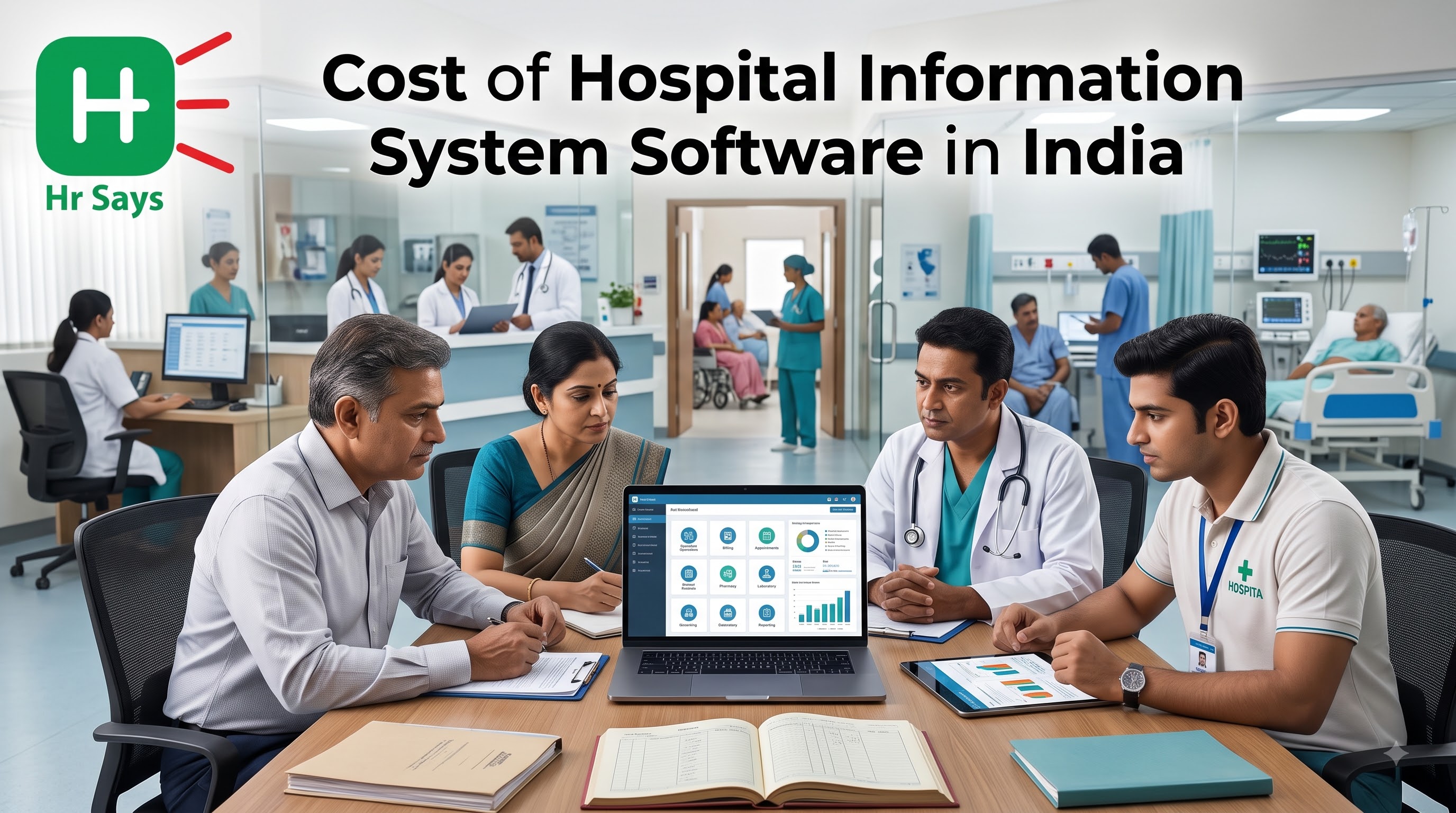
 Hospital Information System costs in India vary by facility size, pricing model, modules, and deployment type. Cloud solutions offer predictable expenses, while TCO analysis helps hospitals identify hidden costs and improve procurement decisions.




The financial landscape for deploying a Hospital Information System (HIS)—also known as a Hospital Management Information System (HMIS)—has shifted significantly across the Indian healthcare sector. Historically, medical facilities were forced to allocate large capital budgets toward physical on-site server hardware, expensive perpetual software licenses, and dedicated in-house IT maintenance personnel.
The widespread adoption of cloud-native architectures has made health technology accessible across every tier of care. Current pricing in the Indian healthcare market spans a broad spectrum: from entry-level outpatient software packages starting around INR 1,500 to INR 3,500 per month, up to fully bespoke enterprise hospital ERP implementations exceeding INR 50 Lakhs.
Navigating this variance requires evaluating vendor pricing structures, aligning software expenditures with institutional bed capacity, calculating total cost of ownership, and identifying hidden service fees prior to contract execution.
1. The Four Primary Pricing Models in India
A vendor's pricing architecture directly impacts an institution's long-term operating cash flow. Software providers in India generally structure contracts around four commercial models:
- Cloud Subscription (Per Bed / Month):
- Target Facility: Inpatient multi-specialty hospitals and nursing homes.
- Pricing Mechanics: Monthly or annual subscription fees scale dynamically with the hospital's total operational or licensed bed count.
- Market Rate: Ranges from INR 150 to INR 500 per bed, per month, covering core clinical and ward modules.
- Cloud Subscription (Per Active User / Month):
- Target Facility: Daycare surgery centers, diagnostic clinics, and high-volume outpatient hubs.
- Pricing Mechanics: The facility pays a fixed fee calculated strictly by the number of active user accounts assigned to physicians, nurses, billing executives, and administrators.
- Market Rate: Ranges from INR 500 to INR 2,000 per user, per month.
- Modular / À La Carte Platform Fee:
- Target Facility: Specialized facilities requiring tailored clinical integrations.
- Pricing Mechanics: Providers charge a base subscription for core registration and outpatient billing, with independent add-on fees for advanced modules (such as Blood Bank management, intensive care clinical charting, or advanced OT scheduling).
- Perpetual / Custom On-Premise License:
- Target Facility: Large corporate hospital networks, government medical colleges, and trust hospitals with existing server infrastructure.
- Pricing Mechanics: An upfront one-time capital purchase of the software license, accompanied by a mandatory recurring Annual Maintenance Contract (AMC) for system patches and technical support.
2. Average Cost Breakdown by Hospital Bed Capacity
Software requirements expand in tandem with institutional bed count and departmental complexity. The structural breakdown below reflects current market benchmarks across operational tiers in India:
- Small Clinic / Nursing Home (1 to 15 Beds):
- Essential Modules: Physician scheduling, basic OPD billing, digital prescriptions, patient health records, and local retail pharmacy billing.
- Average Cloud Subscription (SaaS): INR 1,500 to INR 4,500 per month.
- One-Time On-Premise / Custom Cost: INR 50,000 to INR 2,00,000.
- Mid-Sized Multi-Specialty Hospital (15 to 50 Beds):
- Essential Modules: Complete OPD/IPD workflows, real-time bed management matrix, basic LIS/RIS diagnostic tracking, TPA insurance processing, and GST-compliant invoicing.
- Average Cloud Subscription (SaaS): INR 8,000 to INR 22,000 per month.
- One-Time On-Premise / Custom Cost: INR 3,00,000 to INR 8,00,000.
- Large Multi-Specialty Hospital (50 to 150 Beds):
- Essential Modules: Advanced multi-ward operations, Operation Theater management, ICU charting, fixed-asset tracking, biometric role-based access, and real-time business intelligence dashboards.
- Average Cloud Subscription (SaaS): INR 25,000 to INR 75,000 per month.
- One-Time On-Premise / Custom Cost: INR 8,00,000 to INR 25,00,000.
- Enterprise Chains & Teaching Institutions (150+ Beds):
- Essential Modules: Multi-branch database synchronization, custom open-API integrations, dedicated HL7/FHIR communication brokers, automated supply chain management, and full source code escrow.
- Average Cloud Subscription (SaaS): Custom enterprise pricing, typically starting at INR 1,00,000+ per month.
- One-Time On-Premise / Custom Cost: INR 25,00,000 to INR 70,00,000+.
3. Five-Year Total Cost of Ownership (TCO) Analysis
Evaluating software strictly on Year 1 entry pricing introduces financial risk. A complete 5-year Total Cost of Ownership (TCO) model compares the hidden maintenance expenses of legacy on-premise infrastructure against predictable cloud SaaS deployments:
- Legacy On-Premise Infrastructure (Estimated 5-Year Cost: ~INR 29,00,000):
- Initial Software License: INR 5,00,000 upfront capital expenditure.
- Server & Network Hardware: INR 4,00,000 for local servers, backup power rigs, and firewalls.
- Annual Maintenance Contracts (AMC): INR 5,00,000 cumulative (calculated at 20% of base license annually).
- Dedicated On-Site IT Support: INR 12,00,000 cumulative (retaining an internal network/system administrator).
- Server Room Power & Climate Control: INR 3,00,000 for continuous cooling and uninterruptible electricity.
- Modern Cloud SaaS Model (Estimated 5-Year Cost: ~INR 4,50,000 to INR 6,00,000):
- Initial Software License: INR 0 (included in subscription).
- Server & Network Hardware: INR 0 (managed in external enterprise cloud data centers).
- Annual Maintenance Contracts (AMC): INR 0 (upgrades and maintenance bundled into SaaS).
- Dedicated On-Site IT Support: INR 0 (vendor handles remote technical operations).
- Server Room Power & Climate Control: INR 0.
- All-Inclusive SaaS Subscription: Predictable operational fee scaling with usage over 60 months.
4. Identifying and Mitigating Hidden Vendor Charges
Budget software proposals in India often feature low baseline entry pricing that expands later due to unlisted operational fees. Hospital leadership should audit vendor contracts for these cost factors:
- Mandatory Annual Maintenance Contracts (AMC): For perpetual or on-premise deployments, verify whether the AMC is mandatory to receive software patches. Standard commercial rates range from 15% to 25% of the initial license value annually.
- Legacy Data Migration Fees: Extracting, cleaning, and importing legacy patient files, historic diagnostic archives, and pharmacy inventories into a new database requires dedicated database engineering, often billed separately at INR 10,000 to INR 2,00,000.
- Transactional Communication Gateways: Automated patient engagement tools often carry variable usage charges. External SMS and WhatsApp Business API gateways typically incur surcharges of INR 0.15 to INR 0.50 per message, which can add significant overhead for high-volume outpatient centers.
- ABDM Compliance and Regulatory Patching: Aligning with the Ayushman Bharat Digital Mission requires ongoing maintenance to support national health ID integration, digital consent loops, and unified claims platforms. Confirm that regulatory compliance updates are included in the baseline agreement without extra maintenance fees.
5. Strategic Procurement Roadmap for Hospital Leadership
To maximize return on investment and protect cash flow, hospital administrators should follow a structured four-stage evaluation process:
- Pillar 1: Demand a Contractual Cap on Regulatory Updates: Ensure the Service Level Agreement (SLA) explicitly states that all statutory updates—such as revisions to Goods and Services Tax (GST) slabs, National Health Authority mandates, and ABDM interoperability standards—will be delivered without upgrade surcharges.
- Pillar 2: Conduct a Role-Based Access Control (RBAC) Audit: Verify that the system enforces strict departmental permission controls. Floor nurses should access clinical charts, pharmacists should be restricted to dispensing and inventory ledgers, and billing executives should be barred from clinical narratives.
- Pillar 3: Evaluate Support Response Metrics: Establish clear SLA performance guarantees for technical resolution, mandating support response times under 15 to 30 minutes for critical billing, triage, or admission interruptions.
- Pillar 4: Confirm Data Ownership and Portability: Ensure the contract guarantees that the hospital retains complete ownership of all clinical, operational, and financial databases, with unencumbered export capabilities in standard CSV, JSON, or SQL formats.
10 Frequently Asked Questions (FAQs)
Q1. What is the average starting cost of a basic hospital management software license in India?Standalone cloud packages for basic outpatient department (OPD) queue coordination and electronic prescriptions generally range from INR 1,250 to INR 3,500 per month. Comprehensive systems incorporating inpatient (IPD) logistics, visual bed boards, and operation theater management generally start between INR 8,000 and INR 20,000 per month.
Q2. Why is cloud-native hospital software more cost-effective than on-premise installations?On-premise installations require upfront capital expenditure for dedicated server hardware, enterprise cooling, database licenses, and on-site IT personnel. Cloud-native systems operate on standard web browsers or mobile tablets, replacing high capital costs with predictable monthly operational expenses.
Q3. How do vendors calculate "Per Bed" pricing structures?Under a per-bed model, the monthly subscription fee is calculated by multiplying a fixed rate (e.g., INR 200 per bed) by the facility's licensed bed capacity, providing predictable billing regardless of how many clinical staff members access the system across shifts.
Q4. Does the Government of India provide free hospital management software?Yes. The National Informatics Centre (NIC) and National Health Authority provide the e-Hospital and open-source digital health suites for public government hospitals and medical institutions. Private hospitals and corporate facilities typically utilize private enterprise software to access customized commercial TPA insurance panels, private billing matrices, and specialized EMR workflows.
Q5. What does an ABDM-compliant software package include?An ABDM-compliant platform integrates with the Ayushman Bharat Digital Mission architecture, enabling registration desks to generate or link Ayushman Bharat Health Accounts (ABHA IDs), verify practitioner credentials via the Healthcare Professionals Registry (HPR), and share consent-based electronic medical records across the national network.
Q6. Can an institution transition to a new software vendor without losing historical records?Yes. Facilities can export existing patient demographics, billing histories, and diagnostic records into standardized formats (such as CSV or Excel). The incoming vendor uses database mapping scripts to import these records into the new system during pre-launch onboarding.
Q7. What is the standard GST rate applicable to hospital management software in India?Procuring hospital software licenses, implementation services, and recurring SaaS subscriptions is categorized under Information Technology services and is subject to the standard 18% Goods and Services Tax (GST).
Q8. Do software systems charge additional fees for pathology and radiology integrations?Fully integrated hospital management platforms bundle Laboratory Information Systems (LIS) and Radiology Information Systems (RIS) into their core packages. However, establishing bidirectional interfacing with automated laboratory analyzers or external Picture Archiving and Communication Systems (PACS) may incur one-time technical integration fees depending on the provider.
Q9. Why do some vendors charge add-on fees for automated medical speech-to-text tools?Voice-driven clinical documentation tools require access to specialized natural language processing (NLP) models and continuous cloud computing infrastructure to transcribe medical terminology accurately in real time, leading vendors to price these tools as premium add-on modules.
Q10. What is a realistic deployment and onboarding budget for a 50-bed Indian hospital?For a 50-bed multi-specialty facility adopting a cloud-native platform, one-time onboarding, data setup, and staff training fees typically range from INR 25,000 to INR 1,00,000, with ongoing monthly subscriptions averaging between INR 12,000 and INR 25,000.