 Saturday, October 24, 2026
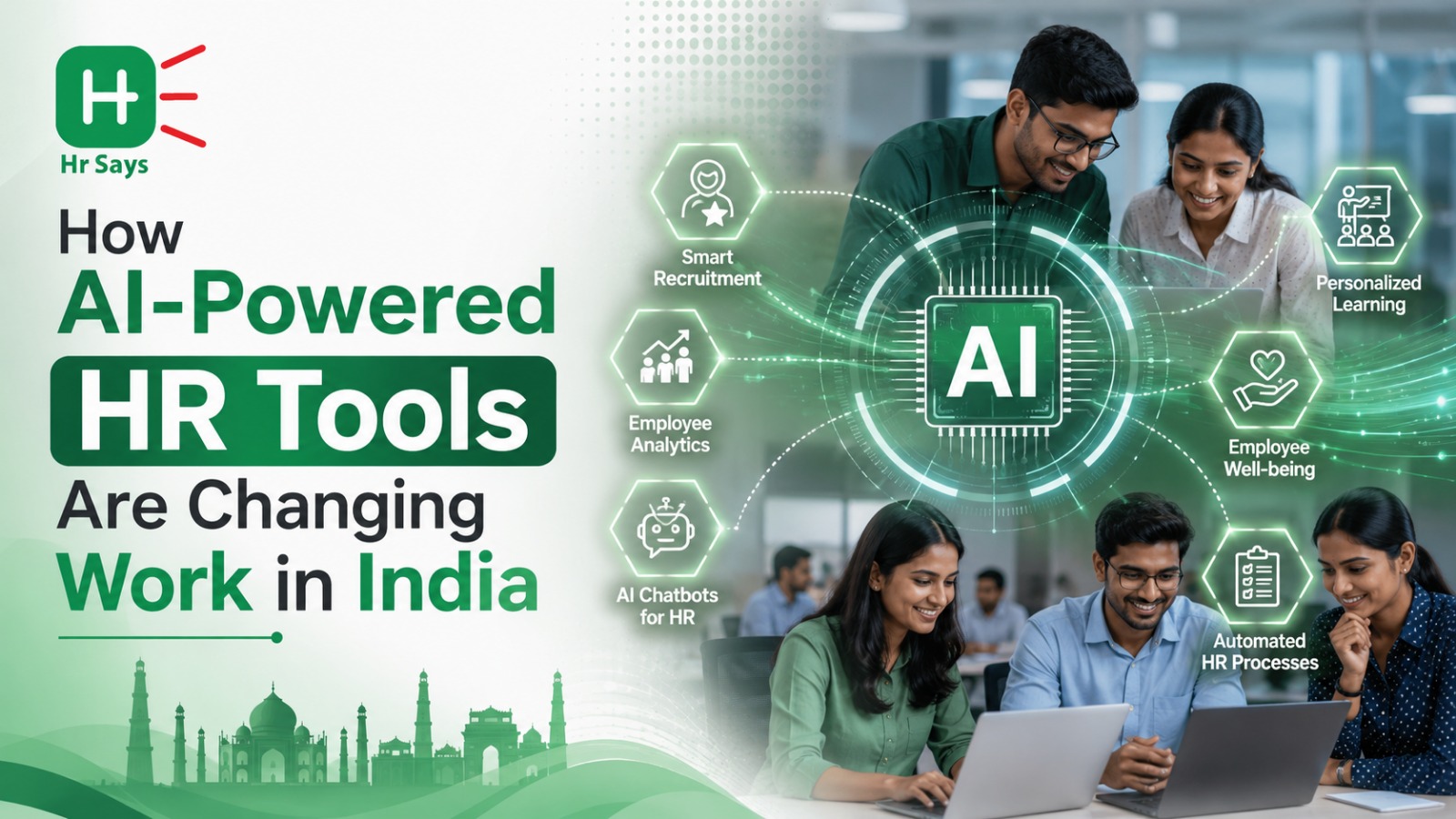
 AI-powered HR tools are reshaping recruitment, payroll, and employee support across Indian organisations, driving efficiency while raising data privacy and change management considerations under the DPDP Act.




Introduction
Human resources in India is going through one of its most significant shifts in decades. What used to be a function built around paperwork, spreadsheets, and manual coordination is now increasingly powered by artificial intelligence. From the moment a candidate applies for a job to the day an employee logs a query about their salary slip, AI is quietly present in the background, sorting, predicting, and responding.
This is not a distant trend anymore. According to Deloitte's State of AI in the Enterprise 2026 report, nearly 40 percent of Indian respondents fall into the category of significant or full use of AI, placing India first among 15 countries surveyed globally. That is a striking number for a function that, until recently, was seen as one of the slower adopters of technology within most organisations.
For HR leaders, founders, and business owners across India, understanding how AI-powered HR tools are reshaping work is no longer optional. It affects hiring speed, compliance obligations under new data protection rules, employee expectations, and ultimately, the kind of organisation people choose to work for. This article breaks down what is actually changing, where the real value lies, and what Indian companies of every size should keep in mind as they bring AI into their HR practices.
Understanding AI in HR Today
Artificial intelligence in HR refers to the use of machine learning, natural language processing, and automation to support tasks that were previously handled manually. This includes generative AI that drafts job descriptions and policy documents, predictive analytics that forecast attrition risk, and AI assistants that answer employee queries around the clock.
It helps to separate three layers that often get bundled together under the single label of AI. The first is automation and robotic process automation, which handles rule-based, repetitive tasks such as payroll runs or data entry. The second is generative AI, which creates new content like interview questions or onboarding material. The third, and most advanced, is agentic AI, which can complete multi-step workflows with minimal supervision, such as screening a batch of resumes, shortlisting candidates, and scheduling interviews without a human touching every step.
The distinction matters because Indian HR technology providers are increasingly moving from simple chatbots toward this third category. As one industry analysis puts it, a chatbot only answers questions, while agentic AI autonomously completes multi-step HR workflows end to end, whether that means screening candidates, flagging payroll anomalies, or drafting a job description from a title. This shift is quietly redefining what an HR team's daily workload actually looks like.
Where Indian Organisations Are Applying AI
Hiring and RecruitmentRecruitment remains the most mature and measurable use case for AI in Indian HR. The sheer volume of applications that Indian companies receive, often running into thousands per role in the IT and technology services sector, has made manual screening genuinely unworkable at scale. AI tools now handle resume shortlisting, candidate ranking, and even automated verification of documents through systems such as DigiLocker before a recruiter steps in for the final decision.
Recruitment corridors like Bengaluru, Hyderabad, and Pune are leading this shift, with AI implementation in the IT and ITES sectors projected to reach 84 percent by the end of 2026. Beyond the big cities, the effect is spreading fast into Tier 2 markets as well. Cloud-based, no-code HR platforms have made it possible for small and growing businesses in cities such as Jaipur, Surat, and Kochi to run structured, AI-supported hiring processes without building large in-house HR teams.
Onboarding and Early Employee ExperienceOnce a candidate accepts an offer, AI continues to play a role. Personalised onboarding assistants walk new hires through documentation, company policies, and role-specific training at their own pace. This matters more in India than in many other markets, given the scale of hiring and the diversity of roles, functions, and regional offices most mid-sized and large Indian companies manage simultaneously.
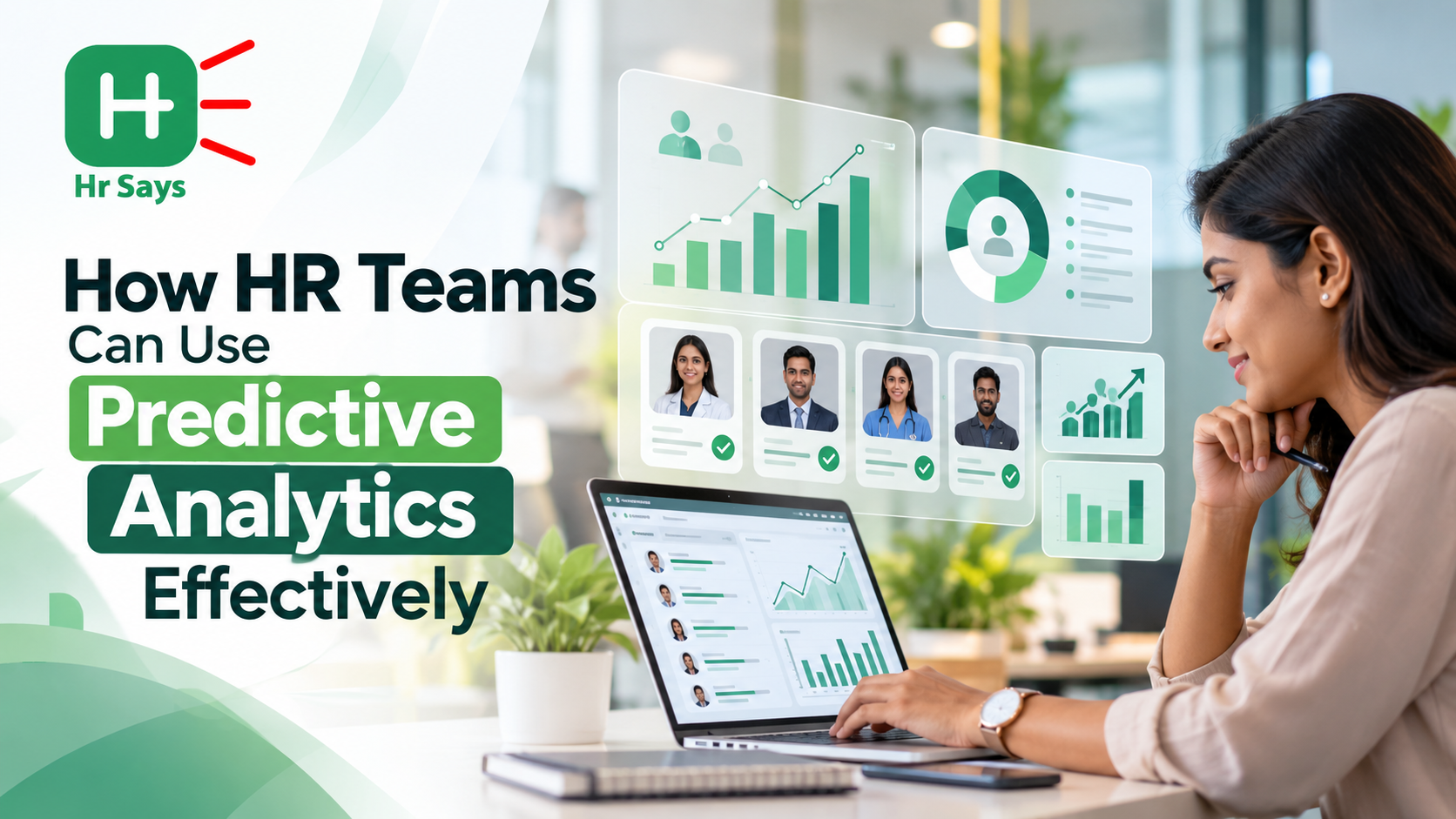
Payroll and CompliancePayroll is one of the more sensitive and error-prone areas of HR, and it is also one where AI delivers some of the clearest returns. AI systems can flag anomalies in salary disbursement, catch calculation errors before they reach employees, and help HR teams stay aligned with India's evolving Labour Codes. Predictive tools are also being used for attrition forecasting, giving HR leaders early warning before resignations happen rather than reacting to them after the fact.
Employee Support and EngagementEmployees today expect the same ease of use from workplace tools that they get from consumer apps. AI-powered virtual assistants are increasingly used to answer routine queries about leave balances, benefits, and policies, freeing up HR teams to focus on situations that genuinely need a human conversation. This shift reduces wait times considerably and gives HR bandwidth back for higher-value, relationship-driven work.
The Real Benefits Organisations Are Reporting
Indian companies adopting AI in HR are seeing gains across a few consistent areas. Recruitment cycles are shortening as manual screening time drops. Payroll accuracy is improving as automated anomaly detection catches errors that might otherwise slip through. HR teams report being able to support far larger employee bases without proportionally growing headcount.
There is also a productivity dimension worth noting. The EY 2025 Work Reimagined Survey found that 86 percent of Indian employees report a positive impact on productivity from generative AI, a notably higher figure than in many other markets. This suggests that Indian employees, across functions and not just HR, are relatively open to working alongside AI tools rather than viewing them purely as a threat.
That said, the picture is not entirely one-sided. The same body of research shows that a meaningful share of the workforce remains uneasy. Mercer's 2026 data shows that employee concern about job loss due to AI has risen from 28 percent in 2024 to 40 percent globally, and a BCG 2025 survey found that 48 percent of Indian employees fear their jobs could disappear within the next decade because of AI. HR leaders cannot afford to treat this concern as background noise. It has a direct bearing on trust, engagement, and how confidently teams adopt new tools.
Challenges Indian HR Teams Need to Navigate
Legacy Systems and IntegrationMany Indian organisations, particularly those with a longer operating history, run HR on legacy payroll, attendance, and core HR systems that were never designed with AI integration in mind. Bolting a modern AI tool onto an outdated HRMS often creates more friction than it removes. Before investing in new AI capabilities, it is worth auditing whether existing systems can actually support them, or whether a broader platform consolidation is needed first.
Data Privacy Under the DPDP ActPerhaps the most consequential shift for Indian HR teams in 2026 is regulatory rather than technological. The Digital Personal Data Protection Act, 2023, along with its Rules notified in November 2025, now governs how organisations collect, store, and process employee data, including salary records, biometric attendance data, and health information. Penalties for non-compliance can run into hundreds of crores of rupees, which makes this a board-level concern rather than a purely operational one.
Under the Act, employers do benefit from certain legitimate use exemptions for data processed strictly for employment purposes. However, this exemption is narrower than many assume, and HR teams are expected to collect only the data genuinely necessary for a stated purpose, define clear retention timelines, and be able to respond to employee data access requests within a defined window. Any AI HR tool that touches employee data, from resume screening software to payroll analytics platforms, now needs to be evaluated through this compliance lens before deployment.
The Emotional Impact GapOne finding stands out from recent research: Mercer's Global Talent Trends 2026 report found that only 19 percent of HR leaders globally consider AI's emotional impact as part of their digital implementation strategy. In other words, most organisations are treating AI rollouts as IT projects rather than people projects. Given how directly HR touches employee wellbeing, this is a gap Indian HR leaders would do well to close early, through transparent communication about what AI will and will not be used for.
Building an AI Ready HR Function
Organisations that are getting real value from AI in HR tend to follow a few consistent practices rather than chasing every new tool that appears in the market.
- Start with a clear vision that ties AI adoption to specific, measurable HR goals, such as reducing time to hire or improving retention, rather than adopting technology for its own sake.
- Audit data quality and governance before scaling any AI tool, since unreliable or incomplete HR data will produce unreliable AI outputs regardless of how sophisticated the underlying model is.
- Invest in upskilling HR teams on data literacy and AI fundamentals, since People Matters research shows a growing share of Indian HR leaders are now opting for hybrid or best-of-breed technology models rather than single vendor solutions, which requires teams that can evaluate and manage multiple systems confidently.
- Run small, well-scoped pilot projects before wide-scale rollout, and measure both quantitative outcomes and how employees actually feel about the change.
This is also where a platform like HRSays plays a useful role for the broader HR community. By bringing together practical conversations on HR technology adoption, workplace culture, and compliance, HRSays helps HR leaders and business owners learn from how their peers across Indian industries are actually navigating this transition, rather than relying solely on vendor pitches.
What This Means for the Future of HR Roles
The evidence so far suggests that AI is reshaping HR roles rather than eliminating them. Research cited by SHRM indicates that AI's organisational impact is significantly more likely to shift job responsibilities and create new roles than to displace jobs outright. For Indian HR professionals, this points toward a future where administrative and repetitive tasks shrink, while responsibilities around AI governance, data ethics, workforce planning, and employee experience design grow in importance.
The HR professionals best positioned for this shift are not necessarily the most technical people in the room. They are the ones who can interpret AI-generated insights critically, ask the right questions of a predictive model, and still bring the judgement and empathy that no algorithm can replicate when it comes to genuinely difficult people decisions.
Conclusion
AI-powered HR tools have moved well past the experimental stage in India. They are actively reshaping how organisations hire, onboard, pay, and support their people, often with measurable gains in speed and accuracy. But the technology itself is only part of the story. The organisations seeing the strongest results are the ones treating AI adoption as a people transformation guided by clear governance, not just a software upgrade. With India's data protection framework now firmly in force and employee sentiment about AI still mixed, the HR leaders who combine thoughtful technology adoption with genuine transparency and care for their workforce will be the ones who turn this shift into a lasting advantage.
Frequently Asked Questions
Q1: Will AI replace HR jobs in India?
AI is unlikely to replace HR jobs entirely. It is changing how HR professionals spend their time by automating repetitive administrative work, while human judgement remains essential for conflict resolution, culture building, and complex people decisions.
Q2: Which AI HR tools are most commonly used by Indian companies?
Indian organisations commonly use AI for resume screening, chatbot-based employee support, payroll anomaly detection, predictive attrition analytics, and personalised learning recommendations, often through platforms such as ZingHR, HROne, greytHR, and Keka.
Q3: Is AI in HR compliant with Indian data protection laws?
AI-powered HR tools must comply with the Digital Personal Data Protection Act, 2023, and its 2025 Rules, which govern how employee data such as biometrics, salary details, and health records are collected, stored, and processed.
Q4: Do small and medium businesses in India benefit from AI in HR?
Yes. Cloud-based, no-code AI HR platforms have made automation affordable for small and medium businesses, including those in Tier 2 and Tier 3 cities, allowing them to manage recruitment, payroll, and compliance without large HR teams.
Q5: What skills should HR professionals build to work well with AI?
HR professionals benefit from building data literacy, familiarity with AI governance and ethics, and the ability to interpret AI-generated insights, while continuing to strengthen judgement-based skills such as negotiation, empathy, and change management.
Resources
- SHRM State of AI in HR 2026 Report: Survey of nearly 1,900 HR professionals on AI adoption trends and workflow impact
- Deloitte State of AI in the Enterprise 2026 Report: Global benchmarking data showing India leading AI adoption across 15 countries
- Digital Personal Data Protection Act, 2023 and DPDP Rules, 2025, Government of India: Primary legislation governing employee data privacy in India
- EY 2025 Work Reimagined Survey: Research on employee sentiment toward generative AI and productivity in India
- Mercer Global Talent Trends 2026 Report: Analysis of workforce sentiment and organisational readiness around AI adoption
Interlinking Keywords
AI in HR India, HR digital transformation, employee data privacy compliance, HR technology trends, predictive attrition analytics, AI recruitment tools, HRMS platforms India, DPDP Act compliance for HR, workplace culture, HR upskilling
Disclaimer:
This article is intended for general informational and educational purposes only and does not constitute legal, compliance, financial, or professional HR advisory advice. While the statistics, regulatory references, and industry insights cited are drawn from publicly available and reputable sources believed to be accurate at the time of publication, readers should independently verify current requirements, particularly regarding the Digital Personal Data Protection Act, 2023, and its associated Rules, before making organisational or compliance decisions. HRSays and its contributors accept no liability for actions taken based on the content of this article. Organisations are encouraged to consult qualified legal counsel, data protection officers, or HR compliance professionals for guidance specific to their circumstances.