Saturday, October 24, 2026
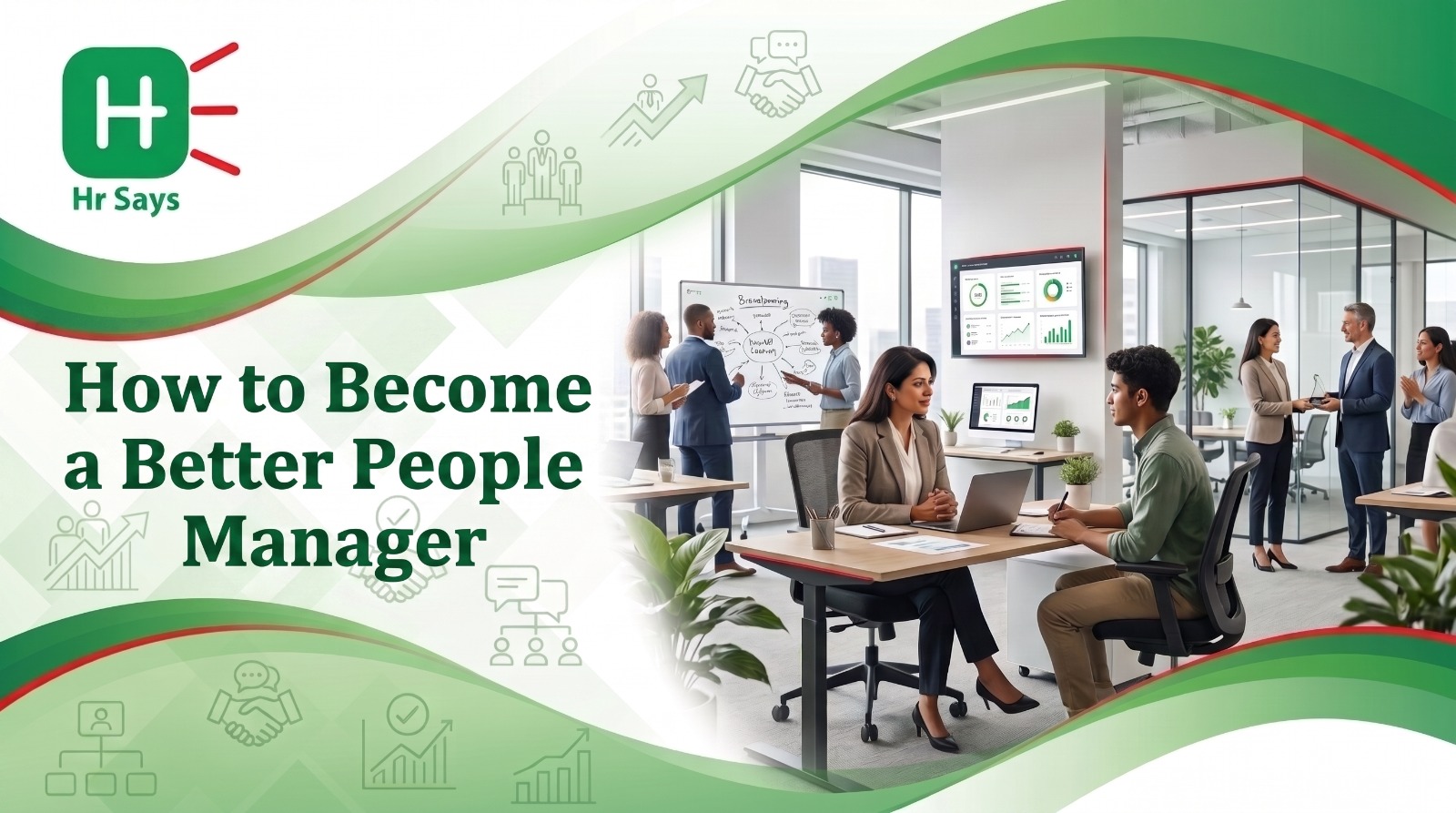
 This guide explains how to become a better people manager by building trust, improving communication, delegating effectively, and giving consistent feedback, tailored specifically for Indian workplace realities and challenges.





Introduction
Becoming a better people manager is one of the most valuable investments a professional can make in their career, and one of the most valuable investments an organisation can make in its future. Good technical skills can get a person promoted into a management role, but they rarely prepare that person for the actual work of managing people. Leading a team requires a different mindset altogether, one built around trust, communication, delegation, and consistent support for the people who report to you.
In India, the shift toward hybrid work, skills-based hiring, and higher employee expectations around growth and flexibility has made people management skills more important than ever. According to recent industry research on HR trends in India, organisations are increasingly expected to support managers through this transition rather than assume the skills will simply develop on their own. This shift places direct responsibility on both individual managers and their organisations to build stronger people leadership capability.
This guide breaks down what people management actually involves, the core skills every manager needs to develop, and practical steps to becoming more effective at leading a team. Whether someone has recently stepped into a managerial role or has been leading a team for years and wants to sharpen their approach, this article offers grounded, actionable guidance relevant to the Indian workplace context.
Understanding What People Management Really Means
People management refers to the practices, behaviours, and skills a manager uses to guide, support, and develop the individuals who report to them. It is different from project management, which focuses on tasks, timelines, and deliverables. People management focuses on the human side of work, including motivation, communication, trust, conflict resolution, and career growth.
Many professionals confuse being a manager with being a leader who manages people well. A manager can technically hold the title and still fail to build trust, communicate clearly, or support their team's development. People management is the ongoing practice that separates a title from genuine leadership capability.
In most Indian organisations, this distinction is becoming sharper. Companies now expect managers to balance business outcomes with employee experience, particularly as younger employees prioritise clarity, flexibility, and growth over traditional markers such as designation or brand name. A manager who understands this shift is better positioned to retain talent and build a high-performing team.
Effective people management typically covers a few interconnected areas. It includes setting clear expectations, delegating appropriately, communicating consistently, recognising good work, resolving conflict fairly, and supporting each team member's growth. None of these function well in isolation. A manager who delegates well but never gives feedback, or communicates clearly but never builds trust, will still struggle to lead an engaged team.
Core People Management Skills Every Manager Needs
Building Trust With Your TeamTrust is the foundation of every effective manager and employee relationship. Without it, employees hesitate to share concerns, avoid taking ownership, and disengage over time. Trust is built gradually through consistency, fairness, and follow-through rather than through any single gesture.
One of the most common trust breakers in Indian workplaces is inconsistency between what a manager says and what a manager does. If a manager promises support during a performance review and then fails to follow up, employees notice, and trust erodes quickly. Managers who want to build stronger trust should focus on keeping commitments, being transparent about decisions, and avoiding favouritism, particularly in team settings where former peers may now report to them.
Communicating With Clarity and ConsistencyClear communication prevents the misunderstandings that often derail team performance. A manager needs to communicate expectations, priorities, and feedback in a way that leaves little room for ambiguity. This does not mean overexplaining every task, but it does mean confirming that the message has landed as intended.
Good communication also involves listening as much as speaking. Active listening, which means giving full attention, avoiding interruptions, and responding thoughtfully, helps managers understand what their team members are actually experiencing rather than assuming they already know. This is particularly relevant in Indian workplace culture, where hierarchy can sometimes discourage employees from speaking up unless they feel genuinely heard.
Delegating Work EffectivelyMany new managers struggle with delegation because they are used to doing the work themselves rather than guiding others to do it. Effective delegation is not about offloading tasks. It involves understanding each team member's strengths, setting clear expectations for outcomes, and then stepping back enough to let them take ownership.
Overdelegating without context creates confusion, while underdelegating, often called micromanagement, damages morale and slows down the team. The goal is to match tasks to capability and provide support without hovering over every decision.
Giving and Receiving FeedbackFeedback is one of the most direct ways a manager influences team performance and growth. Constructive feedback, delivered regularly rather than only during annual reviews, helps employees understand what they are doing well and where they need to improve. Feedback should be specific, tied to observable behaviour, and delivered with genuine intent to help rather than criticise.
Equally important is a manager's willingness to receive feedback from their own team. Asking for input, whether through informal conversations or structured surveys, signals that the manager values the team's perspective and is open to improving their own approach.
Resolving Conflict FairlyWorkplace conflict is inevitable, particularly in cross-functional or fast-growing teams. A good people manager does not avoid conflict or take sides based on personal preference. Instead, they listen to all perspectives, identify the root cause, and work toward a resolution that is fair and sustainable.
Handling conflict well also means recognising when a disagreement is really about unclear expectations, workload pressure, or personality differences, since each of these requires a different approach to resolve effectively.
How to Become a Better People Manager: Practical Steps
Becoming a stronger people manager is not about mastering a single technique. It requires consistent practice across several areas, supported by honest self-reflection and a willingness to keep learning.
- Start with self-awareness. Understanding your own communication style, biases, and default reactions under pressure helps you recognise where you may be falling short as a manager. Many organisations now use structured assessments or 360-degree feedback tools to help managers see themselves more clearly.
- Set clear expectations early. Ambiguity is one of the biggest sources of frustration for employees. Clarify goals, timelines, and what success looks like at the start of any project, rather than assuming your team already understands.
- Invest in one-on-one conversations. Regular, focused one-on-one meetings, separate from status update calls, give employees space to raise concerns, share ideas, and discuss career growth. These conversations are often where trust is built most effectively.
- Recognise good work consistently. Recognition does not need to be elaborate. A specific, timely acknowledgement of good work, whether public or private, reinforces positive behaviour and boosts morale.
- Seek mentorship or training. Many first-time managers benefit significantly from structured leadership development programs, whether offered internally by their organisation or through external courses focused on people management skills.
- Reflect and adjust regularly. Effective managers periodically review their own approach, ask for feedback from their team, and adjust their style rather than assuming what worked once will always work.
Common Challenges Indian Managers Face
Several challenges are particularly common in Indian workplace settings. Many first-time managers are promoted from within a team and now find themselves managing former peers, which can create discomfort around authority and fairness. Others struggle to balance the cultural weight of hierarchy with the growing expectation, especially among younger employees, for open dialogue and flexibility.
Hybrid and remote work has added another layer of complexity. Managers now need to build trust and maintain visibility into their team's wellbeing without relying solely on in-person interaction. This has made intentional communication and regular check-ins even more important than before.
Organisations are increasingly recognising these pressures. HR teams across sectors are being asked to support managers through structured onboarding for leadership roles, coaching, and ongoing learning resources, rather than expecting people management capability to develop informally through experience alone. Platforms focused on HR knowledge sharing, workplace insights, and leadership conversations, such as HRSays, play a role here by helping HR professionals and business leaders access practical guidance on building stronger, more people-focused management practices across their organisations.
Building Long-Term People Management Capability
Becoming a better people manager is not a one-time achievement but an ongoing practice. The most effective managers treat leadership as a skill that requires continuous attention, much like any technical competency. This means staying open to feedback, adjusting to the needs of a changing workforce, and recognising that what worked for one team or one generation of employees may need to evolve for another.
Organisations that invest in developing their managers, through training, mentorship, and honest performance conversations, tend to see stronger retention, higher engagement, and more resilient teams over time. For managers themselves, the effort invested in becoming better at leading people often pays off not just in team performance, but in their own growth as professionals capable of building trust, resolving conflict, and creating workplaces where people genuinely want to stay.
Conclusion
Becoming a better people manager requires more than good intentions. It demands consistent effort across trust building, clear communication, thoughtful delegation, honest feedback, and fair conflict resolution. For managers navigating India's evolving workplace landscape, where hybrid work, generational shifts, and rising employee expectations are reshaping what good leadership looks like, these fundamentals matter more than ever.
The path to becoming a stronger manager is rarely linear. It involves ongoing self-reflection, a willingness to seek feedback, and ongoing learning from mentors, structured training, or one's own team. Managers who commit to this process, rather than treating people management as a skill they already possess by default, are the ones who build teams that are engaged, productive, and genuinely well supported.
Frequently Asked Questions
Q1: What is the most important skill for a people manager to develop?
Active listening is often considered the most foundational skill because it enables trust, accurate decision-making, and early conflict resolution. Without it, other management skills such as feedback and delegation tend to fall short.
Q2: How long does it take to become a good people manager?
There is no fixed timeline, as it depends on experience, feedback, and willingness to learn. Most new managers see noticeable improvement within twelve to eighteen months of consistent practice, mentorship, and honest self-reflection.
Q3: Can introverts become effective people managers?
Yes. Introverts often excel at active listening, thoughtful decision-making, and one-on-one relationship building, which are core people management skills. Effective management is less about personality type and more about consistent behaviour.
Q4: What are common mistakes new managers make in Indian workplaces?
Common mistakes include micromanaging former peers, avoiding difficult conversations due to hierarchy concerns, delaying feedback, and failing to set clear expectations. Many new managers also struggle to transition from an individual contributor mindset to a team enabler mindset.
Q5: How can HR support first-time managers in India?
HR can support first-time managers through structured onboarding for leadership roles, mentorship programs, manager-specific training on feedback and delegation, and regular check-ins during the first six months of the transition.
Resources
- Society for Human Resource Management (SHRM): Research and guidance on people management practices and leadership development.
- Harvard Business Review: Articles and case studies on management, leadership, and organisational behaviour.
- National Human Resource Development Network (NHRDN) India: Community and resources for HR professionals across Indian organisations.
- LinkedIn Learning: Courses and certifications on people management, communication, and leadership skills.
- AIHR (Academy to Innovate HR): Research and training resources on HR trends and people management capability building.
Interlinking Keywords
people management skills, leadership development, employee engagement, feedback culture, workplace communication, first-time managers, HR trends India, employee retention strategies
Disclaimer:
This article is intended for general informational and educational purposes only. It does not constitute professional HR, legal, or career advice. Readers are encouraged to consult a qualified HR professional or workplace expert for guidance specific to their organisation.