Thursday, October 01, 2026
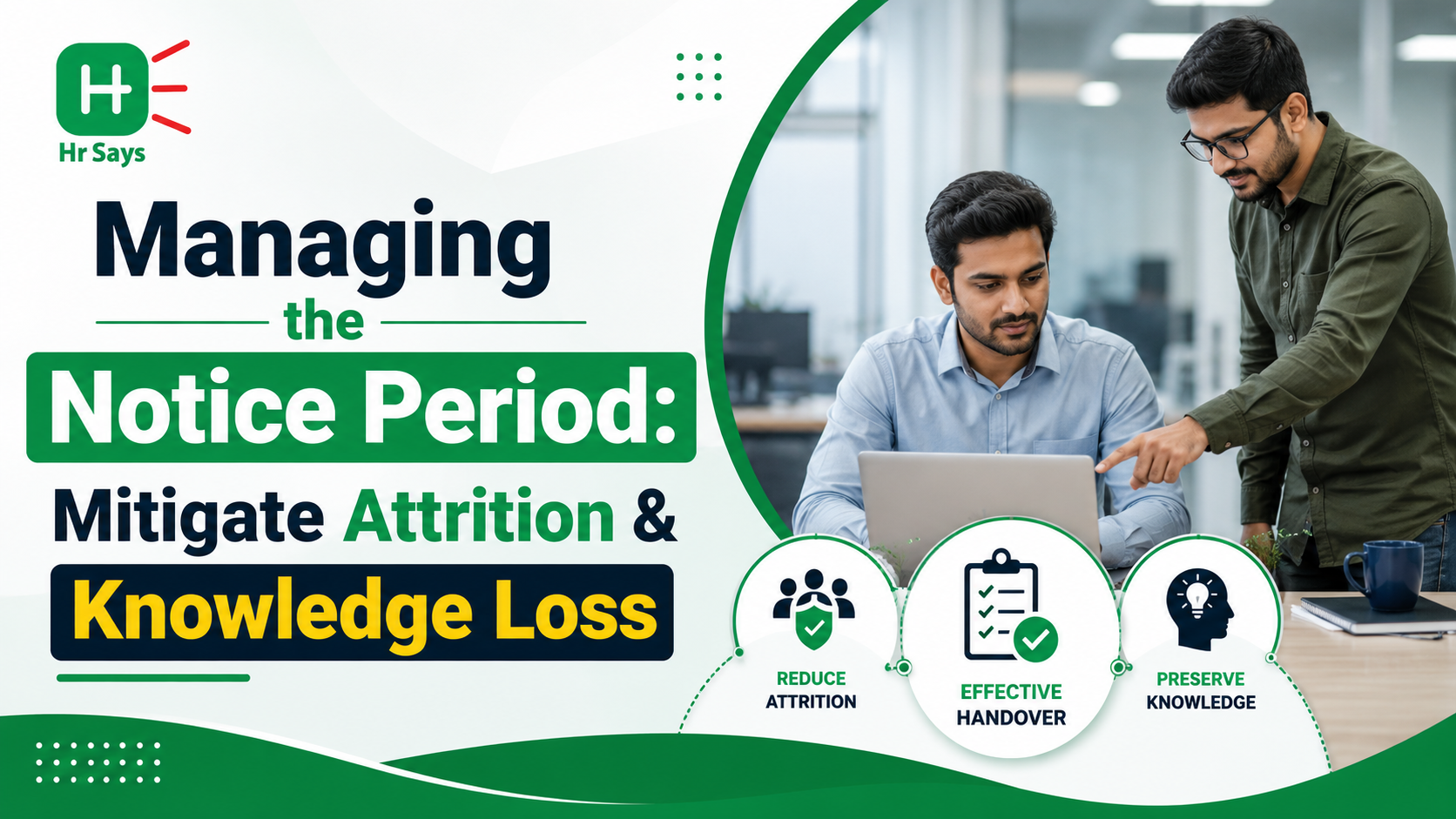
 A well-managed notice period ensures smooth employee transitions by protecting business continuity, client relationships, and team productivity. With structured knowledge transfer and proactive HR planning, organizations can minimize attrition risks and preserve critical institutional knowledge.




When an employee resigns, the subsequent multi-week transition phase is critical for operational stability.
Effectively managing the notice period determines whether a departure passes smoothly or disrupts
ongoing projects, client relationships, and team morale. Rather than viewing this period as a phase of
disengagement, proactive HR managers treat it as an essential window for knowledge management.
Optimizing how your organization handles exits involves a structured blend of formal documentation, clear
expectations, and empathetic offboarding workflows.
The Risks of an Unmanaged Notice Period
Failing to establish a clear framework for managing the notice period exposes a company to massive risks:
operational bottlenecks, lost client context, or data leaks. When exiting team members check out mentally,
milestones get delayed, and remaining employees must absorb extra work, increasing burnout and triggering
further attrition.
1. Immediate Handover Planning
within 48 hours of a resignation approval, a formal transition plan must be drafted. This document should
detail all active deliverables, client touchpoints, and systemic credentials that require transfer. Assigning a
clear peer recipient or successor immediately guarantees immediate accountability.
2. Maintaining Motivation and Productivity
A major challenge in managing the notice period is keeping the departing employee motivated. Treat them
with respect, include them in standard rituals, and explicitly tie their final settlement clearances to the
completion of the handover milestones.
3. Comprehensive Knowledge Documentation
ensure that institutional knowledge is documented in a centralized repository (e.g., Notion, Confluence).
Codebases must be commented, client preferences recorded, and standard operating procedures updated
before the final day.
4. Conducting Strategic Exit Interviews
An exit interview is a goldmine for internal feedback. Use this time to gather honest data on corporate culture,
compensation benchmarks, and management efficiency to fix internal issues before they spread.
Handling Buy-Outs and Early Relief Requests
Frequently, employees request an early release to join a new employer. Businesses should assess these
requests on a case-by-case basis. If a comprehensive handover is achieved early, granting a buy-out can
save payroll costs and preserve goodwill.
To ensure total compliance, always coordinate with dynamic legal advisors specialized in Indian corporate
laws. Building clean statutory frameworks safeguards equity valuation and fosters structural integrity across all
corporate tiers over long horizons.
Frequently Asked Questions Regarding managing the notice period
Q1: What is the primary purpose of managing the notice period?
It ensures organizational compliance with statutory laws, mitigates operational and legal risks, and
builds a professional, high-performing corporate environment.
Q2: Is managing the notice period mandatory for early-stage startups?
Yes, as soon as the company crosses the specific legal headcount or statutory threshold defined by
Indian labor laws.
Q3: What are the financial penalties for non-compliance with managing the notice period?
Penalties range from substantial compounding financial fines to potential imprisonment for directors,
along with operational shutdowns.
Q4: Can digital tools help track and manage managing the notice period?
Absolutely. Modern HRMS tools and cloud equity platforms optimize workflows, reduce errors, and
maintain audit trails.
Q5: How does managing the notice period impact investor due diligence during funding
rounds?
Institutional investors thoroughly audit regulatory files; compliance clean sheets prevent delays and
valuation haircuts.
Q6: Who is responsible for monitoring managing the notice period within a company?
The board of directors, dedicated HR heads, compliance officers, and legal counsels bear joint
responsibility.
Q7: Are remote workers and contract staff covered under managing the notice period?
Yes, modern labor amendments protect remote workers, gig contractors, and site consultants under
compliance frameworks.
Q8: How often should compliance audits for managing the notice period be executed?
It is best practice to perform internal health checks semi-annually and formal external legal audits once
every financial year.
Q9: What is the first actionable step to implement managing the notice period?
Draft an institutional policy document approved by the board and share it transparently with all
workforce tiers.
Q10: Where can founders find the official government templates for managing the notice
period?
official structures are hosted on ministries' statutory web domains like the Ministry of Labour and
Employment or EPFO portals.