 Sunday, October 25, 2026
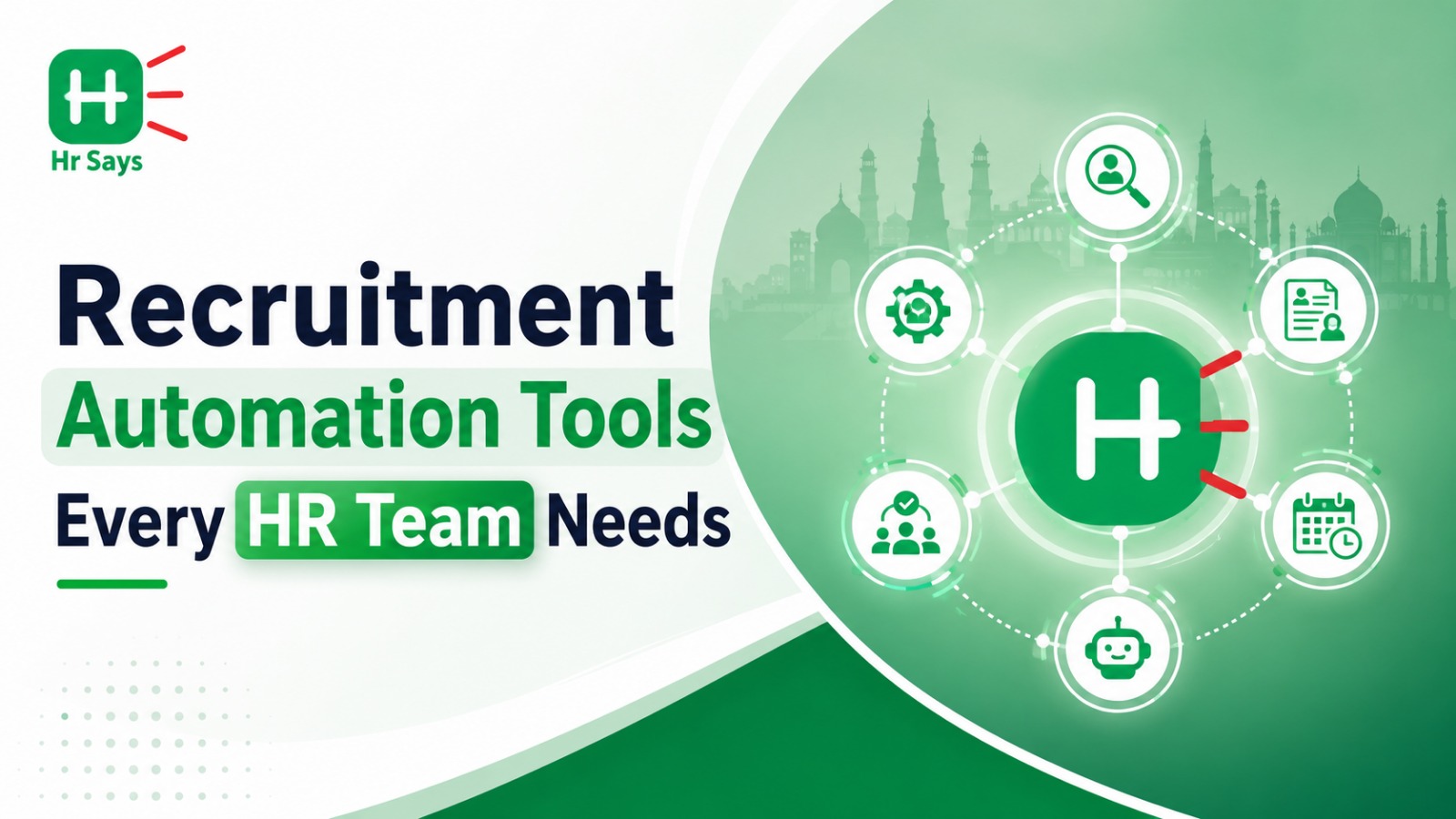
 Recruitment automation tools help modern HR teams streamline hiring, improve candidate engagement, and scale recruitment processes more efficiently. AI hiring platforms, applicant tracking systems, and workflow automation are reshaping talent acquisition through smarter, faster, and more connected recruitment strategies.




Hiring has changed faster in the last few years than many HR teams expected. What once depended heavily on manual screening, spreadsheets, and endless follow-up emails is now being transformed by automation, AI-driven workflows, and predictive hiring systems. Businesses are no longer searching only for candidates. They are searching for speed, efficiency, better hiring decisions, and long-term workforce stability. This is where recruitment automation tools have become essential rather than optional.
Modern recruitment is not just about filling vacancies quickly. It is about reducing hiring friction, improving candidate experience, identifying quality talent earlier, and helping HR teams adapt to a more digital workforce environment.
Why Recruitment Automation Became Essential for Modern HR Teams
Recruitment automation grew out of necessity, not convenience. As businesses expanded digitally, hiring demands became larger and more complex. HR teams started handling higher application volumes, remote hiring processes, multiple communication channels, and faster turnaround expectations simultaneously.
Traditional recruitment systems struggled under this pressure because manual hiring processes create delays at nearly every stage. Recruiters spend hours reviewing resumes, scheduling interviews, responding to repetitive candidate questions, and updating internal systems. These repetitive tasks reduce the time available for actual talent evaluation and relationship building.
Recruitment automation tools solve this operational imbalance by handling repetitive workflows automatically. Applicant tracking systems, AI screening software, automated scheduling tools, and communication platforms reduce administrative overload while improving process consistency.
The shift is especially visible among growing startups, remote-first companies, and global organizations where hiring happens continuously across different regions and time zones. In these environments, automation becomes less about saving effort and more about maintaining operational stability.
Another important factor is candidate behavior. Modern candidates expect faster communication, smoother application experiences, and quicker hiring decisions. Delayed responses often push strong applicants toward competitors. Recruitment automation helps businesses maintain responsiveness without overwhelming HR teams.
How Recruitment Automation Tools Actually Work in Real Hiring Scenarios
Many businesses misunderstand automation as a fully independent hiring system. In reality, the most effective recruitment automation tools work as support systems that enhance recruiter efficiency rather than replace recruiters entirely.
The process usually begins at the application stage. Automated systems collect candidate information, organize applications, and filter resumes based on predefined requirements. AI-driven software can identify skills, certifications, experience levels, and role relevance within seconds.
Once candidates enter the system, automation continues throughout multiple stages:
- Resume parsing and skill matching reduce manual filtering time significantly
Instead of reviewing hundreds of resumes manually, recruiters receive shortlisted profiles aligned with job requirements. This allows HR teams to focus more on evaluating candidate quality rather than sorting applications. - Automated interview scheduling improves candidate communication flow
Scheduling delays are one of the biggest frustrations in recruitment. Automation tools sync calendars, suggest available slots, and handle confirmations automatically, reducing back-and-forth communication. - Candidate engagement systems maintain communication consistency
Automated emails, status updates, and reminders help candidates stay informed throughout the hiring process. This improves employer branding and reduces candidate drop-offs. - Analytics dashboards help recruiters identify hiring bottlenecks early
Recruitment software now tracks metrics like response times, interview conversion rates, and sourcing efficiency. These insights help HR teams refine recruitment strategies continuously.
The real advantage appears when companies scale hiring. A process that works manually for five positions often collapses when managing fifty openings simultaneously. Automation creates process stability under growth pressure.
The Growing Role of AI in Recruitment and Talent Acquisition
AI has shifted recruitment automation from simple workflow management into intelligent decision support. Earlier systems focused mainly on organizing applications. Modern AI-powered platforms attempt to predict hiring outcomes, identify talent patterns, and improve matching accuracy.
This evolution matters because recruitment is becoming increasingly data-driven. Companies now analyze behavioral patterns, skill alignment, retention probability, and even communication style compatibility during hiring.
AI recruitment tools help HR teams in several ways:
AI Improves Pattern Recognition Beyond Human SpeedAI systems process large volumes of recruitment data much faster than humans. They identify recurring hiring success indicators, helping recruiters understand which candidate profiles align better with specific roles.
For example, companies hiring remote software engineers may discover through AI analysis that communication patterns and project collaboration history predict long-term success more accurately than degree qualifications alone.
Bias Reduction Becomes More StructuredManual recruitment often contains unconscious bias, even in experienced HR teams. Automation introduces standardized screening structures that reduce subjective inconsistencies during early-stage filtering.
However, this does not mean AI is bias-free. Poorly trained systems may inherit bias from historical hiring data. This is why responsible AI implementation matters as much as automation itself.
Candidate Experience Becomes Faster and More PredictableOne major reason businesses adopt AI hiring systems is responsiveness. Candidates prefer clarity and momentum. Automated systems reduce waiting periods between application stages and provide more transparent communication timelines.
This becomes especially valuable in industries facing talent shortages, where losing candidates due to slow hiring processes creates long-term operational issues.
Why Small Businesses and Startups Are Adopting Automation Faster
Large corporations introduced recruitment software years ago, but startups and small businesses are now adopting automation at a much faster pace. The reason is practical rather than technological.
Smaller teams usually operate with limited HR capacity. One recruiter may handle sourcing, screening, onboarding, and employer branding simultaneously. Without automation, hiring quickly becomes unsustainable during growth phases.
Recruitment automation helps startups scale hiring without immediately expanding HR departments. This is particularly useful for technology startups, remote agencies, e-commerce brands, and digital service businesses that experience unpredictable hiring spikes.
Another important factor is global talent access. Remote work opened international hiring opportunities, but managing candidates across multiple countries manually creates communication and scheduling complexity. Automation tools simplify coordination across time zones and hiring pipelines.
Cloud-based recruitment systems also lowered entry barriers. Businesses no longer require expensive enterprise infrastructure to access advanced recruitment technology. Subscription-based SaaS recruitment tools made automation accessible even for early-stage businesses.
Features That Matter Most in Recruitment Automation Platforms
Not every automation platform solves the same problems. Many businesses make the mistake of choosing tools based only on popularity rather than operational fit.
The best recruitment automation tools usually combine workflow efficiency, communication management, and data visibility within one ecosystem.
Applicant Tracking Systems Create Centralized Hiring VisibilityAn applicant tracking system acts as the operational foundation of recruitment automation. It organizes candidate pipelines, application stages, communication records, and evaluation workflows within a centralized system.
Without proper visibility, recruitment becomes fragmented quickly, especially when multiple recruiters or departments are involved.
Workflow Automation Reduces Operational FrictionAutomation works best when repetitive administrative tasks disappear from recruiter workloads. Interview reminders, follow-up emails, candidate tagging, document requests, and onboarding steps can all be automated effectively.
This allows recruiters to focus more on relationship-building and decision-making rather than operational maintenance.
Integration Capabilities Improve Hiring EcosystemsModern recruitment rarely happens inside one isolated platform. Businesses use HR software, communication tools, payroll systems, assessment platforms, and onboarding systems simultaneously.
Recruitment automation tools that integrate smoothly across these systems reduce duplicate work and improve hiring consistency.
The Challenges and Limitations of Recruitment Automation
Despite its advantages, recruitment automation is not perfect. Many businesses adopt automation expecting complete hiring transformation but later discover operational gaps.
One major challenge is over-automation. Candidates still expect human interaction during important hiring stages. Fully automated recruitment experiences often feel impersonal and transactional.
Another issue is keyword dependency. Some systems prioritize keyword matching too aggressively, which may exclude highly capable candidates with unconventional resumes or transferable skills.
Implementation complexity also becomes a challenge for organizations with outdated internal processes. Automation works best when hiring workflows are already reasonably structured. Automating disorganized recruitment processes often amplifies confusion rather than solving it.
Cost management matters too. Businesses sometimes purchase multiple overlapping tools without fully utilizing them. Effective recruitment automation requires process clarity, not just software accumulation.
How Recruitment Automation Is Changing Candidate Expectations
Candidates today evaluate hiring experiences almost as carefully as employers evaluate candidates. Recruitment automation is reshaping these expectations significantly.
Faster responses are now considered normal rather than impressive. Candidates expect application confirmations immediately, interview scheduling within days, and regular communication updates.
Transparency has become equally important. Modern candidates prefer visibility into hiring timelines and application stages instead of long periods of silence.
Automation also changed accessibility. Mobile-friendly applications, simplified interview scheduling, and remote hiring systems made opportunities easier to access globally.
However, personalization still matters deeply. Candidates appreciate efficiency, but they also want signs of genuine employer interest. The most successful companies balance automation with human interaction strategically.
What HR Teams Should Consider Before Choosing Automation Tools
Choosing recruitment automation software should begin with operational evaluation rather than feature comparison alone.
HR teams need to understand:
- Current hiring bottlenecks
- Candidate drop-off patterns
- Communication inefficiencies
- Screening delays
- Hiring volume expectations
A startup hiring five people annually requires different systems compared to a multinational organization hiring continuously across departments.
Scalability matters too. Many businesses outgrow recruitment tools quickly because they select software designed only for immediate needs.
Training and adoption also influence success significantly. Even advanced automation systems fail when recruiters avoid using them consistently. The technology should simplify workflows rather than create additional complexity.
Conclusion
Recruitment automation tools are no longer optional systems reserved for large enterprises. They have become essential operational support structures for modern hiring environments. As recruitment becomes faster, more global, and increasingly data-driven, automation helps HR teams maintain efficiency without sacrificing candidate experience.
The most effective organizations are not replacing recruiters with automation. They are using automation to remove repetitive friction, improve hiring visibility, and create more thoughtful recruitment processes. Businesses that adapt thoughtfully to these systems are far more likely to build scalable, resilient hiring strategies for the future.
Frequently Asked Questions (FAQs)
1. What are recruitment automation tools and how do they work?Recruitment automation tools are software platforms that simplify hiring tasks such as resume screening, interview scheduling, and candidate communication. These systems use workflow automation and AI hiring support to reduce repetitive manual work. Many businesses use them to improve recruitment efficiency and create a smoother talent acquisition process.
2. Why are companies investing heavily in recruitment automation today?Businesses are hiring faster and managing larger candidate volumes than before, which makes manual recruitment difficult to scale. Recruitment automation helps improve hiring speed, candidate engagement, and overall HR productivity. Modern talent acquisition strategies now depend heavily on digital recruitment systems and smart workflow management.
3. How does AI improve recruitment and candidate screening?AI improves recruitment by identifying patterns in resumes, matching skills with job requirements, and helping recruiters prioritize suitable candidates faster. This reduces manual filtering time and improves hiring consistency. AI-driven hiring platforms also support better workforce planning and smarter recruitment decision-making.
4. Are recruitment automation tools useful for small businesses and startups?Yes, smaller companies benefit significantly because automation reduces administrative workload and helps lean HR teams manage hiring efficiently. Cloud-based recruitment systems and applicant tracking platforms make scalable hiring possible without requiring large HR departments or expensive infrastructure.
5. What features should HR teams look for in recruitment software?HR teams should focus on features such as applicant tracking systems, automated interview scheduling, communication workflows, analytics dashboards, and integration capabilities. These features improve recruitment visibility and help create a more organized talent acquisition ecosystem.
6. Can recruitment automation improve candidate experience?Yes, automation improves candidate experience by providing faster communication, easier scheduling, and more transparent hiring updates. Modern recruitment systems reduce waiting periods and improve responsiveness, which helps businesses maintain stronger employer branding and candidate trust.
7. What are the biggest challenges of recruitment automation?One major challenge is over-automation, where hiring starts feeling impersonal. Another issue is dependency on keyword-based screening, which may overlook strong candidates with unconventional experience. Effective recruitment automation requires balanced human involvement and well-structured hiring workflows.
8. How do applicant tracking systems support recruitment automation?Applicant tracking systems centralize candidate applications, hiring stages, and recruiter communication within one platform. This improves workflow management and reduces operational confusion. Many organizations use ATS platforms as the foundation of their digital recruitment infrastructure.
9. How is recruitment automation changing modern HR practices?Recruitment automation is shifting HR teams toward data-driven hiring and predictive workforce planning. Recruiters now spend less time on repetitive tasks and more time evaluating candidate quality and long-term fit. This transition supports more strategic talent acquisition and operational scalability.
10. What is the future of recruitment automation and HR technology?The future of recruitment automation will focus more on AI-powered hiring intelligence, predictive analytics, and personalized candidate engagement. HR technology is moving toward connected recruitment ecosystems that combine automation, workforce insights, and smarter hiring decisions within one streamlined platform.