Saturday, October 24, 2026
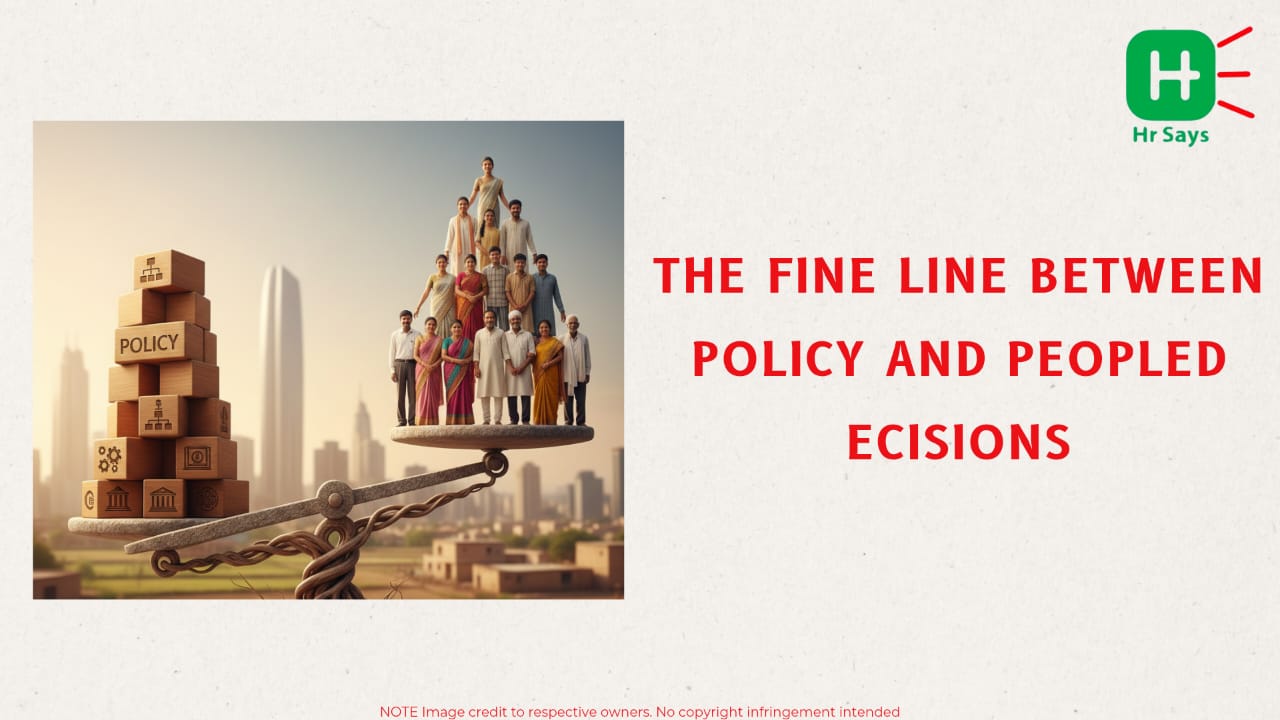
 This blog explores how policies and people decisions intersect in modern workplaces, highlighting the importance of balancing structure with empathy. It focuses on leadership judgment, consistency, and trust without sacrificing fairness or humanity.




The purpose of the policies is to safeguard systems, be equal and less risky. However, behind any policy, there is a human condition where we will see it playing out. In the modern work places, the challenge does not lie in formulating rules, but rather in making a choice as to whether to abide by them in all situations, or at times take breaks, listen, and act with discretion.
When Policies Are Designed For Order, Not Reality
Policies are designed in constructive way. They are geared towards standardisation of decisions, minimization of bias and facilitation of compliance. In theory, they bring clarity. In reality, they usually encounter circumstances, which had not been envisaged in the draft.
The majority of organisational policies are constructed on optimal conditions. Life is usually, however, contextual, emotive and multifaceted. A leave policy can sound nice on a piece of paper, but the personal conditions can render it cruel when they are not considered. A performance system might seem objective, but it might not be acknowledging the invisible handwork or limitations.
It is the disconnection between the formal and the informal that creates the basis of discomfort.
Why People Decisions Rarely Fit Into Templates
Human behaviour is unpredictable. Personal challenges, cultural backgrounds, and mental health factors rarely align neatly with policy clauses. When people decisions are reduced to checklists, trust is often eroded.
People decisions are influenced by factors such as:
● Emotional intelligence and empathy
● Situational awareness
● Past performance and intent
● Team dynamics and morale
When these elements are excluded, decisions may be correct procedurally, but damaging relationally. Over time, rigid enforcement can lead to disengagement, quiet resentment, and high attrition.
The Risk Of Overcorrecting With Flexibility
While empathy is essential, unchecked flexibility can create confusion. Inconsistent decisions may appear biased, even when intentions are good. Teams may begin to question fairness, especially when similar situations receive different outcomes.
This is where leaders often feel stuck. Too much policy feels cold. Too much discretion feels risky.
The balance is rarely about choosing one over the other. It is about applying policy with context, not replacing it.
How Strong Leaders Walk The Line
Effective people management is rarely loud or dramatic. It is often quiet, deliberate, and uncomfortable. Strong leaders tend to pause before reacting. They seek understanding before enforcement.
A few practices are commonly observed:
● Policies are treated as frameworks, not weapons
● Conversations are prioritised before conclusions
● Decisions are explained, not just delivered
● Exceptions are documented to maintain transparency
When people feel heard, even difficult decisions are accepted more easily. The outcome may remain the same, but the experience feels different.
Why This Balance Matters More Than Ever
Modern workplaces are shaped by remote work, burnout conversations, and evolving employee expectations. Employees are no longer asking only for clarity. They are asking for fairness with humanity.
HR leaders and managers are increasingly judged not by how well policies are enforced, but by how wisely they are applied. A workplace that hides behind rules may remain compliant, yet lose its people slowly.
Trust is built in moments where judgment meets structure.
Conclusion
The fine line between policy and people decisions is not meant to be erased. It is meant to be walked carefully. Policies provide safety. People provide meaning. When both are respected, workplaces become not just functional, but sustainable.