Saturday, October 24, 2026
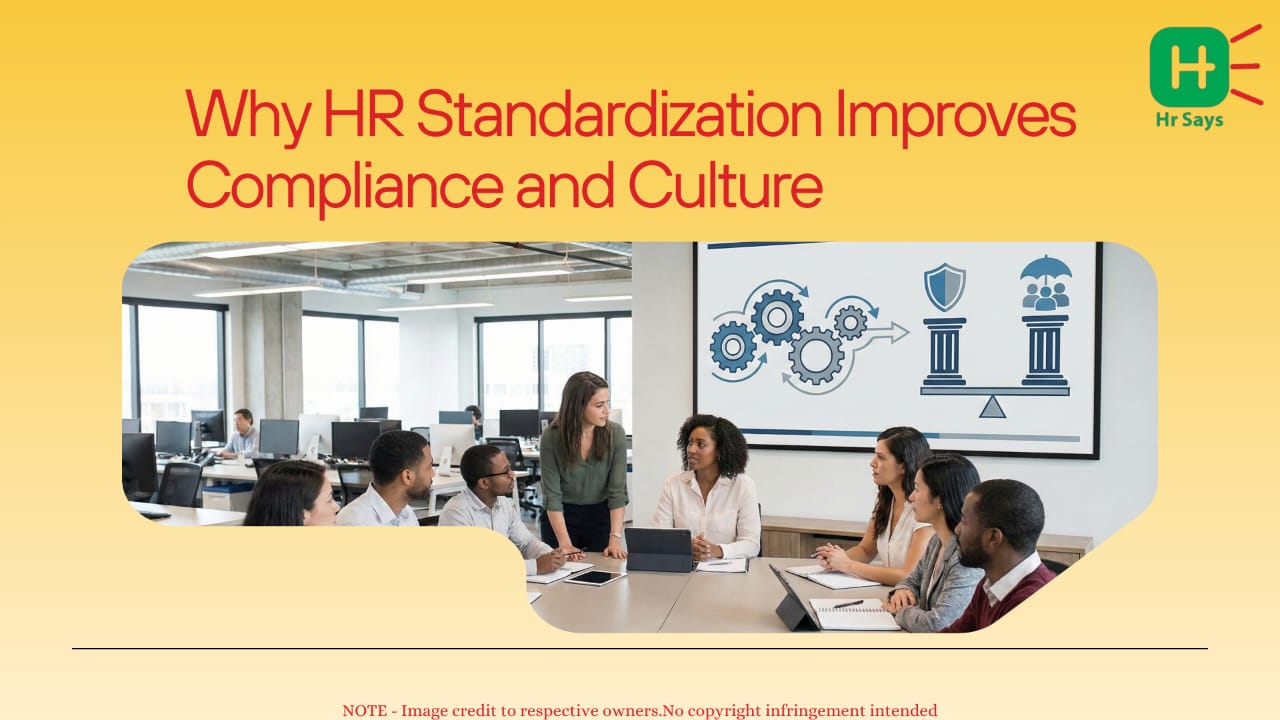
 HR standardization enhances compliance and workplace culture by aligning policies, ensuring
fairness, and promoting accountability. It builds transparency, reduces risks, and fosters an
inclusive environment where employees feel valued and secure.
HR standardization enhances compliance and workplace culture by aligning policies, ensuring
fairness, and promoting accountability. It builds transparency, reduces risks, and fosters an
inclusive environment where employees feel valued and secure.




How can this be when all the HR processes have different languages? This often leads to confusion, delays, and even the threat of compliance violations. The cohesive factor between people, processes, and policies is HR standardization. It ensures that an organization operates efficiently, fairly, and with shared values at its core.
The Core of HR Standardization
HR standardization goes beyond regulations or checklists. It focuses on establishing a consistent structure for hiring, onboarding, training, and managing employees. With a unified approach to policies, employees know what to expect, and leaders make decisions with confidence.
Consistency creates predictability — and predictability builds trust. Standardized HR processes also make it easier for businesses to stay compliant with labor laws and ethical policies. It’s less about control and more about clarity.
Key Areas of Standardization
-
Recruitment and onboarding: Consistent screening and training reduce bias and set equal expectations.
-
Performance management: Transparent criteria promote fairness and accountability.
-
Policy implementation: Clear, uniform rules minimize confusion and ensure everyone follows the same standards.
How Standardization Strengthens Compliance
Compliance often becomes a struggle when departments interpret policies differently. Standardized HR practices eliminate ambiguity and reduce the risk of errors.
Every form, approval, and document follows the same process, making audits seamless When compliance audits occur, a structured HR framework ensures records are accurate and up to date.
Consistent training on workplace ethics and labor regulations also helps employees understand their rights and responsibilities. This not only prevents violations but also protects the company from legal disputes.
Benefits for Compliance
-
Reduced legal risks and penalties
-
Easier documentation and audit tracking
-
Enhanced transparency in HR records
-
Clearer employee communication
Creating a Cohesive Workplace Culture
A standardized HR system promotes a shared sense of belonging. When employees experience fairness and uniform treatment, engagement rises naturally. Consistency prevents favoritism and builds credibility in leadership decisions.
It fosters a culture where expectations are clear, and feedback is valued. Over time, employees start to trust HR not as a rule enforcer but as a growth partner. This trust strengthens collaboration and loyalty across the organization.
How It Impacts Culture
-
Equality: Everyone receives the same opportunities and treatment.
-
Clarity: Policies are easy to understand and accessible.
-
Accountability: Defined responsibilities make people more responsible for their actions.
-
Engagement: A fair environment encourages motivation and retention.
Balancing Flexibility and Standardization
Too much rigidity can stifle creativity. Smart HR leaders know how to balance both. Standardization should set boundaries, not barriers.
Policies must be structured yet adaptable. For example, while leave policies remain fixed, managers can allow flexibility in implementation when circumstances require. This balance keeps employees satisfied while maintaining compliance.
It’s not about removing individuality — it’s about guiding it within a framework that ensures fairness and legal safety.
Conclusion
HR standardization is the quiet force behind a transparent and compliant workplace. It aligns processes, nurtures trust, and builds a culture where every voice matters. By combining consistency with adaptability, organizations strengthen both their compliance systems and their people.