 Tuesday, September 22, 2026
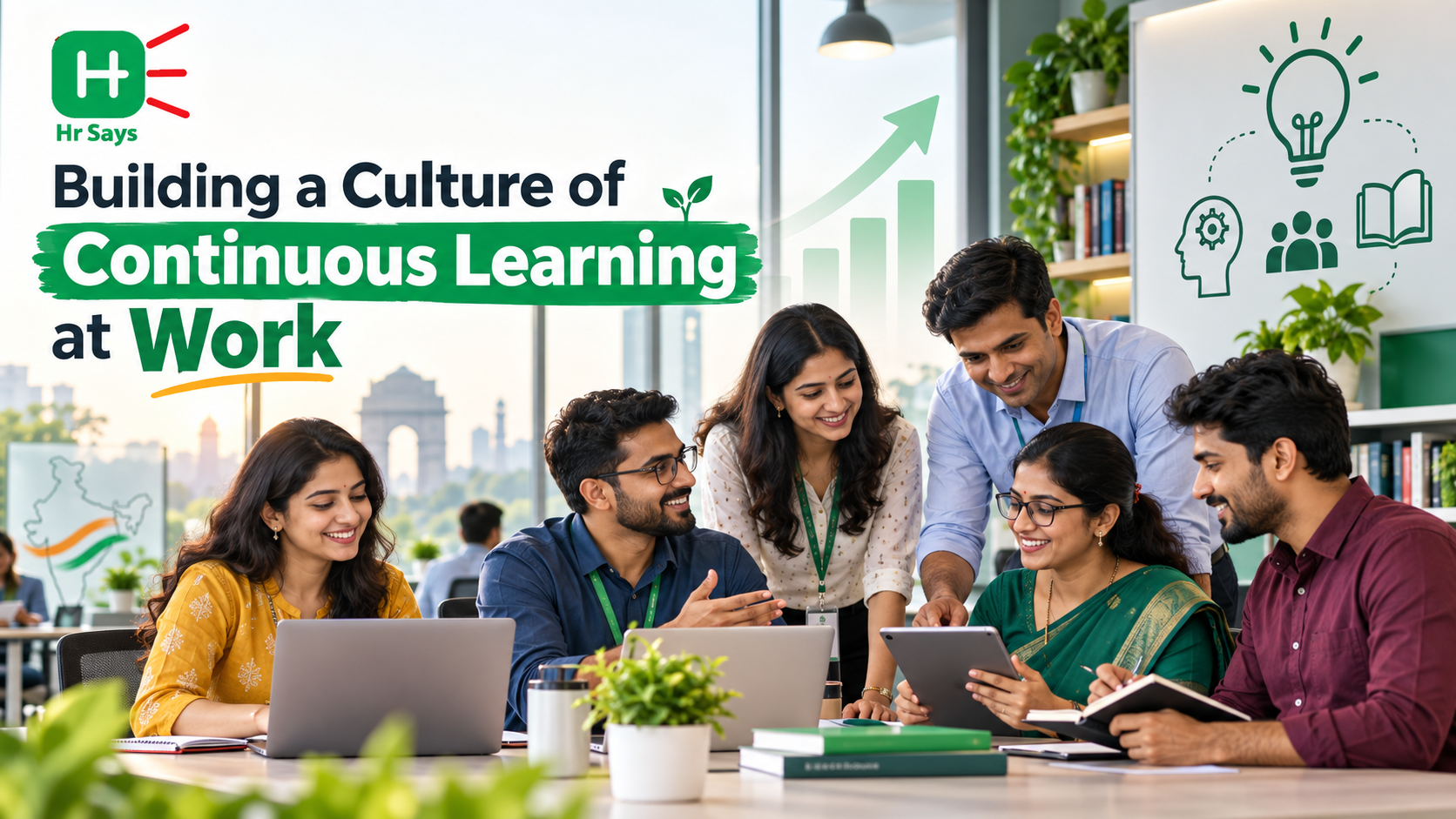
 A culture of continuous learning helps Indian organizations stay agile, retain talent, close skill gaps, and build workplaces where employees and businesses grow together sustainably.





Introduction
In a business environment that changes faster than most organizations can keep up with, the ability to learn continuously is no longer a nice-to-have. It is a competitive necessity. For Indian companies navigating rapid digital transformation, evolving workforce expectations, and intense talent competition, embedding learning into the daily rhythm of work has become one of the most critical mandates for HR leaders and business heads alike.
A culture of continuous learning is not simply about enrolling employees in training programs once a year. It is about creating an environment where curiosity is encouraged, skill development is ongoing, knowledge sharing is rewarded, and growth is treated as a shared organizational value. When this culture takes root, organizations become more adaptable, employees become more engaged, and the entire workplace transforms into a living, evolving engine of capability.
India's workforce is young, ambitious, and increasingly aware of the value of skill development. According to a LinkedIn Workplace Learning Report, 94 percent of employees say they would stay longer at a company that invested in their career development. In a country where talent attrition remains a persistent challenge across industries, this statistic carries significant weight for HR professionals and business leaders.
Understanding Continuous Learning and Why It Matters
Continuous learning refers to the ongoing, voluntary, and self-motivated pursuit of knowledge and skills for both personal and professional development. In an organizational context, it means creating structures, systems, and a mindset that allows employees to keep learning as part of their regular work, rather than treating learning as a separate, occasional event.
The concept draws from the idea of the "learning organization," a term popularized by Peter Senge in his foundational work on organizational development. A learning organization is one where people continually expand their capacity to create the results they truly desire, where new and expansive patterns of thinking are nurtured, and where people are continually learning how to learn together.
For Indian organizations, the importance of this concept is amplified by several factors. The country's rapidly growing digital economy demands new technical skills at a pace that traditional education systems cannot match. Sectors such as information technology, healthcare, financial services, manufacturing, and logistics are all undergoing significant transformation. Without a strong internal learning culture, organizations risk building a skill gap that slows growth, increases recruitment costs, and reduces organizational agility.
Key Pillars of a Continuous Learning Culture
Building a genuine culture of continuous learning requires more than launching a learning management system or sending employees to workshops. It demands deliberate design across multiple organizational dimensions.
Leadership commitment is the most important pillar. When senior leaders visibly prioritize their own learning, speak openly about what they are reading or exploring, and invest organizational resources in learning infrastructure, it signals to the entire workforce that learning is a genuine priority. In contrast, when learning is delegated only to the HR department and treated as a checkbox exercise, it rarely takes root at a cultural level.
Psychological safety plays an equally important role. Employees must feel safe to experiment, make mistakes, and ask questions without fear of judgment or professional consequences. In many Indian workplaces, hierarchical structures can inadvertently suppress this kind of openness. HR leaders need to actively work to dismantle those barriers by normalizing learning from failure and celebrating curiosity alongside achievement.
Structured learning pathways give employees clarity about how their development connects to their career growth. This includes:
- Role-based learning tracks that align skill development with job responsibilities
- Career growth maps that show employees what capabilities they need for the next level
- Access to blended learning formats including online courses, mentoring, peer learning, and on-the-job projects
- Regular learning conversations between managers and their teams
Recognition and reward systems must also reflect the value the organization places on learning. When employees who actively upskill or share knowledge are recognized, it reinforces learning as a behavior worth investing in.
Strategies Indian Organizations Can Implement
Several practical strategies have proven effective for organizations looking to build a sustainable learning culture, particularly within the Indian workplace context.
Learning in the flow of work is one of the most powerful approaches available to HR teams. Rather than pulling employees away from their responsibilities for extended training programs, this strategy embeds learning into daily tasks. Microlearning modules, short video lessons, knowledge bases, and peer learning platforms allow employees to acquire skills and information at the moment they need it. Platforms such as LinkedIn Learning, Coursera for Business, and homegrown Indian platforms like UpGrad for Business and Disprz have made this approach increasingly accessible.
Mentorship and reverse mentorship programs are particularly well-suited to India's multigenerational workforce. Traditional mentoring connects senior professionals with junior employees to transfer institutional knowledge and experience. Reverse mentoring flips this dynamic, allowing younger, digitally native employees to coach senior leaders on technology, social media, and evolving workplace expectations. Both models reinforce learning across levels and create stronger cross-generational connections within the organization.
Learning circles and communities of practice represent another highly effective strategy. These are informal groups of employees who come together around a shared area of interest or professional domain to learn from one another. In large Indian IT and consulting firms, communities of practice around areas such as cloud computing, data analytics, agile methodologies, and cybersecurity have become important engines of informal knowledge transfer.
Manager-led learning conversations are a simple but often underutilized tool. When managers make learning a regular part of their one-on-one meetings, by asking what an employee has learned recently, what skills they want to develop, or what challenges they would like support in navigating, it embeds learning into the manager-employee relationship in a meaningful and sustained way.
The Role of Technology in Enabling Workplace Learning
Technology has fundamentally changed what is possible in workplace learning. Learning Management Systems, or LMS platforms, allow organizations to create, deliver, track, and measure employee learning at scale. For larger Indian organizations with distributed workforces across multiple cities and regions, an LMS is often essential infrastructure.
Artificial intelligence is beginning to play a larger role in personalizing learning at work. AI-driven learning platforms can analyze an employee's current skills, role requirements, and career goals to recommend tailored learning content. This moves learning from a one-size-fits-all model toward something far more relevant and effective for the individual.
Mobile learning has particular relevance in India, where smartphone penetration is high and employees in many sectors, including retail, manufacturing, and logistics, may not have regular access to desktop computers. Mobile-first learning platforms make skill development accessible to frontline workers and employees in Tier 2 and Tier 3 cities, democratizing workplace learning in meaningful ways.
Gamification is another technology-enabled tool that has shown strong results in increasing learner engagement. By incorporating elements such as badges, leaderboards, points, and learning streaks, organizations can make skill development more engaging and motivating, particularly for younger employees.
Measuring the Impact of a Learning Culture
No organizational initiative is complete without a mechanism for measurement. HR leaders need to track both the inputs and outcomes of their learning culture efforts to demonstrate value and refine their approach over time.
Common metrics for measuring learning culture include:
- Learning completion rates and time spent on learning per employee
- Internal mobility and promotion rates, which reflect skill growth within the organization
- Employee engagement scores, particularly questions related to development and growth
- Attrition rates among employees who actively participate in learning programs versus those who do not
- Business performance outcomes linked to specific upskilling initiatives, such as improved sales performance after a sales training program or faster onboarding times after process learning interventions
In India, the NASSCOM Sector Skills Council and the National Skill Development Corporation have published frameworks that organizations can use to benchmark their learning investments against industry standards, which can be a useful reference point for HR teams.
Common Challenges and How to Overcome Them
Despite the clear benefits, many Indian organizations struggle to move from intention to execution when it comes to building a learning culture. Understanding the common obstacles is the first step toward addressing them.
Time constraints are often cited as the biggest barrier. Employees and managers frequently feel that learning competes with productivity. The solution lies in shifting the narrative from learning as time taken away from work to learning as a core part of the work itself. When managers actively protect learning time and when leaders model the behavior by dedicating time to their own development, this mindset shift becomes possible.
Budget limitations affect many mid-sized and small Indian organizations. However, a learning culture does not require expensive platforms or elaborate programs. Peer learning sessions, internal knowledge sharing workshops, curated reading lists, and cross-functional project rotations are all low-cost strategies that can have significant impact.
Measuring return on investment for learning continues to challenge HR teams. This is where connecting learning outcomes to specific business metrics, such as customer satisfaction, product quality, or employee retention, becomes important. Building these connections into the design of learning programs from the start makes it much easier to demonstrate value over time.
The Business Case for Continuous Learning in India
India's economic ambitions, including the vision of becoming a five trillion dollar economy, rest heavily on the quality and capability of its workforce. For organizations operating in this environment, investing in a learning culture is not simply an HR initiative. It is a business strategy.
Research consistently shows that organizations with strong learning cultures outperform their peers on key business metrics. They innovate faster, adapt more readily to market shifts, and retain talent more effectively. In sectors such as information technology, pharmaceuticals, and advanced manufacturing, where India has significant global ambitions, workforce capability is the single most important differentiator.
HRSays, as a platform focused on conversations that shape better workplaces, recognizes that building a learning culture is among the most impactful investments a people-focused organization can make. The transformation begins when HR leaders stop treating learning as a department function and start treating it as an organizational philosophy.
Conclusion
A culture of continuous learning is built one deliberate decision at a time. It requires leadership that models curiosity, systems that make learning accessible, managers who make growth a regular conversation, and employees who feel safe enough to grow without fear. For Indian organizations, the opportunity is significant. The workforce is ready to learn. The question is whether organizations are ready to build the environment that makes it possible.
HR leaders who take this seriously will find that learning culture is not just about developing skills. It is about developing people. And organizations that develop their people well will always be better positioned to face whatever comes next.
Frequently Asked Questions
Q1: What is a culture of continuous learning in the workplace?
A culture of continuous learning is an organizational environment where employees are consistently encouraged and supported to develop new skills, expand their knowledge, and share what they learn with others. It goes beyond formal training programs to embed learning into everyday work, team conversations, and career development practices.
Q2: Why is building a learning culture important for Indian organizations?
Indian organizations operate in a fast-changing business environment driven by digital transformation, global competition, and evolving workforce expectations. A learning culture helps organizations stay agile, retain talent, reduce skill gaps, and build the internal capability needed to grow sustainably in this environment.
Q3: How can HR professionals start building a continuous learning culture?
HR professionals can begin by securing visible leadership commitment to learning, creating structured learning pathways tied to career growth, introducing mentoring and peer learning programs, and measuring learning outcomes against business results. Starting with small, high-impact initiatives and scaling from there is often more effective than attempting large-scale transformation at once.
Q4: What role does technology play in enabling continuous learning?
Technology enables learning at scale, personalization, and flexibility. Learning management systems, AI-powered learning platforms, mobile learning apps, and gamified tools all make it easier for organizations to deliver relevant learning content to employees across roles, locations, and experience levels, including frontline workers in Tier 2 and Tier 3 cities in India.
Q5: How can organizations measure the success of a learning culture initiative?
Organizations can measure success through metrics such as employee engagement scores, internal promotion and mobility rates, learning completion data, attrition rates among active learners, and direct links between specific upskilling programs and business performance outcomes such as productivity, customer satisfaction, or revenue growth.
Resources
- LinkedIn Workforce Learning Report: Annual research on workplace learning trends, employee expectations for development, and the business impact of learning cultures globally.
- National Skill Development Corporation (NSDC): Government of India body offering frameworks, funding support, and skill development resources for organizations and workforce development initiatives.
- NASSCOM Sector Skills Council: Industry body providing benchmark data, skill frameworks, and best practices for learning and capability development in India's technology and business services sectors.
- Peter Senge, The Fifth Discipline: Foundational work on learning organizations that remains one of the most referenced frameworks for understanding how organizations can build cultures of continuous learning.
- Josh Bersin Academy: Global HR research and learning platform offering practical insights, benchmarking data, and best practices on corporate learning culture, talent development, and HR strategy.
Interlinking Keywords
continuous learning culture, workplace learning strategy, employee skill development, HR learning and development, learning management system India, upskilling employees, talent development programs, employee engagement and learning, organizational learning, workplace growth culture, learning organization strategy, HR best practices India
Last Reviewed By
Dr. Manthan Tripathi and Hr Says Advisory Panel on 19 September, 2026
Disclaimer
The information presented in this article is intended for general informational and educational purposes only. It reflects broad industry practices, research findings, and professional perspectives related to workplace learning and human resource management. The strategies, frameworks, and recommendations discussed here may not apply universally to every organization, industry, or workforce context. Organizations are advised to assess their specific business needs, workforce demographics, and operational realities before implementing any learning and development initiative. HRSays does not take responsibility for outcomes resulting from the direct application of any strategy or approach mentioned in this article without appropriate professional guidance.