 Saturday, October 24, 2026
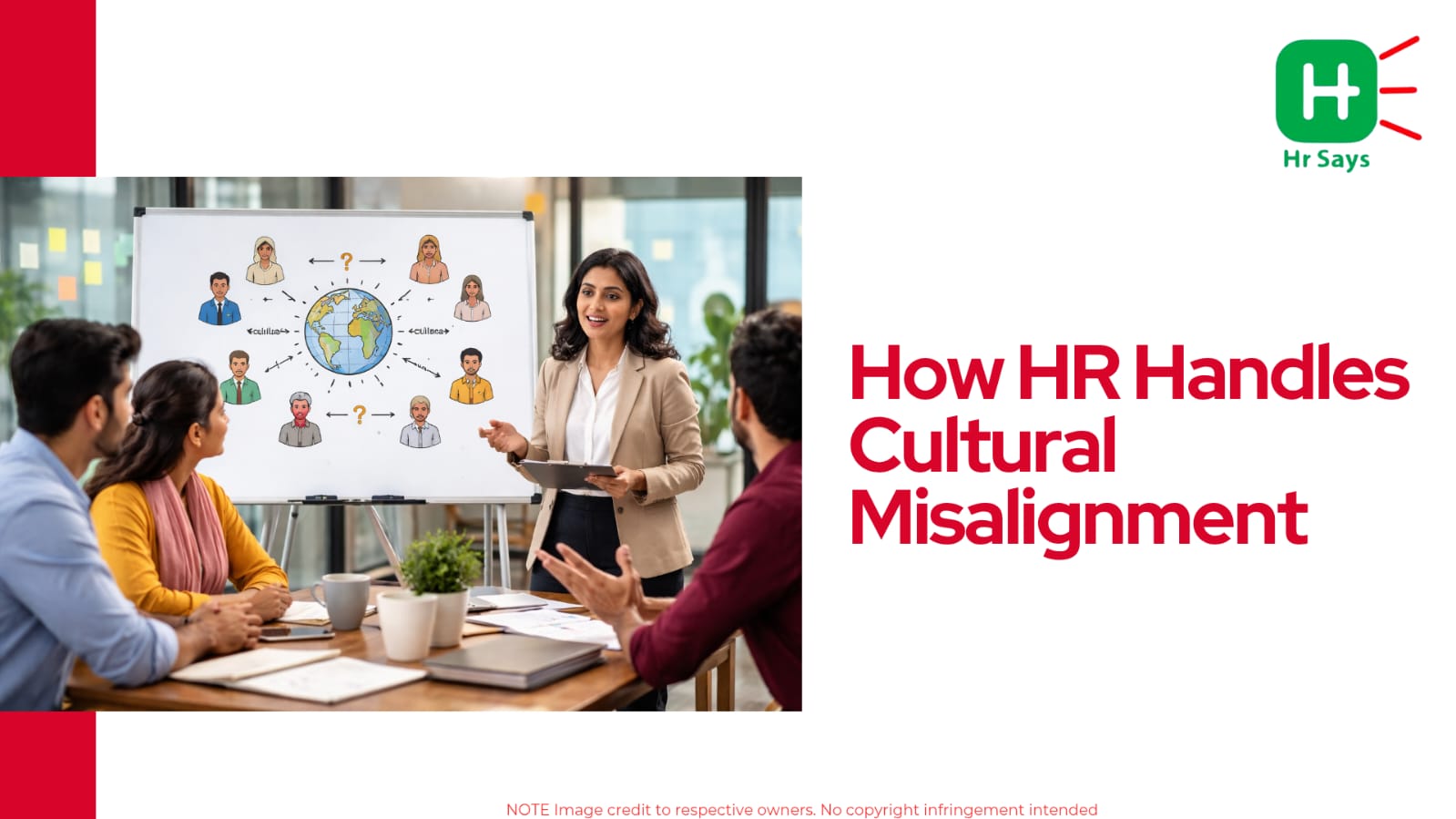
 Cultural misalignment affects engagement, trust, and retention. This blog explains how HR
identifies early signals, addresses root causes, and uses structured people practices to realign
culture while balancing organizational needs and employee dignity.
Cultural misalignment affects engagement, trust, and retention. This blog explains how HR
identifies early signals, addresses root causes, and uses structured people practices to realign
culture while balancing organizational needs and employee dignity.




Cultural misfit is seldom accompanied by a lot of bang. It is often experienced in minor instances, silent opposition, and the increasing uneasiness in the workplace. In the long run, it influences productivity, undermines trust, and an increase in retention is silently growing. It is in this aspect that HR should come in with clarity and care.
Understanding Cultural Misalignment at Work
Misalignment in culture is generally noticed when employees behave, value or expect things in a different manner that does not reflect the my-core culture of the organization. This could be as a result of a hasty recruitment process, change of leadership, mergers, move to remote work, or lack of value communication.
Misalignment is not directly called in various workplaces. It is felt in disengagement via low engagement, internal strife, silent disengagement, or repetition of policy conflagration. The initial function that has the signs observed and recorded is usually the HR.
How HR Identifies Early Warning Signs
Cultural issues are rarely diagnosed through one conversation. Patterns are instead tracked over time through multiple channels.
Common signals noticed by HR
● Employee feedback shows confusion about values or expectations
● Managers report resistance to processes or collaboration
● Engagement surveys reflect declining trust or belonging
● Exit interviews reveal recurring cultural concerns
These signals are usually reviewed collectively rather than in isolation. A cultural issue is often confirmed only when repetition is observed.
HR’s Role in Addressing the Root Cause
Once misalignment is acknowledged, HR work shifts from observation to structured intervention. The focus is kept on systems, communication, and alignment rather than blame.
Culture is clarified before it is corrected
HR often revisits how organizational values are being communicated and practiced. In many cases, it is found that culture exists in documents but not in daily behavior. When this gap is identified, alignment efforts are redirected.
Leadership alignment is assessed
Cultural correction is rarely effective if leadership behavior contradicts stated values. HR is often involved in coaching leaders, refining expectations, and aligning performance metrics with cultural behaviors.
Employee conversations are facilitated
Open dialogue is encouraged through structured check-ins, listening sessions, or mediated discussions. These conversations are usually framed around shared expectations rather than individual fault.
Tools HR Uses to Realign Culture
HR does not rely on one solution. A combination of people practices is typically applied.
● Revised onboarding to reinforce cultural expectations
● Manager training focused on inclusive leadership and communication
● Performance frameworks linked to behavioral values
● Clear policies that reflect culture, not just compliance
These actions are usually implemented gradually, allowing space for adjustment and feedback.
When Misalignment Persists
Not all misalignment can be resolved. In some cases, expectations remain incompatible despite support and clarity. When this happens, role changes or respectful exits may be considered. Such decisions are generally approached carefully, with fairness and transparency maintained.
HR is often tasked with balancing organizational health with individual dignity. That balance is rarely simple, but it remains necessary.
Conclusion
Cultural misalignment is not a failure of people alone. It is often a signal that systems, communication, or leadership alignment need attention. When handled thoughtfully by HR, it can become an opportunity to rebuild trust and clarity