 Saturday, October 24, 2026
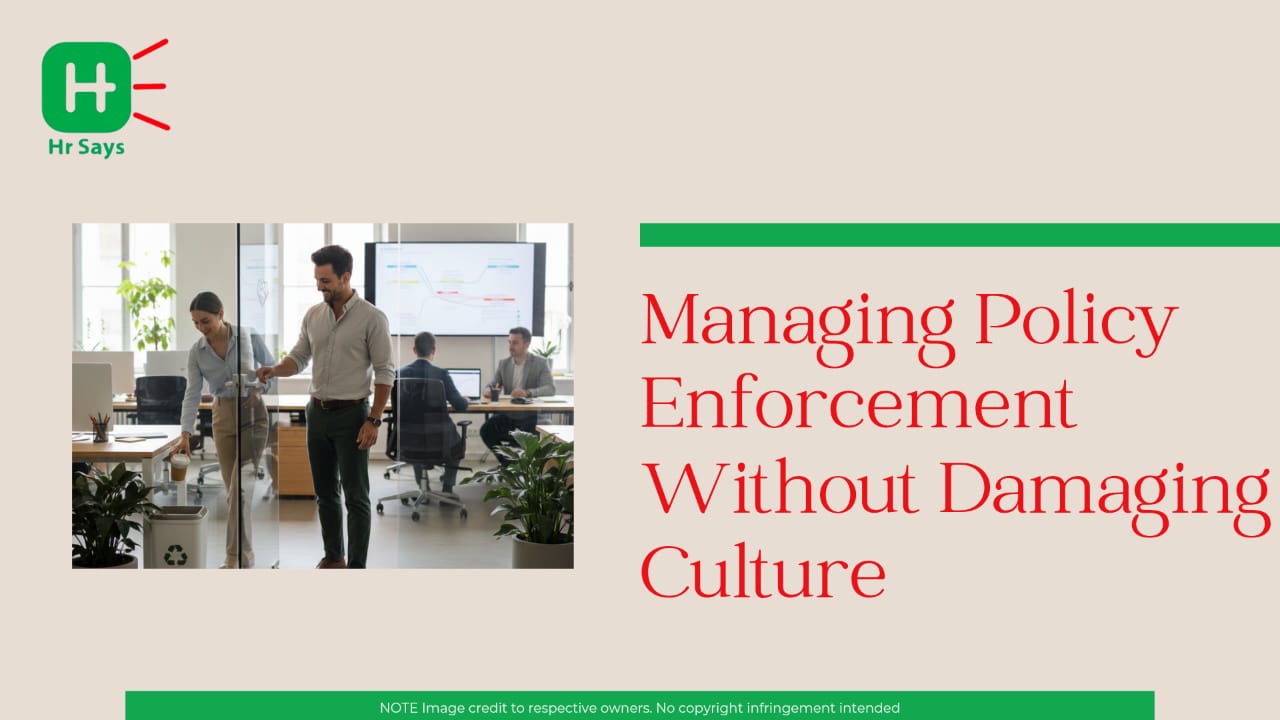
 Policy enforcement shapes workplace culture more than policies themselves. This blog explores how thoughtful communication, consistent application, and empathetic leadership can maintain accountability without eroding trust or engagement.




There are policies that protect individuals, values, as well as the organisation itself. But it can happen that in the process of carelessly applied rules, one can lose something fragile. Culture. It is the quiet trust, mutual understanding and belonging that can be affected the most, way before the performance numbers are considered.
Why Policy Enforcement Often Feels Personal
There is scarcely a rule that can be interpreted as neutral. They are realized in terms of tone, timing and intent. Enforcement may be sudden and strict, thus it tends to look like control and not care. Mistrust is something that can be destroyed in cases where individuals are monitored rather than assisted.
On healthy workplaces, policies should give directions but not regulations. That difference is significant than one would think.
The Hidden Cost of Over-Enforcement
Strict enforcement may create short-term compliance, but long-term damage is often left behind. Engagement drops quietly. Conversations become cautious. Creativity is reduced because safety feels conditional. A strong workplace culture is not broken in one moment. It is slowly eroded when employees feel that rules matter more than people.
Framing Policies as Shared Agreements
Policies are better received when they are framed as collective safeguards rather than top-down commands. Language plays a significant role here. When intent is clearly explained, resistance is softened. Instead of being positioned as restrictions, policies can be presented as shared commitments that protect fairness, wellbeing, and consistency.
What Helps Policies Feel Fair
● Clear reasoning behind why a policy exists
● Consistent application across roles and levels
● Room for context and human judgement
● Open communication before enforcement begins
When these elements are present, compliance feels less forced and more natural.
Managers as Culture Carriers
Managers are often seen as the face of policy enforcement. Their approach shapes how rules are perceived. When empathy is shown, enforcement feels corrective, not punitive. It is often forgotten that tone is remembered longer than the rule itself. A calm conversation can preserve dignity even when accountability is required.
Balancing Accountability and Trust
● Expectations should be stated clearly, without threat
● Feedback should focus on behaviour, not character
● Corrections should be private, not performative
● Listening should be prioritised before conclusions are drawn
Trust is rarely lost because of a policy. It is lost when people feel unheard while that policy is enforced.
Creating Space for Feedback and Flexibility
Modern workplaces are changing rapidly. Policies that remain rigid often fall out of step with reality. When feedback loops are encouraged, policies stay relevant and culture stays intact. Flexibility does not weaken standards. It strengthens credibility. Employees are more likely to respect rules when they see them evolve thoughtfully.
Conclusion
Policy enforcement does not have to be cold or damaging. When approached with clarity, consistency, and empathy, rules can coexist with trust. Culture is protected not by avoiding enforcement, but by handling it with care.