 Sunday, October 04, 2026
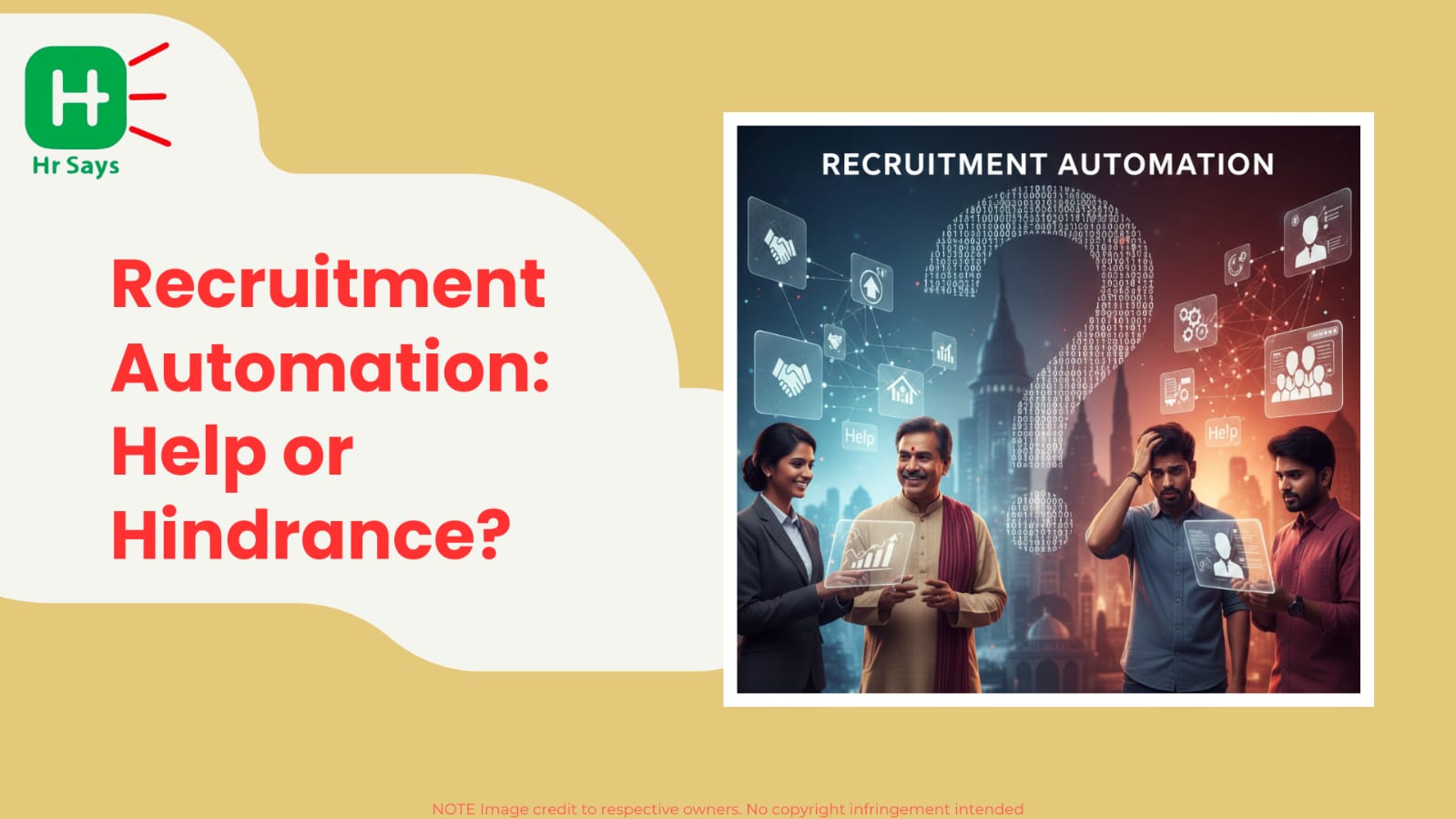
 Recruitment automation improves efficiency, reduces administrative effort, and supports data-driven hiring. However, concerns around bias, personalization, and transparency remain. A balanced, human-assisted approach ensures technology enhances recruitment without compromising fairness or candidate experience.




Recruitment in the modern world is not about a stack of resumes on desks anymore. It is being influenced by applicant tracking system, AI-driven recruitment machine and data-driven hiring processes. Even as efficiency is being touted, issues regarding justice and humanity are also being brought in questions. It is the question silently lingering. Does automation really make the recruiting process more difficult?
The Rise of Recruitment Automation in Modern Hiring
In all sectors, automation in recruitment has been fast being implemented. Applicant Tracking Systems are now filtering large quantities of applications. The AI resume screening programs scan the resumes. Scheduling Interview schedules are orchestrated through computerized workflows. Time-to-hire is being reduced.
The trends of remote work and international talent pools have fostered the change of digital hiring. Recruiters no longer have to be limited by geography. Candidate databases are accessed and narrowed down on based on keywords, skills and level of experience with the touch of a few clicks.
The following tasks are commonly automated:
● Resume parsing and shortlisting
● Chatbot-led candidate engagement
● Automated interview scheduling
● Skills assessments and pre-employment testing
● Recruitment analytics and reporting
Efficiency is clearly enhanced. Administrative burden is lowered. Recruiters are allowed to focus on strategic workforce planning and employer branding. However, something subtle is also shifting.
Human judgment is being partially replaced by algorithms. Decisions are being influenced by programmed logic. The process becomes faster, but it may also become distant.
How Automation Is Transforming the Candidate Experience
From the candidate’s perspective, recruitment automation feels both convenient and impersonal. Applications can be submitted in minutes. Status updates are often automated. Interview slots are instantly visible. Communication is streamlined.
Yet, many candidates report frustration. Resumes optimized for keyword matching often receive more attention than genuine potential. A candidate may be rejected within seconds if specific phrases are missing. The system evaluates patterns, not people.
Artificial Intelligence in HR is designed to eliminate bias. Structured data is analyzed instead of subjective impressions. Diversity hiring goals are supported through standardized screening. Still, algorithmic bias cannot be entirely ruled out. If training data carries historical bias, the system may replicate it.
There is also the concern of transparency. Candidates rarely understand why they were screened out. The decision feels final. The explanation is absent.
Recruitment technology should ideally balance:
● Speed with fairness
● Automation with personalization
● Data insights with human empathy
When technology is used as support rather than replacement, the experience tends to improve.
Help or Hindrance? Finding the Right Balance
Recruitment automation is neither entirely helpful nor purely harmful. It is a tool. Its impact depends on implementation.
When over-relied upon, automation can weaken employer branding. A robotic hiring journey may discourage top talent. When thoughtfully integrated, it can strengthen hiring efficiency and data-driven decision making.
Organizations are now adopting hybrid hiring models. Automation handles repetitive tasks. Final decisions are guided by recruiters and hiring managers. Human conversations are preserved at critical stages.
It should be remembered that talent acquisition is ultimately about people. Skills can be filtered by software. Cultural alignment and potential growth are better assessed through dialogue.
Automation simplifies. Humans interpret.
The future of recruitment may not be fully automated. It is likely to be intelligently assisted.