 Saturday, October 24, 2026
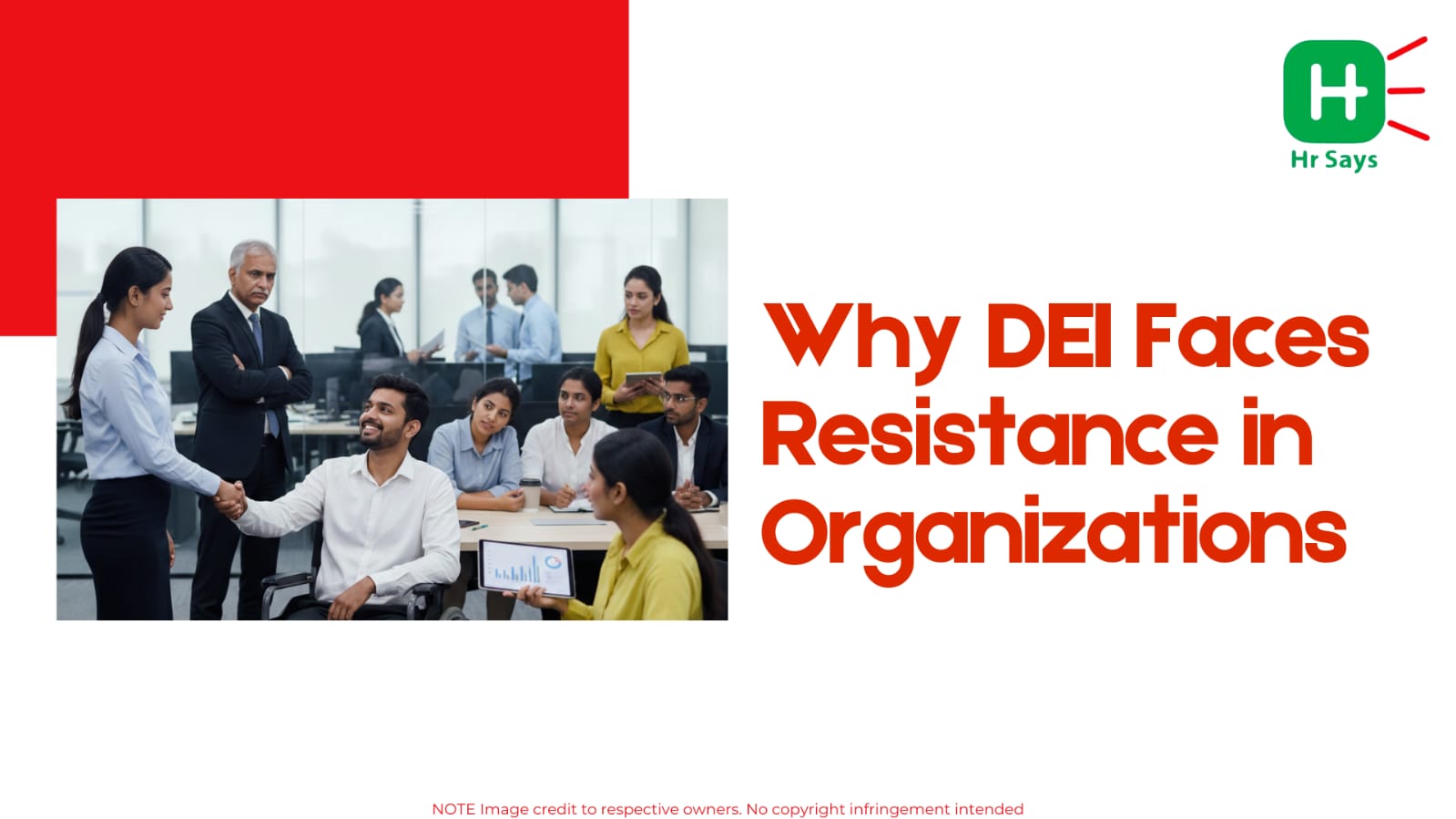
 DEI faces resistance due to fear of change, unclear communication, leadership gaps, and performance pressures. When goals are misunderstood or poorly implemented, skepticism increases. Sustainable inclusion requires transparency, accountability, and strategic alignment with business outcomes.




Discussions regarding diversity, equity, and inclusion are transforming workplaces into a new form. Statements are published. But even today opposition still spots out in the shadowy gatherings and the low-level actions. The efforts on DEI usually get celebrated on the one hand and questioned on the other. The strain is worth to be cognized.
The Fear of Change
Culture in an organization is not easily changed. Diversity initiatives challenge the established norms when they are brought in place. The hierarchies that have existed can be disrupted.
It is often perceived that:
● Opportunities will be redistributed
● Promotion criteria will shift
● Long standing practices will be questioned
Change management principles are sometimes overlooked during DEI implementation. Without clarity, employees may assume loss rather than growth. Psychological safety is reduced. Resistance grows quietly.
Misunderstanding of DEI Goals
DEI is frequently misunderstood as favoritism rather than fairness. The language of equity can be interpreted as unequal treatment.
In many corporate environments, diversity hiring is framed as a compliance requirement instead of a strategic advantage. As a result, inclusion programs are viewed as symbolic rather than performance driven.
When communication lacks transparency, doubts are formed. Employees may ask:
● Is meritocracy being replaced?
● Are standards being lowered?
● Is this about optics rather than outcomes?
If such questions are not addressed openly, skepticism becomes embedded.
Leadership Gaps and Inconsistent Messaging
DEI strategies are often announced from the top, yet modeled inconsistently. Leadership commitment may be expressed in public forums, but daily decisions may not reflect inclusive leadership practices.
Middle managers are frequently left untrained. Expectations are communicated vaguely. Accountability metrics are not clearly defined.
In such situations, DEI becomes:
● A side project
● An HR responsibility only
● A short term campaign
Without alignment between leadership behavior and organizational values, trust weakens. Employees observe more than they listen.
Cultural and Generational Divides
Workforces today include multiple generations with varied worldviews. Conversations about unconscious bias, gender identity, or workplace inclusion may feel unfamiliar to some employees.
Digital transformation and remote work have already altered work dynamics. When DEI training is layered on top of rapid change, fatigue may be experienced.
For some, language evolves faster than comfort levels. Fear of saying the wrong thing leads to silence. Silence is then mistaken for resistance. In reality, uncertainty is often present.
Performance Pressure and Business Priorities
Organizations operate under targets and shareholder expectations. When economic uncertainty rises, diversity programs are sometimes seen as secondary.
If DEI outcomes are not linked clearly to:
● Talent retention
● Employee engagement
● Innovation strategy
● Employer branding
They are categorized as cost centers rather than growth drivers.
In high performance cultures, initiatives not tied directly to measurable KPIs are questioned. The business case must therefore be communicated consistently.
Emotional Discomfort and Identity Threat
DEI discussions require reflection on privilege, bias, and systemic inequality. Such conversations can feel personal. Defensive reactions are natural.
When individuals feel labeled or blamed, resistance is triggered. It is rarely about the policy itself. It is often about identity protection.
If dialogue spaces are not facilitated carefully, learning shuts down. Inclusion cannot be enforced. It must be cultivated.
Conclusion
Resistance to DEI is rarely simple opposition. It is shaped by fear, misunderstanding, leadership inconsistency, and business pressures. When communication is transparent and accountability is shared, alignment improves. Sustainable workplace inclusion is built gradually. It is earned through trust, not mandated through policy.