Sunday, October 04, 2026
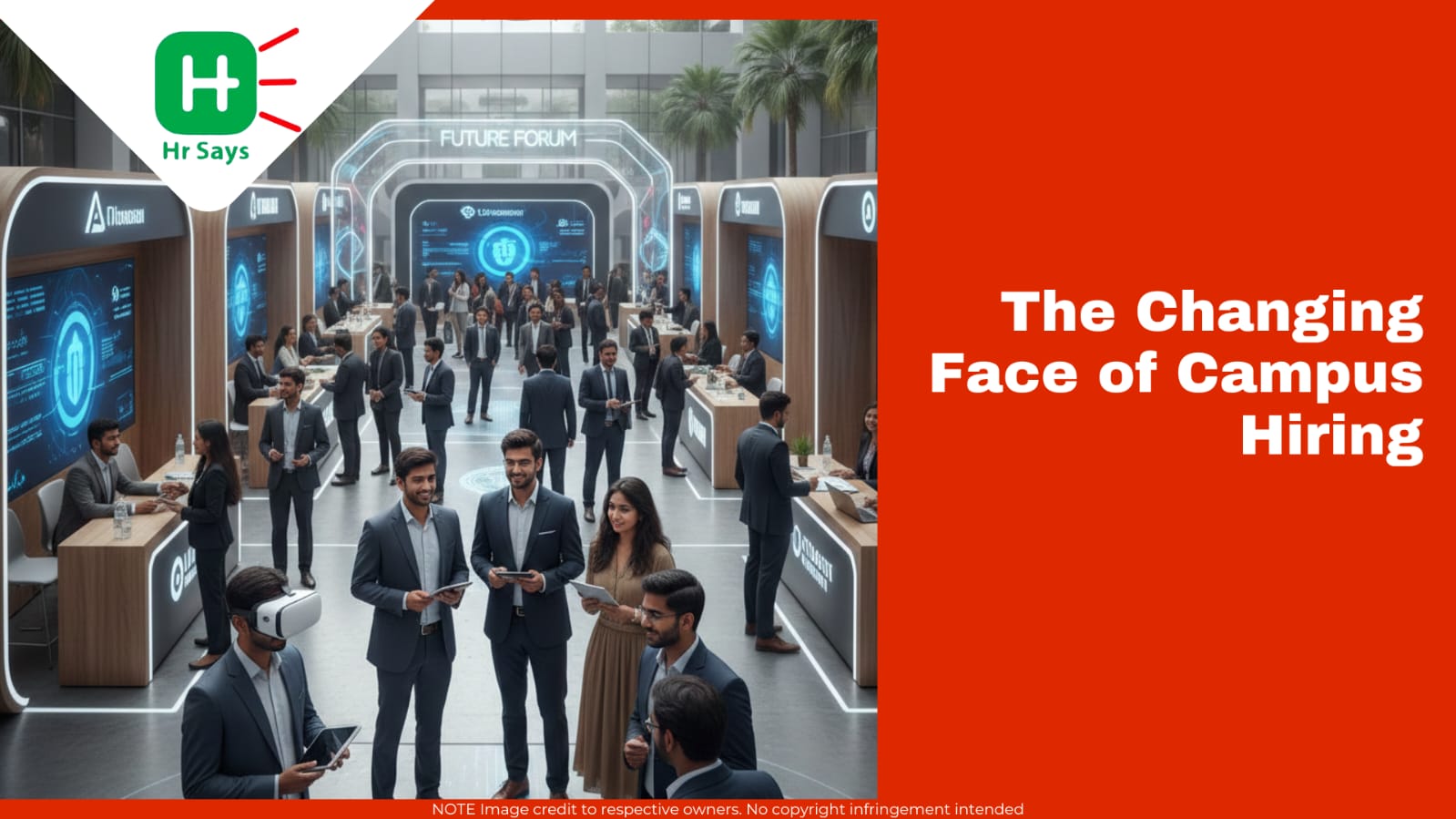
 Campus hiring has transitioned from traditional placement drives to digital, skill-focused recruitment models. Technology, analytics, and hybrid processes are reshaping employer strategies. Students are expected to demonstrate practical skills, adaptability, and digital readiness in a competitive hiring landscape.




Campus hiring has not got its appearance anymore. Placement drives, which were previously restricted to lecture halls are being done online. Software does the screening of resumes. Interviews will be arranged at time zones. The change has been slow but very radical to students as well as recruiters.
From Placement Cells To Digital Talent Ecosence
Physical presence has just recently been the foundation of campus recruitment. Recruiters would go to institutions, carry aptitude tests on candidates and select short-listeds in a day. This was organized, foreseeable and frequently restricted to a small group of key organizations.
In the modern world, virtual recruitment agencies and artificial intelligence-based tools to hire employees have changed the system. The tests done online are done using distance proctoring. The interviews will be set up using video conferencing tools. Applicant tracking systems sieve candidate data and then the human evaluation starts.
Several shifts can be observed:
● Digital campus hiring has replaced traditional paper-based processes
● AI resume screening has reduced manual shortlisting
● Virtual interview platforms have widened geographical reach
● Skill-based hiring has started replacing degree-based filtering
It is no longer enough for students to rely solely on academic scores. Industry readiness, digital portfolios, and internship experience are now expected. Employers are seen prioritizing practical exposure over theoretical excellence.
Skills Over Scores And The Rise Of Hybrid Expectations
A noticeable change has been the shift from marks to measurable skills. Companies are now searching for job-ready graduates who can adapt quickly. Technical assessments, case simulations, and behavioral analytics are being used more frequently.
Hybrid hiring models are being adopted. While first-round screenings are conducted virtually, final discussions may still take place offline. Flexibility has become a defining feature of modern campus recruitment trends.
The following capabilities are increasingly valued:
● Data literacy and analytical thinking
● Communication in virtual work environments
● Familiarity with digital collaboration tools
● Adaptability in hybrid workplace settings
Students are also being encouraged to build LinkedIn profiles, participate in hackathons, and enroll in industry-certified courses. Employer branding on campuses is now managed through webinars, virtual engagement sessions, and social media campaigns.
At the same time, diversity hiring initiatives are being integrated into campus strategies. Structured evaluation frameworks are being developed to reduce bias. Inclusion metrics are being tracked more consciously.
Technology, Automation And Smarter Decisions
Recruitment analytics has started influencing decision making. Hiring data is being analyzed to predict candidate performance and retention. Automation is being used to schedule interviews, send assessments, and generate offer letters.
Campus recruitment software is helping organizations manage bulk hiring efficiently. Chatbots are being deployed to answer student queries in real time. Candidate experience is being measured as a key metric.
It is evident that speed and scalability are being prioritized. However, human judgment continues to remain important in final selection decisions.
Conclusion
Campus hiring has been reshaped by technology, shifting skill demands, and evolving workplace models. While processes have become faster and more data driven, expectations from students have also increased. Adaptability, continuous learning, and digital fluency are now seen as essential rather than optional.