Saturday, October 24, 2026
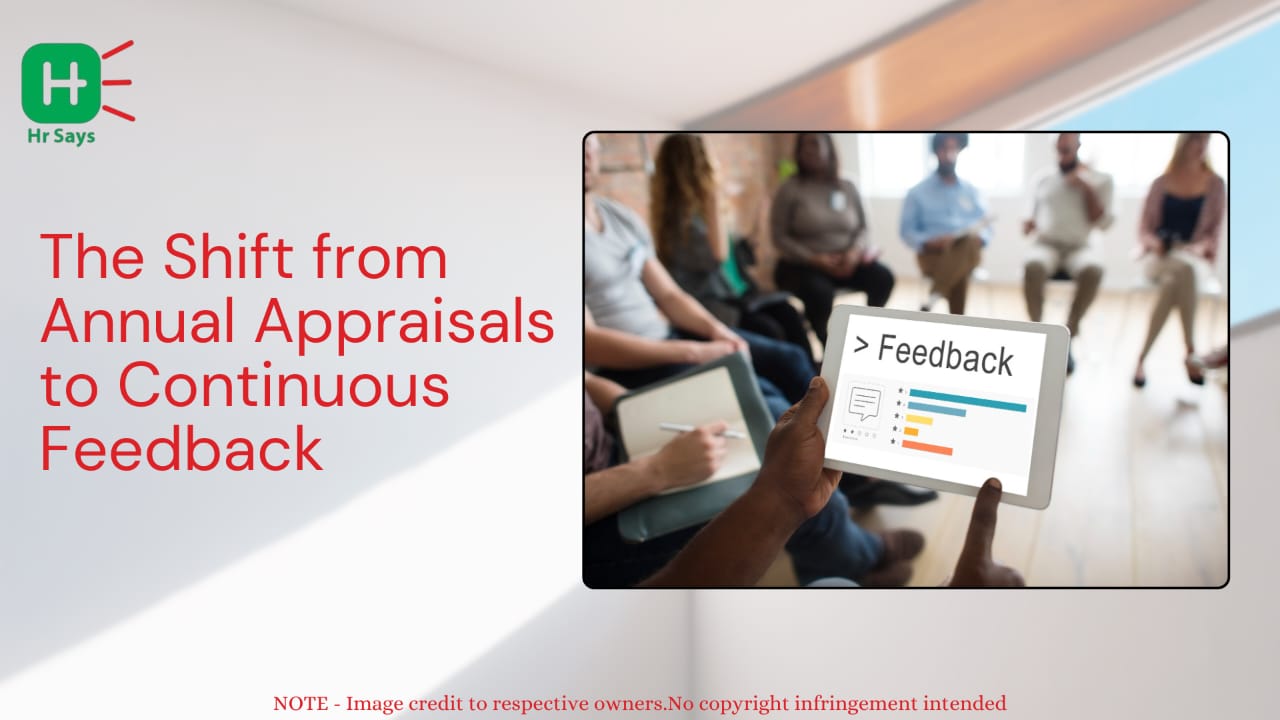
 This blog explains the transition from annual appraisals to continuous feedback, highlighting
benefits, challenges and the impact on performance and culture. It focuses on clarity,
engagement and real time development in a modern workplace.
This blog explains the transition from annual appraisals to continuous feedback, highlighting
benefits, challenges and the impact on performance and culture. It focuses on clarity,
engagement and real time development in a modern workplace.




Have you ever questioned yourself how did annual appraisals in a rapidly changing workplace seem old-fashioned? Employees also develop over the course of a year but most of the time feedback is received at the end of the year, after every twelve months. The existence of this gap has resulted in organisations today incorporating continuous feedback in a more agile, people focused method. The shift will be simply and relatably subdivided in this blog.
Understanding the Traditional Appraisal Model
The annual performance appraisal has only been made out to be a formal checkpoint over the decades. It typically looks back into the previous performance, reproduces ratings and increments. Although it used to be able to support a stable working environment, today it is struggling to live with the dynamism in expectations, skills and shorter project families. The current generation of employees would enjoy real time feedback, developmental discussions and continuous recognition.
Why It Started Falling Short
Employees often felt judged once a year. Managers found the process stressful. Teams waited months for feedback that could have helped earlier. As the workplace became more digital, the model began to feel too rigid and slow.
The Rise of Continuous Feedback
Continuous feedback is based on regular conversations. Insights are shared throughout the year, not saved for a single meeting. This approach aligns with modern HR trends like performance management systems, employee engagement tools and real time analytics. It encourages growth, builds trust and creates a culture where learning becomes a natural part of work.
How Continuous Feedback Enhances Performance
A steady flow of feedback supports better alignment and healthier work relationships. It keeps goals relevant and creates clarity. Teams become aware of their strengths and improvement areas without waiting months. This timely reflection improves productivity and reduces stress.
Key Benefits of Continuous Feedback
Before shifting to a new model, every organisation must consider the benefits. Continuous feedback is not just an HR trend. It creates a workplace that adapts faster and communicates better.
Improved Clarity and Alignment
Employees understand how they are performing throughout the year. Priorities stay clear. No one feels blindsided during reviews.
Stronger Employee Engagement
Engagement rises when feedback is consistent, actionable and respectful. People feel supported instead of judged.
Real Time Skill Development
With frequent guidance, employees can adjust their efforts quickly. New skills are picked up faster. Mistakes are corrected early.
A More People First Culture
A continuous feedback loop signals that growth matters. It shows that development is ongoing and not a yearly task.
How Managers Can Adopt Continuous Feedback
Managers play an important role in creating a healthy feedback culture. A few simple habits can make the transition smoother.
● Schedule short monthly check ins
● Use clear and specific language
● Ask open ended questions
● Focus on goals and progress
● Share feedback in a calm, respectful tone
These habits make the process feel natural. Employees feel safe to respond and share their ideas.
Challenges to Address
This shift is rewarding but not without its hurdles. Some managers may hesitate. Some employees may need time to adjust. Technology adoption, skill gaps and workload pressures can slow down the transition. With patience and proper training, organisations can overcome these barriers.
Conclusion
The shift from annual appraisals to continuous feedback reflects how workplaces are evolving. It encourages meaningful conversations, better alignment and a culture built on trust. When done correctly, it supports growth for both employees and employers in a balanced way.