 Saturday, October 24, 2026
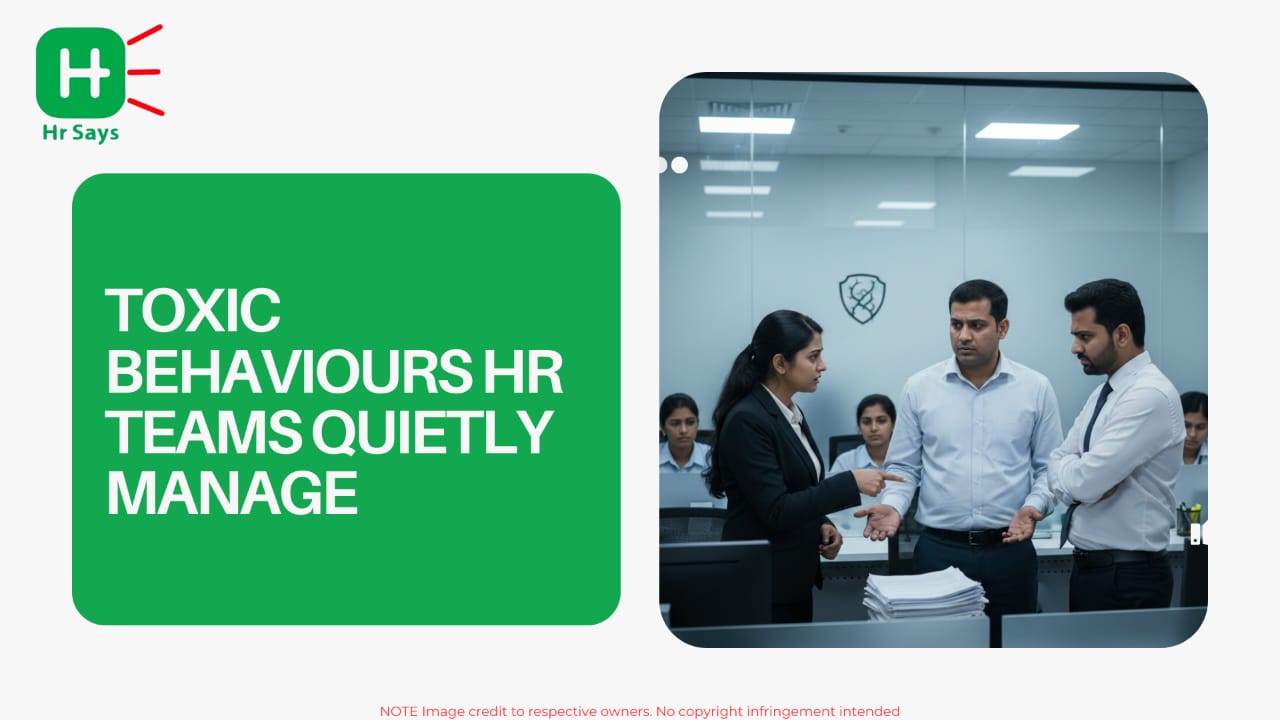
 Subtle toxic behaviours often shape workplace culture more than policy breaches. This blog
explores the quiet patterns HR teams manage daily, why they persist, and how early
intervention supports healthier, more sustainable work environments.
Subtle toxic behaviours often shape workplace culture more than policy breaches. This blog
explores the quiet patterns HR teams manage daily, why they persist, and how early
intervention supports healthier, more sustainable work environments.




Vision decks and town halls tend to describe work place culture. What is under spoken are the day-to-day frictions of behaviour that are taken care of under the carpet. Such trends are often off very few headlines but they are also constituents of morale, retention, and trust than even policies can ever be.
Silent Patterns That Drain Workplace Energy
There are those behaviours that are not as dramatic to elicit formal action, but they are destructive enough to cripple the teams. These trends are normally resolved by discussion, written materials and mild course intervention as opposed to confrontation.
Passive Resistance to Accountability
Deadlines are missed. Feedback is acknowledged but not applied. Ownership is avoided without open refusal. This behaviour is often framed as workload pressure, but the pattern remains visible over time. Productivity is affected quietly, and frustration spreads across teams.
Common signs noticed by HR include:
● Repeated follow-ups being required
● Vague status updates
● Blame being shifted to process gaps
Chronic Negativity Disguised as Honesty
Concerns are healthy. Constant pessimism is not. When every change is met with skepticism, team energy is reduced. HR teams often find this behaviour tolerated because it is labelled as realism or experience.
Over time, innovation is stalled, and newer employees become disengaged before they fully settle in.
Power Dynamics That Go Unspoken
Not all toxic behaviours are loud. Some are rooted in influence and informal authority.
Quiet Gatekeeping
Information is selectively shared. Access to leaders is subtly controlled. Certain voices are amplified while others are ignored. This behaviour is rarely intentional, but it creates invisible hierarchies that undermine inclusion efforts.
HR usually intervenes indirectly through role clarity, communication audits, and leadership coaching.
Credit Redirection
Work is done collectively, but recognition flows upward or sideways. Junior contributors are often left unnamed. This behaviour damages trust faster than overt conflict, yet it is difficult to prove.
Emotional Patterns That Impact Teams
Workplaces are emotional ecosystems, even when professionalism is maintained.
Emotional Withholding
Support is inconsistent. Feedback is delayed. Conversations are kept transactional even during high-pressure periods. While not abusive, this behaviour leaves teams feeling unseen.
HR often addresses this through manager training rather than disciplinary routes.
Over-Dependence on HR
Some employees rely on HR to mediate every discomfort. While support systems exist for a reason, constant escalation of minor interpersonal issues can indicate avoidance of direct communication. Over time, this creates dependency instead of resilience.
Why These Behaviours Are Managed Quietly
Formal action is not always the right response. Many of these behaviours sit in grey zones where intent is unclear, and impact accumulates slowly. HR teams balance employee wellbeing, legal safety, and business continuity.
Trends in people management now focus on psychological safety, early intervention, and behavioural feedback loops. Toxicity is being treated less as a personality flaw and more as a system signal.
Conclusion
Most workplace toxicity is not dramatic or malicious. It is subtle, repeated, and normalized over time. HR teams are often tasked with managing these patterns quietly, long before they become visible problems.