 Saturday, October 24, 2026
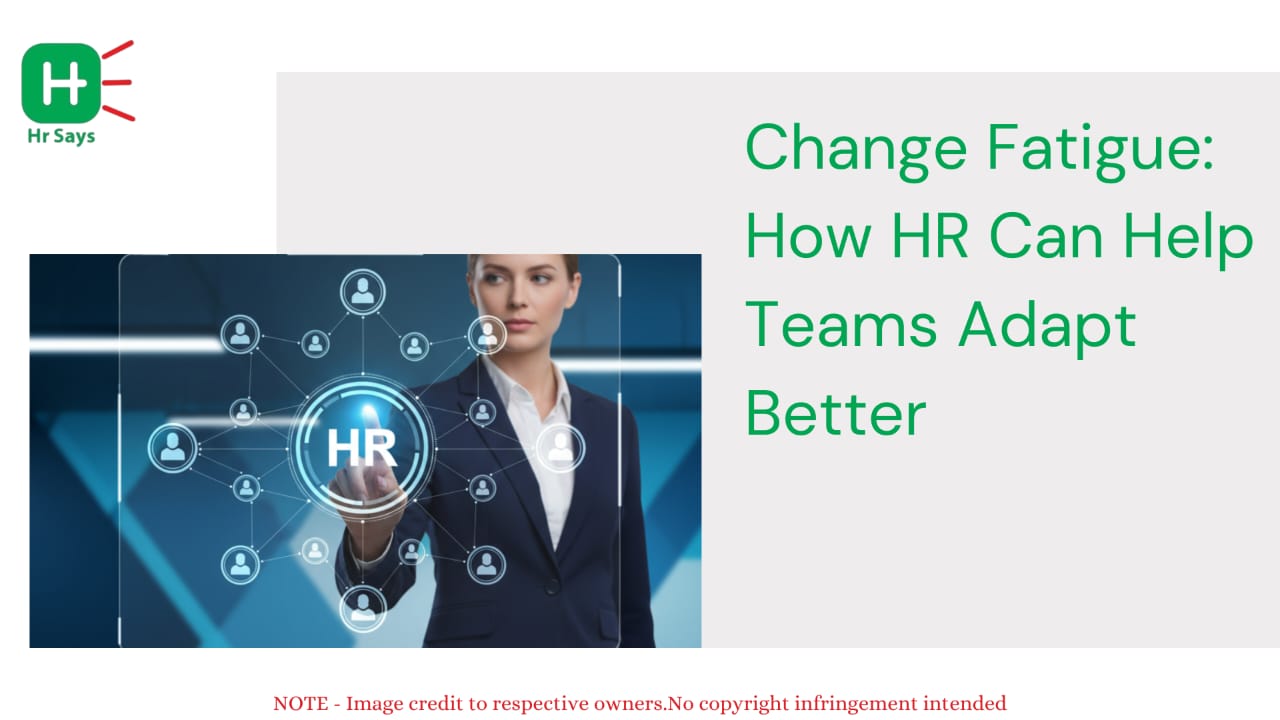
 Change fatigue weakens productivity and morale in evolving workplaces. HR can reduce its
impact through empathy, communication, and continuous support—helping teams build
resilience and adapt confidently to organizational transformation.
Change fatigue weakens productivity and morale in evolving workplaces. HR can reduce its
impact through empathy, communication, and continuous support—helping teams build
resilience and adapt confidently to organizational transformation.




Have you ever observed that in most cases teams go slack mid-way into transformation? That quiet burnout that diffuses in ever-changed organization- it is referred to as change fatigue. This is in the context of the modern hectic work spheres where the HR is becoming more important in assisting employees to adapt to the changing times with new tools, processes and strategies every quarter.
Understanding Change Fatigue
Change fatigue is a state of employees who are under excessive change in the immediate past. It cumulatively accretes, becoming disengaging, resistant, and burnout. They are not very apparent, the signs; their morale is dropping, they are not as productive, or are just no longer interested in projects that they used to love. The task of the HR professionals is to absorb all this emotional burnout and not to interrupt the stream of the organization.
When employees feel overwhelmed, they stop embracing new initiatives. This isn’t laziness; it’s exhaustion. Change fatigue is psychological, not personal. And if it’s ignored, it spreads across teams like wildfire.
Why HR’s Role Matters
HR departments sit at the center of organizational change. Their involvement directly shapes how teams perceive and respond to transformation. Whether it’s implementing new HR technology, rolling out hybrid work models, or introducing performance management systems, HR acts as the human bridge between leadership goals and employee experience.
To reduce change fatigue, HR must:
● Communicate transparently: Keep employees informed early. Surprises create anxiety.
● Promote psychological safety: People should feel safe to express discomfort.
● Provide consistent support: Offer resources like counseling, team discussions, and manager training.
Every HR initiative should aim to balance business continuity with employee well-being.
Building Change Resilience Within Teams
Resilience isn’t built overnight. It requires time, trust, and the right mindset. HR can nurture this resilience by focusing on the emotional and structural side of adaptation. When employees understand the why behind change, they’re more likely to align with it.
Practical Strategies HR Can Use
1. Lead with empathy: Managers should acknowledge the stress of transition. A small recognition can ease a large burden.
2. Reinforce stability: During major shifts, hold on to certain familiar practices or traditions to maintain comfort.
3. Upskill continuously: Offer training programs that strengthen adaptability. Skills give confidence, and confidence fuels resilience.
4. Gather feedback regularly: Listening prevents frustration from turning into resistance.
HR’s goal is to make change less of a shock and more of a steady climb.
Communication: The Core of Adaptation
When communication breaks, fatigue grows. HR can strengthen adaptability through honest storytelling—sharing progress, challenges, and successes alike. Teams feel included when they understand the journey.
It helps to:
● Use open forums to address doubts.
● Involve employees in small decision-making.
● Reinforce positive outcomes through recognition.
A transparent culture creates connection. People adapt better when they trust the message and the messenger.
The Path Forward for HR Leaders
The future of HR lies not just in managing change but in managing how people experience it. Compassionate leadership, continuous learning, and honest dialogue will be key drivers of adaptability. Change is inevitable; fatigue is not.
When HR builds emotionally intelligent workplaces, organizations thrive even amid uncertainty. The focus should shift from coping with change to growing through it.