 Saturday, October 24, 2026
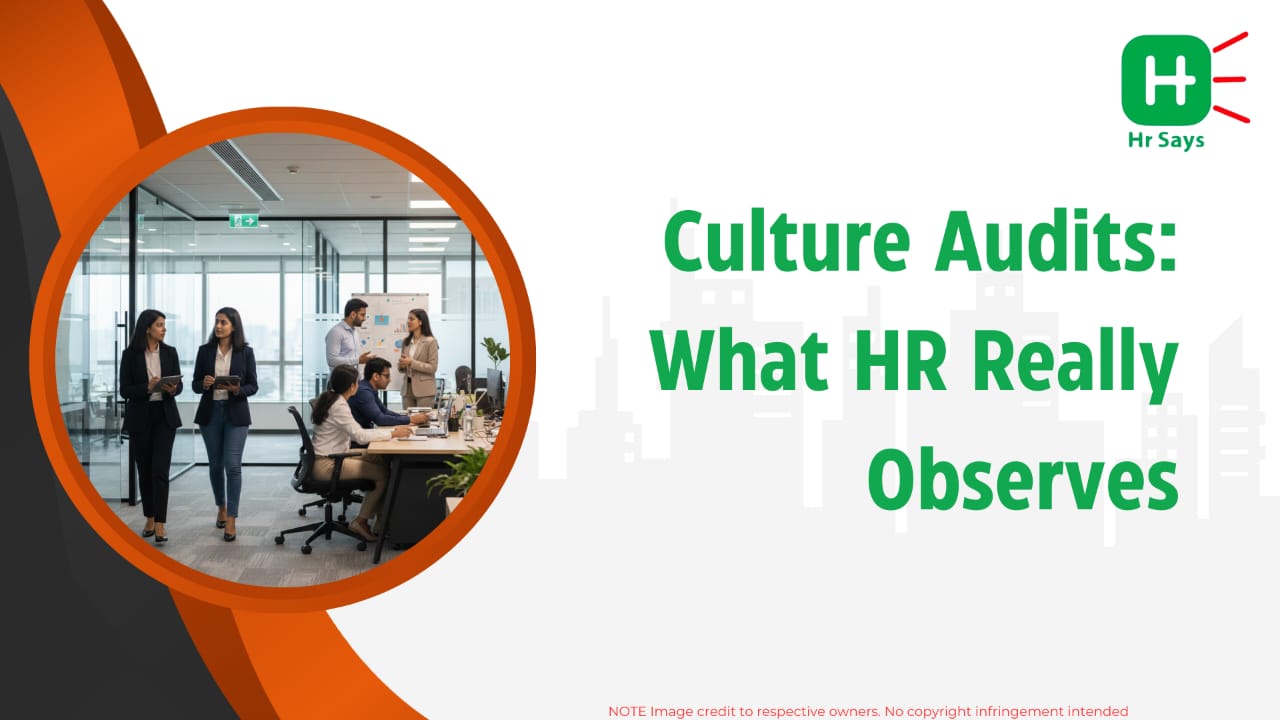
 Culture audits focus on observed behavior rather than stated values. By examining leadership
actions, communication patterns, systems, and employee energy, HR gains a clearer
understanding of workplace culture beyond surveys and surface-level metrics.
Culture audits focus on observed behavior rather than stated values. By examining leadership
actions, communication patterns, systems, and employee energy, HR gains a clearer
understanding of workplace culture beyond surveys and surface-level metrics.




One can hardly judge culture in posters or slogans. It is observed silently, between meetings and the manner of handling normal work. A culture audit does not usually involve question asking, in most cases it is just a matter of observing the patterns as the time passes.
What A Culture Audit Actually Looks Like
A culture audit is not conducted as a checklist opportunity. It is found to be a sluggish reading of actions, systems and silent regulations. The words spoken during the meetings are important but more important is avoiding what is not required.
In many cases, culture is expressed in an informal way. The way feedback is received. The manner in which conflicts are diluted or disregarded. HR pays close attention to these instances when they do not even suspect.
Leadership Behavior Under Observation
Leadership behavior is quietly mirrored across teams. During audits, attention is placed on how leaders react under pressure rather than during polished town halls.
Signals That Are Noticed
● How accountability is handled when targets are missed
● Whether credit is shared or quietly claimed
● How decisions are explained or left unexplained
Through these signals, power distance, trust levels, and psychological safety are understood without formal surveys.
Communication Patterns Inside Teams
Communication is rarely judged by volume. It is measured by clarity, consistency, and response.
Emails, meeting flow, and even silence are observed. A culture where people hesitate before speaking is noted differently from one where interruptions are common. Both reveal something.
Quiet Indicators
● Who speaks first and who speaks last
● Whether dissent is acknowledged or redirected
● How often clarifications are requested
These patterns often explain engagement scores better than dashboards do.
Systems That Shape Daily Behavior
Culture is reinforced by systems more than statements. During audits, HR looks closely at how policies are applied rather than how they are written.
Performance reviews, promotion timelines, and workload distribution are studied. When systems reward speed over quality, or visibility over collaboration, those values are understood as cultural truths.
Employee Energy And Emotional Climate
Energy is noticed before numbers are analyzed. The pace at which people move, the tone of casual conversations, and even absenteeism patterns are quietly observed.
Burnout is not always verbalized. It is seen in delayed responses, reduced curiosity, and mechanical participation. These signals are treated as cultural feedback, not individual failure.
Why Culture Audits Matter More Than Surveys
Surveys capture perception. Audits capture reality. While engagement tools rely on responses, culture audits rely on observation.
Trends like employee experience, psychological safety, and workplace transparency are better understood through audits. They allow HR to see misalignment early, before it becomes attrition.
Conclusion
A culture audit is less about judgment and more about awareness. What is consistently observed becomes the real culture. When these insights are acted upon, trust is slowly rebuilt and alignment is naturally strengthened.