Saturday, October 24, 2026
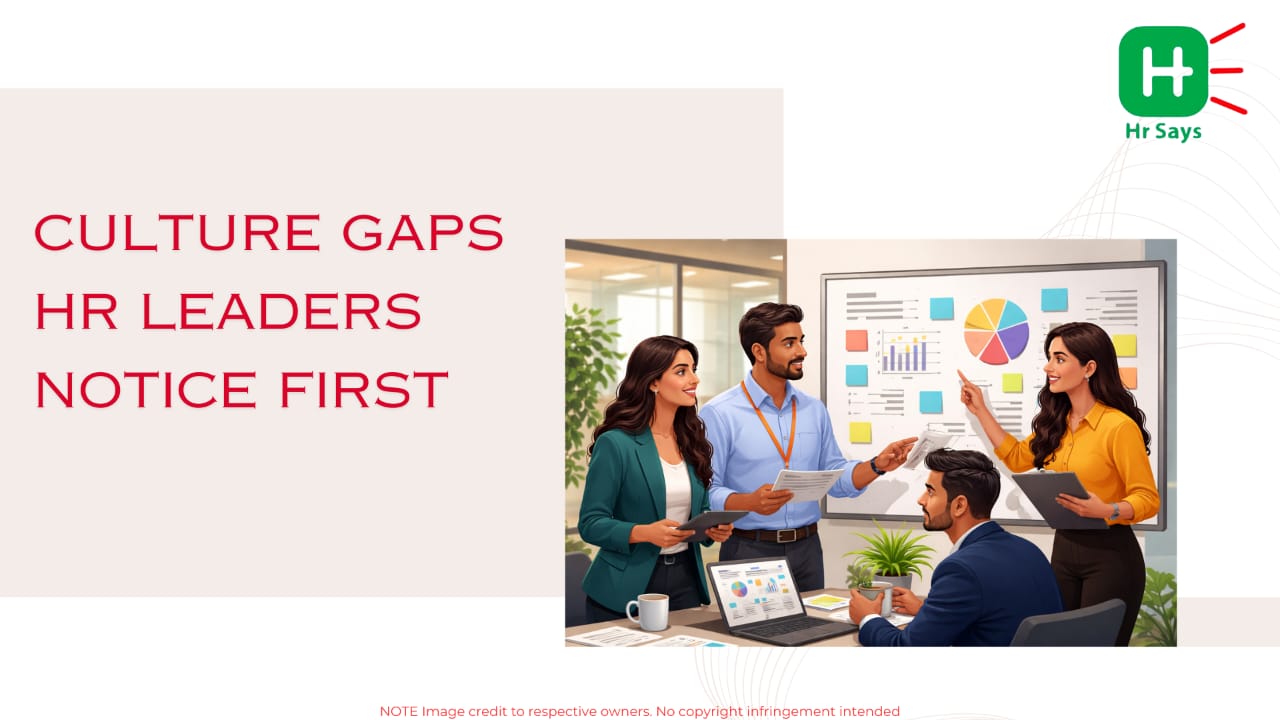
 Culture gaps are first noticed in everyday behaviors, communication patterns, and trust signals.
This blog explores how HR leaders identify early misalignments that quietly shape employee
experience and long-term organizational health.
Culture gaps are first noticed in everyday behaviors, communication patterns, and trust signals.
This blog explores how HR leaders identify early misalignments that quietly shape employee
experience and long-term organizational health.




The issue of culture differences seldom comes screaming. They are normally measured before being felt. Indeed, the first symptoms are manifested in daily talks, small pauses, forgotten hands, or disproportional power levels. HR executives can have the intuition that something is not okay.
Misalignment Between Stated Values and Daily Behavior
Among the first gaps, there is the one between what a particular organization states to be important and how the work is performed.
Values on Walls, Not in Workflows
Mostly, company principles can be found on the Web sites and the onboarding decks. Nonetheless, still, speed can be valued more than ethicality, production more than cooperation, or rank higher than trust. Employees notice this disconnect and the HR picks it up with ease.
Inconsistent Leadership Signals
Different leaders may interpret values differently. When flexibility is promised but penalized, or openness is encouraged but feedback is ignored, credibility begins to erode.
Communication That Flows One Way
Communication gaps surface early, especially in growing or hybrid workplaces.
Information Hoarding
Important updates may be shared selectively. Teams are left guessing, and rumors fill the gaps. This creates unnecessary anxiety and disengagement.
Feedback Without Follow-Through
Surveys are conducted, town halls are held, but visible action is delayed. Over time, participation drops. HR notices when voices go quiet rather than critical.
Inclusion That Exists in Policy, Not Practice
Diversity and inclusion are trending keywords, but gaps appear when inclusion is treated as a checkbox.
Unequal Access to Opportunity
High-visibility projects may keep going to the same groups. Promotions may feel predictable. HR leaders often hear concerns informally long before data reflects them.
Psychological Safety Gaps
People may be present, but not fully heard. Meetings feel safe only for some voices. Silence is mistaken for agreement, while discomfort remains unspoken.
Performance Expectations That Are Unclear
A subtle but damaging gap is created when success is not clearly defined.
Conflicting Priorities
Employees are asked to move fast, but also avoid mistakes. They are told to innovate, yet punished for failure. This tension creates burnout rather than excellence.
Feedback That Arrives Too Late
Performance conversations may happen only during reviews. By then, frustration has already settled. HR senses disengagement well before resignation letters appear.
Trust Erosion in Times of Change
Culture gaps widen most during transitions such as restructuring, rapid scaling, or leadership changes.
Change Without Context
Decisions may be announced without explaining the why. Employees fill the silence with assumptions. Trust is slowly weakened, not broken all at once.
Promises That Fade
What was said during hiring or early growth stages may no longer match reality. HR often becomes the listener for disappointment before it becomes attrition.
Conclusion
Culture gaps are rarely dramatic. They are built through small, repeated inconsistencies. HR leaders notice them early because they listen closely, read between lines, and understand that culture is shaped more by behavior than intent.