 Saturday, October 24, 2026
 This blog explains how hybrid work culture blends flexibility with accountability. It highlights
employee needs, leadership roles, digital collaboration, and cultural foundations. The focus
stays on practical insights and sustainable workplace balance.
This blog explains how hybrid work culture blends flexibility with accountability. It highlights
employee needs, leadership roles, digital collaboration, and cultural foundations. The focus
stays on practical insights and sustainable workplace balance.




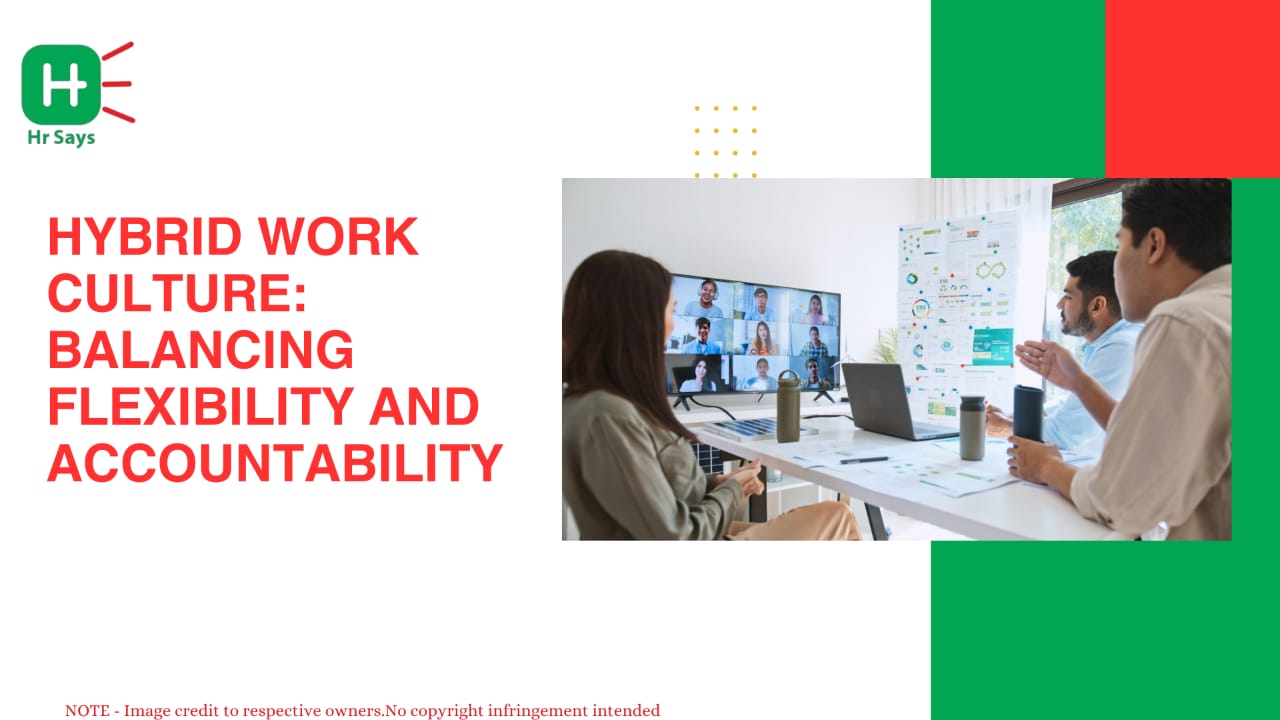
Hybrid work is now a long-term organisational concept instead of a temporary one. This style is a combination of distance liberation and demands of the workplace. Its emergence has spawned new discourse on productivity, employee satisfaction, online teamwork, and new management.
Flexibility in the Evolving Workplace
Hybrid work has brought a new perspective of the way individuals consider routine, communication and performance. Organisations are now operating in evolving employee demands as well as increasingly high demands of work life balance and digital-first workplaces.
Adapting to Employee Expectations
Remote work brought comfort, autonomy, and time savings. Employees adapted fast, and many now prefer a flexible schedule. A hybrid model helps maintain this balance.
Key Employee Priorities
● Reduced commute stress
● Better focus during deep work hours
● Stronger wellbeing
● Freedom to personalise work environments
Challenges for Teams
Hybrid teams often struggle with uneven communication. Some feel disconnected when updates move fast. Others find virtual collaboration tools overwhelming. These gaps can reduce productivity if not managed with clarity.
Accountability in a Hybrid Model
Performance in hybrid work is measured differently today. Organisations use outcomes instead of hours, which helps build trust and responsibility among teams. A clear framework keeps the model stable.
Core Accountability Principles
● Transparent goal setting
● Defined responsibilities
● Regular performance check-ins
● Consistent workflow documentation
Role of Leadership
Leaders act as anchors in hybrid settings. Their behaviour shapes team confidence. Guidance is offered through:
● Structured meetings
● Feedback loops
● Workload balancing
● Support for digital literacy
Navigating Digital Collaboration
Digital tools are central to seamless hybrid operations. Platforms like project trackers, cloud workspaces, and video conferencing systems shape teamwork today. Adoption of these tools must be simple.
Reducing Digital Fatigue
Teams often face meeting overload. To prevent this:
● Shorter calls are preferred
● Recorded updates save time
● Focus hours support deep work
● Asynchronous communication keeps flow stable
Building a Strong Hybrid Work Culture
Culture becomes the backbone of hybrid models. Values must remain visible even when teams work from different places. Small actions help employees feel grounded.
Cultural Anchors
● Recognition of effort
● Open communication channels
● Inclusive virtual activities
● Clear norms for availability
Practical Tips for Organisations
● Create hybrid policies based on employee feedback
● Offer training for digital productivity
● Maintain equal opportunities for remote and onsite workers
● Encourage managers to model balance and boundaries
Conclusion
Hybrid work continues to evolve. Its strength lies in flexibility supported by strong accountability. When teams feel trusted, guided, and connected, the model becomes sustainable. Organisations that embrace this balance often experience smoother workflows, higher morale, and steady growth.