 Saturday, October 24, 2026
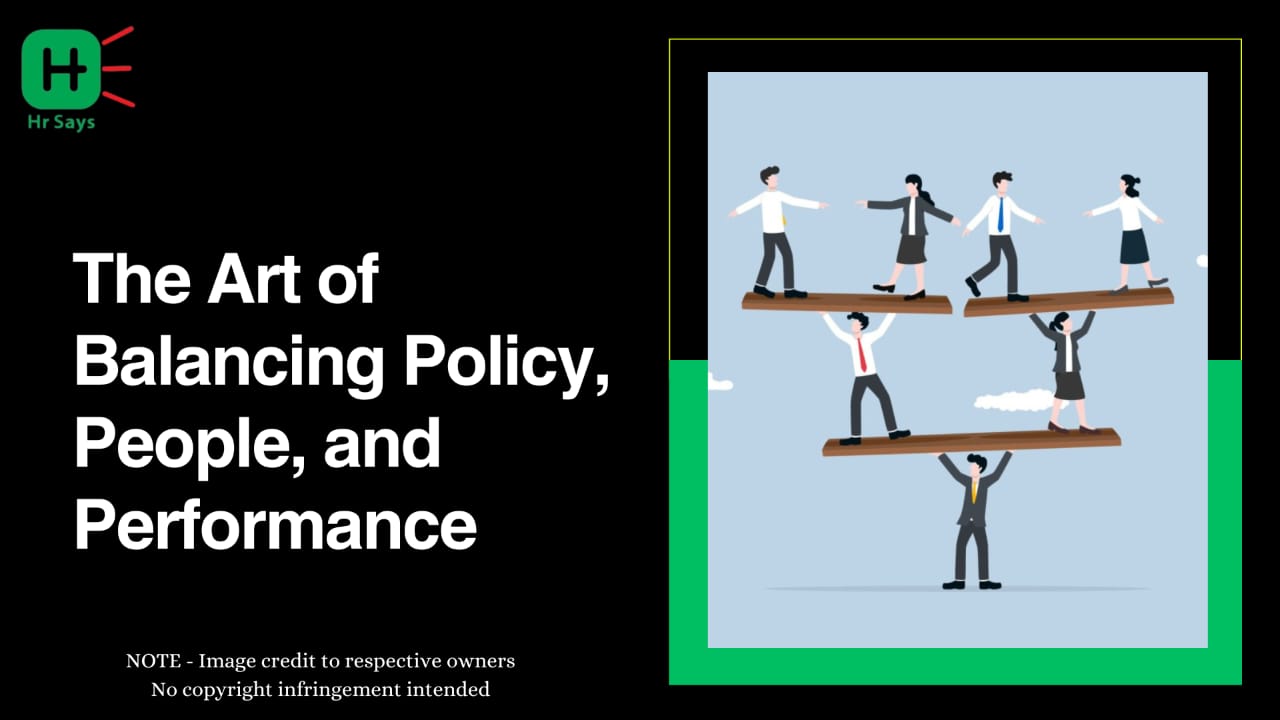
 Balancing policy, people, and performance is vital for organizational success. This blog explores
how transparent policies, empowered employees, and empathetic leadership can create a
sustainable, high-performing workplace culture.
Balancing policy, people, and performance is vital for organizational success. This blog explores
how transparent policies, empowered employees, and empathetic leadership can create a
sustainable, high-performing workplace culture.




What makes an organization continue to succeed? Not only working and having good policies but always a fine line between the two which is people anchored. Managing this trio isn't easy. However, leaders who have this master art form workplaces where mission meets productivity.
The Foundation of Workplace Balance
Any organization is centered on three pillars namely, policy, people, and performance. Once one crumbles, then everything trembles. Direction is defined by policies, people make them real and performance shows the extent to which policies work as intended. An effective workplace policy should not be constraining in nature, it helps steer behaviour and foster responsibility.
However, policies often face resistance when employees feel unheard. That’s where human connection matters. Employees want structure, but they also crave trust, autonomy, and respect. Bridging this gap requires emotional intelligence, not just procedural enforcement.
Striking Harmony between Rules and Relationships
Policies should empower, not intimidate. When HR policies or workplace guidelines are transparent, employees see them as safeguards rather than barriers. Leaders who listen actively and communicate clearly can make even the toughest policies easier to embrace.
A balanced approach involves:
● Framing policies around employee growth, not control
● Encouraging participation in decision-making
● Linking performance metrics with human values
This way, compliance becomes a culture, not a compulsion.
People as the Pulse of Performance
An organization’s real strength lies in its people. Their engagement directly affects performance outcomes. When employees feel valued and supported, productivity follows naturally. Yet, too much focus on results can lead to burnout, while excessive flexibility may lower standards.
HR professionals often walk this tightrope daily—aligning employee well-being with business objectives. Open communication, fair recognition, and skill development programs can help sustain this balance.
Small actions make a big difference:
● Recognize individual contributions regularly
● Provide learning opportunities
● Encourage work-life balance through mindful scheduling
The goal is not just performance—it’s sustainable performance.
Policy as a Performance Enabler
A common misconception is that policies slow down innovation. In truth, well-designed HR policies create consistency and fairness, helping employees perform without confusion or conflict. Clear boundaries protect both the organization and its people.
Performance management policies should focus on clarity, not control. When KPIs are realistic and evaluation processes are transparent, employees trust the system. Trust builds motivation, and motivation drives results.
Balanced policies are not rigid—they evolve. They must adapt to market trends, employee needs, and technological shifts. Regular feedback loops can refine policies without disrupting workflow.
Leadership and the Balancing Act
True leadership lies in empathy and adaptability. A leader’s task isn’t only to set goals but to create a space where people feel safe to meet them. Leaders who balance firmness with fairness foster loyalty and innovation.
Effective leaders:
● Promote open dialogue across hierarchies
● Align goals with employee strengths
● Encourage collaboration over competition
When leadership connects policy, people, and performance seamlessly, workplace culture flourishes.
Conclusion
Balancing policy, people, and performance isn’t a one-time act. It’s an ongoing process shaped by communication, empathy, and adaptability. The most successful organizations treat policies as frameworks, people as the heart, and performance as the reflection of harmony between both.