 Thursday, October 01, 2026
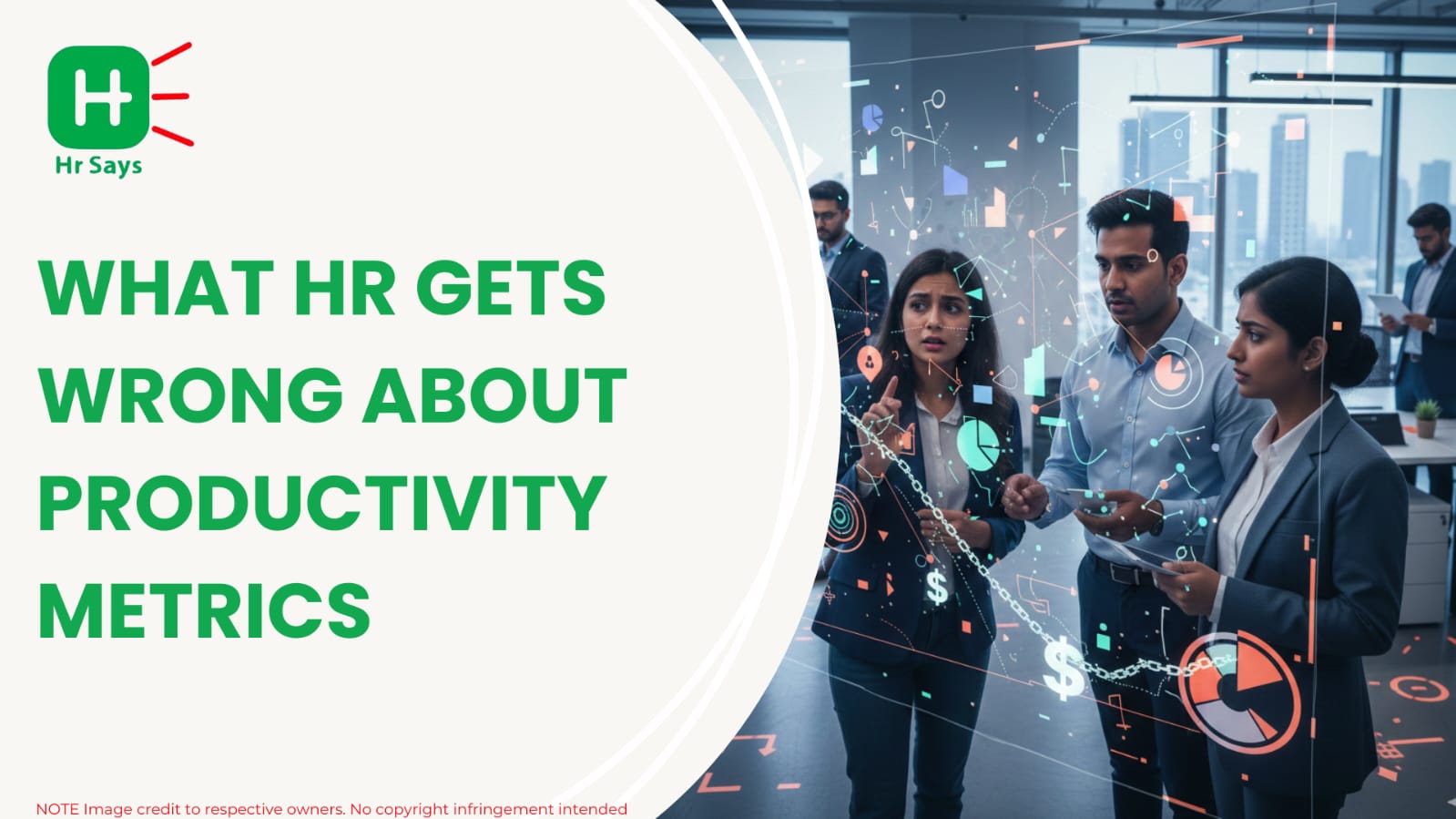
 Productivity metrics often prioritise visibility, speed, and numbers over context, focus, and collaboration. This blog explores where HR measurement falls short and how a more thoughtful, human-centred approach creates sustainable performance.




Given the way it is discussed in boardrooms, productivity is this number that needs to be found. Dashboards glow. Reports circulate. Targets tighten. Yet something feels off. Employees pull more, but results are even less. In the middle between effort and evaluation, meaning is lost.
Productivity Is Mistaken For Visibility
The amount of time spent online is still being discreetly discussed as commitment. Measures of green dots, hourly login, and meetings attendance are taken since they are simple to observe. Work in the real world hardly ever proclaims itself. Thinking remains unseen. Innovative problem solving has no date. Many performance measurements are apt to compensate attendance rather than improvements.
When visibility becomes the goal, behaviour shifts.
● Work is stretched to look busy.
● Meetings replace meaningful execution.
● Focus gets fragmented.
The result looks productive on paper. It rarely feels productive in reality.
Output Is Measured Without Context
Numbers feel objective. Tasks closed. Tickets resolved. Emails sent. These metrics are comforting because they appear neutral. Context is removed in the process.
A task completed under pressure carries a different cost than the same task done sustainably. A high-output month after burnout should not be celebrated blindly. Productivity metrics often ignore emotional load, cognitive fatigue, and role complexity.
Work is not done in a vacuum. Metrics are still treated as if it is.
Speed Is Rewarded Over Quality
Fast delivery has become a quiet obsession. Short turnaround times are praised. Pauses are questioned. Reflection is labelled inefficiency.
This creates predictable patterns.
● Quick fixes replace thoughtful solutions.
● Errors surface later, costing more time.
● Teams stop questioning flawed processes.
Speed looks impressive in reports. Quality shows up months later, often as damage control. Productivity metrics rarely wait long enough to see that cost.
Individual Performance Is Overweighted
Modern work is deeply collaborative. Yet productivity is still measured as an individual sport. Metrics isolate people from systems.
A high-performing employee in a broken workflow will still struggle. A supportive teammate rarely gets credit if outcomes are shared. Collaboration, mentorship, and knowledge transfer remain difficult to quantify, so they are often ignored.
What cannot be measured easily is still essential.
Focus Is Treated As Unlimited
Metrics often assume attention is endless. More goals are added. More KPIs are tracked. Priorities multiply without subtraction.
Cognitive overload is normalised. Context switching becomes routine. Productivity then drops, not because people are lazy, but because focus has been diluted.
Sustainable productivity depends on fewer priorities, not better tracking.
What Works Better Than Traditional Metrics
Productivity improves when measurement shifts from control to clarity.
● Outcomes are defined clearly, not excessively.
● Teams are trusted to choose how work gets done.
● Feedback replaces constant surveillance.
● Progress is reviewed, not policed.
Metrics should support decision-making, not replace judgment. When used thoughtfully, they guide. When used rigidly, they distort.
Conclusion
Productivity cannot be forced into neat boxes without losing its meaning. When metrics dominate the conversation, work becomes performative. When understanding leads instead, productivity follows naturally, quietly, and more honestly.