 Saturday, October 24, 2026
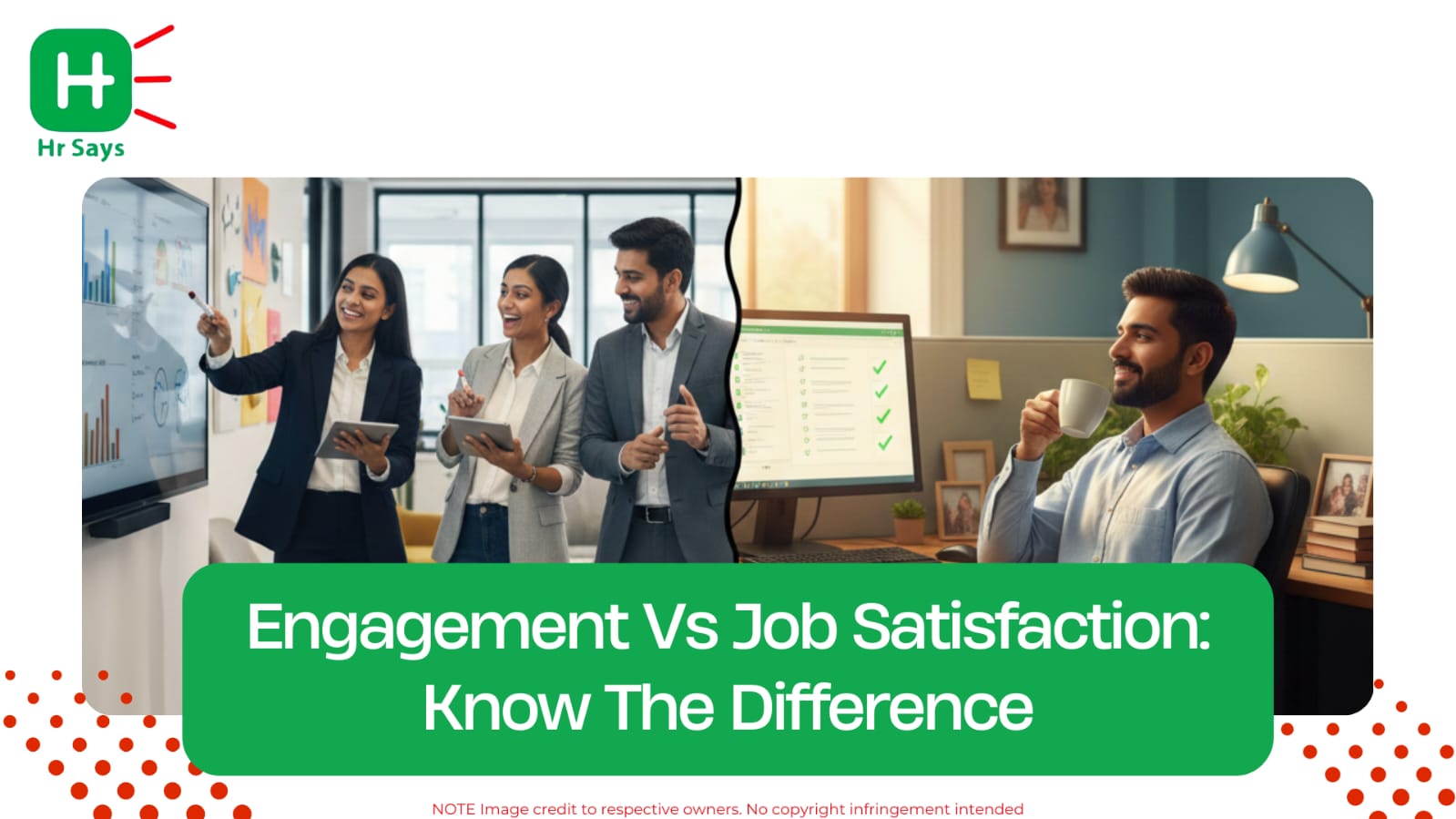
 Job satisfaction reflects comfort and stability, while employee engagement reflects emotional connection and involvement. Understanding the difference helps organizations balance
retention, motivation, and performance in a more sustainable and human centered way.
Job satisfaction reflects comfort and stability, while employee engagement reflects emotional connection and involvement. Understanding the difference helps organizations balance
retention, motivation, and performance in a more sustainable and human centered way.




Paychecks or job titles are no longer the only criteria that are used to judge the workplace. The employees would usually ask a deeper question at the end of a hard day. Is it a satisfying work or something that is just tolerable? The question lies in the core of engagement and job satisfaction.
What Is Job Satisfaction?
Job satisfaction is commonly understood to be some measure of the level of comfort. It is an expression of the level of satisfaction of an employee with his or her position, remuneration, benefits, working schedule and the fundamentals. Satisfaction is most likely to be reported when the expectations are met.
How Job Satisfaction Is Experienced
Job satisfaction is generally passive in nature. It is felt when there are fewer reasons to complain. The role may be predictable, the manager reasonable, and the workload manageable. As a result, stability is valued.
Common contributors include:
● Fair compensation and timely payments
● Reasonable workload and work life balance
● Clear job roles and responsibilities
● Supportive management and policies
A satisfied employee is not necessarily unhappy. However, extra effort is rarely offered without being asked. The work gets done, but little emotional investment is made.
What Is Employee Engagement?
Employee engagement goes beyond comfort. It is associated with emotional commitment and mental involvement in work. An engaged employee feels connected to the organization’s purpose, not just its processes.
How Engagement Shows Up At Work
Engagement is active. Energy, curiosity, and ownership are usually displayed. Challenges are handled with interest rather than avoidance. The job is not only performed but believed in.
Key drivers of engagement include:
● Meaningful work aligned with personal values
● Growth opportunities and continuous learning
● Recognition beyond salary
● A sense of belonging and trust
Engaged employees are often seen contributing ideas, supporting teammates, and staying resilient during change. Productivity is improved, but more importantly, motivation is sustained.
Engagement Vs Job Satisfaction: The Core Difference
The difference lies in depth. Job satisfaction answers the question, “Am I okay here?” Engagement answers, “Do I care about what happens here?”
A satisfied employee may stay because the job is convenient. An engaged employee stays because the work feels worthwhile. Satisfaction can exist without engagement, but engagement rarely exists without at least basic satisfaction.
From a people management perspective, this difference matters. High satisfaction with low engagement often leads to stagnation. High engagement with low satisfaction leads to burnout. Balance is required.
Why Organizations Often Confuse The Two
Employee satisfaction surveys are easier to conduct. Metrics like salary satisfaction or policy approval are simple to measure. Engagement, on the other hand, requires deeper listening.
Engagement is shaped by culture, leadership behavior, psychological safety, and purpose. These elements are harder to quantify, but their impact on employee retention, performance management, and workplace culture is stronger.
Which One Should Be Prioritized?
Both matter, but engagement drives long term outcomes. Satisfaction keeps employees from leaving immediately. Engagement encourages them to grow with the organization.
When engagement is nurtured:
● Employee retention is strengthened
● Performance becomes self driven
● Workplace morale improves naturally
Satisfaction should be treated as the foundation. Engagement should be built on top of it.
Conclusion
Job satisfaction keeps employees comfortable. Engagement keeps them committed. One prevents dissatisfaction, the other fuels contribution. When the difference is understood clearly, better decisions around people strategy and organizational health are usually made.