 Saturday, October 24, 2026
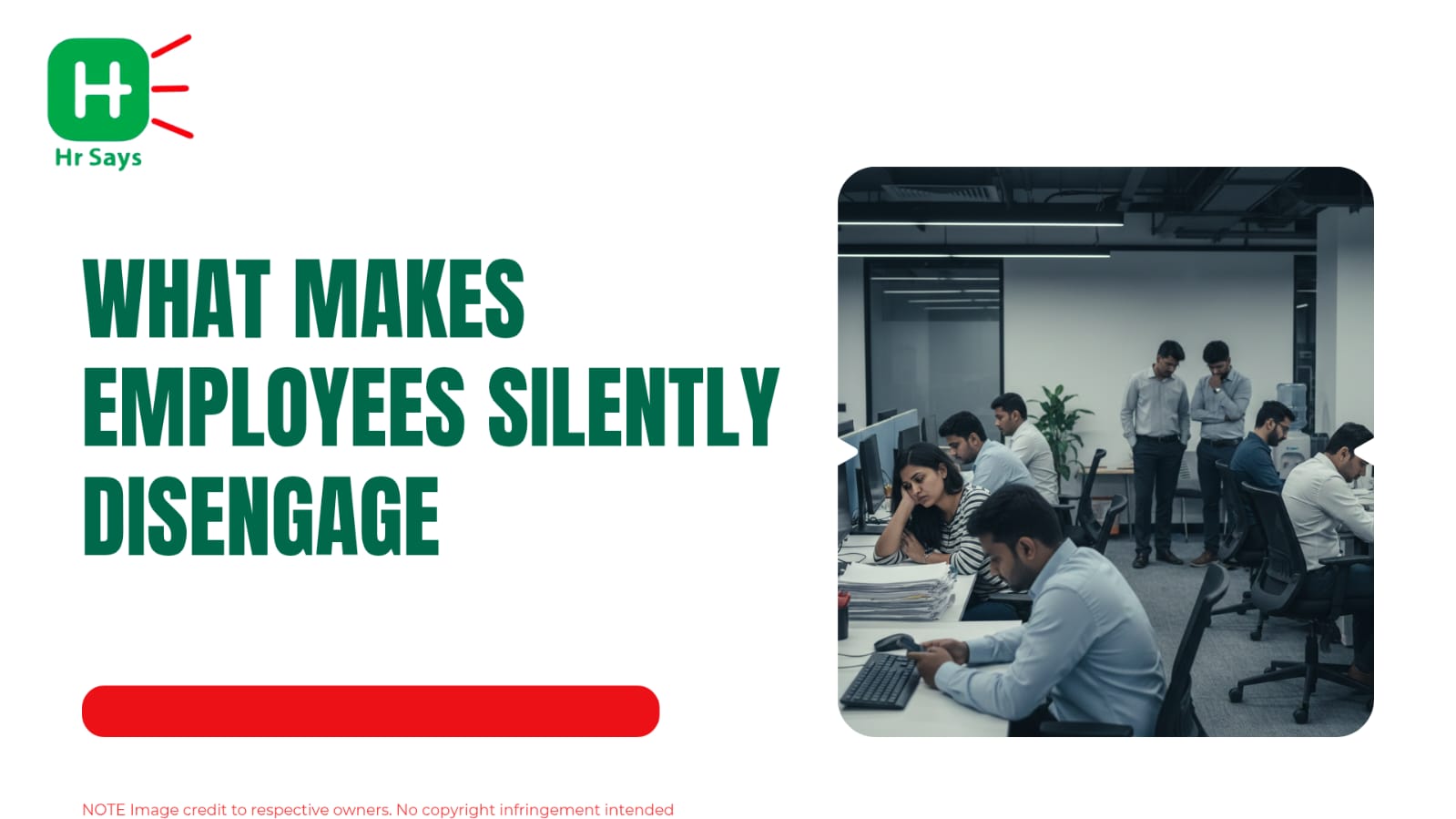
 Silent disengagement develops through overlooked effort, unclear leadership, and emotional
fatigue. This blog explores how purpose fades, burnout hides, and quiet quitting emerges,
offering practical insight into why employees withdraw without speaking.
Silent disengagement develops through overlooked effort, unclear leadership, and emotional
fatigue. This blog explores how purpose fades, burnout hides, and quiet quitting emerges,
offering practical insight into why employees withdraw without speaking.




Declines in performance are usually left unanswered at work place. No complaints are raised. No resignations are made. But something seems to be reserved. Unspoken disconnection can hardly be abrupt. It is typically formed in the course of time, in the little things that were overlooked, disregarded or misinterpreted.
The Slow Erosion Of Purpose
The loss of meaning at the work is not always dramatic. It is more often diluted.
When hard work goes undetected time and again, mission is gradually removed out of everyday work. Workers are observed to do what is needed, and not what they used to be interested in. As time goes by, work begins to be seen as a transction as opposed to being a contribution.
Common signals include:
● Goals being assigned without context
● Outcomes being valued over effort
● Growth conversations being postponed
In such environments, motivation is not killed. It is simply left unattended.
When Psychological Safety Feels Absent
Psychological safety is frequently discussed, yet rarely practiced well. When opinions are subtly dismissed or mistakes are remembered longer than successes, silence becomes safer than honesty.
Ideas start being filtered. Feedback is softened or avoided. What remains is compliance, not engagement.
This is often reinforced when:
● Questions are interpreted as resistance
● Disagreements are taken personally
● Meetings reward agreement over insight
Eventually, withdrawal is chosen because it feels less risky.
The Weight Of Invisible Burnout
Burnout does not always look dramatic. In many cases, it is hidden behind consistency.
Employees continue to deliver. Deadlines are met. But energy is drained internally. This form of burnout is common in high-performing teams where rest is praised but never modeled.
Contributing factors include:
● Always-on expectations in hybrid work setups
● Recognition being tied only to output
● Boundaries being respected in theory, not in practice
What fades first is not productivity, but enthusiasm.
Leadership Gaps That Go Unspoken
Not all leadership issues are confrontational. Many are subtle.
When managers avoid difficult conversations, delay decisions, or communicate vaguely, uncertainty is created. Employees are left guessing priorities, expectations, and their own future.
Over time, trust is weakened when:
● Feedback is inconsistent
● Promises are made but not followed up
● Visibility is offered only during problems
Disengagement is often a response to confusion, not defiance.
Quiet Quitting As A Symptom, Not A Trend
Quiet quitting is frequently labeled as a lack of ambition. In reality, it is more often a boundary response.
Employees reduce effort to match what feels sustainable and fair. This behavior is usually adopted after earlier signals were ignored.
It tends to emerge when:
● Extra effort becomes an expectation
● Career paths feel undefined
● Work-life balance is discussed but not protected
What looks like apathy is often self-preservation.
Conclusion
Silent disengagement is rarely caused by a single policy or person. It is shaped by culture, communication, and consistency. When listening is replaced by assumptions, distance is created quietly. Reconnection, therefore, must also begin quietly and intentionally.