 Saturday, October 24, 2026
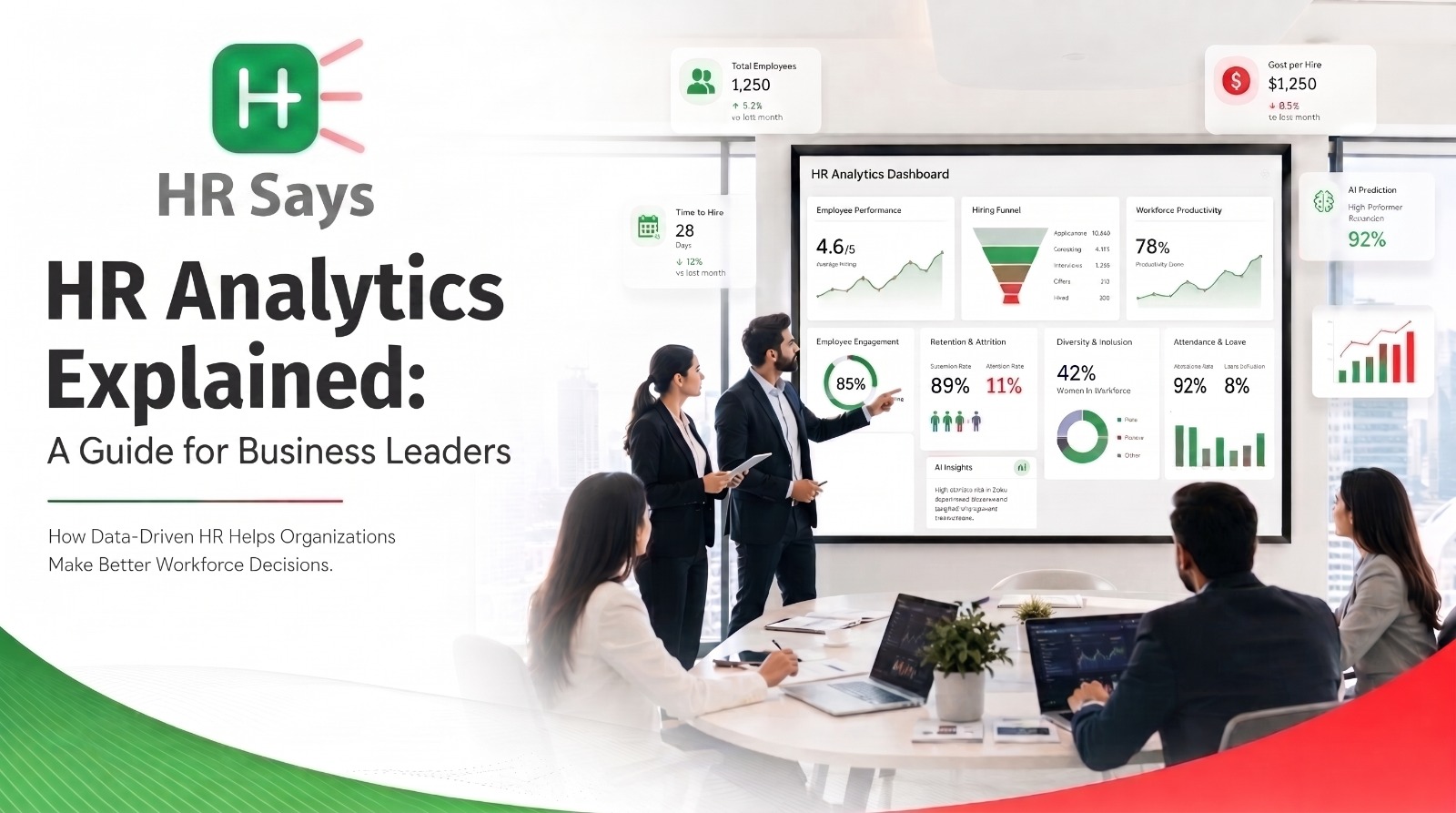
 This guide explains HR analytics for Indian business leaders, covering its four types, key workforce metrics, tool selection, and a practical, compliance-aware path to implementation.





Introduction
Business leaders across India are asking a version of the same question. Is the organisation growing the right people, in the right roles, at the right cost? For decades, the honest answer relied on instinct, tenure, and the judgement of a few senior HR heads. That is changing quickly. HR analytics has moved from a specialised function inside large enterprises to a working requirement for growing companies of every size, from Bengaluru technology firms to manufacturing units in Pune and retail chains expanding into Tier 2 cities such as Indore and Coimbatore.
HR analytics is the practice of collecting, structuring, and interpreting workforce data so that hiring, retention, engagement, and workforce planning decisions are grounded in evidence rather than assumption. India's HR analytics market is projected to grow at a compound annual rate of roughly 16.8 percent between 2026 and 2033, and the broader HR technology spend in the country has already crossed the one billion dollar mark, according to recent industry estimates. That growth signals something important for business leaders. Organisations that treat HR data as a strategic asset are pulling ahead of those that still manage people decisions through spreadsheets and gut feel.
This guide breaks down what HR analytics actually means, the types of analysis available to business leaders, the metrics that matter most for Indian organisations, and a practical path to implementation. The goal is not to turn every business leader into a data scientist. It is to help leaders ask sharper questions of their HR teams and read workforce data with the same confidence they bring to financial statements.
Understanding the Basics of HR Analytics
At its core, HR analytics is about connecting data points that were traditionally kept in silos, such as recruitment records, attendance systems, performance reviews, payroll, and exit interviews, and interpreting them together to reveal patterns. A business leader does not need to know how to build a dashboard, but understanding what the dashboard is telling them changes how decisions get made in the boardroom.
It helps to separate a few terms that are often used loosely. HR reporting simply presents numbers, such as current headcount or last quarter's attrition figure. HR analytics goes a layer deeper by explaining why a trend is happening and what is likely to happen next. Related to this is the broader idea of people analytics, which pulls in data beyond core HR systems, including manager feedback, learning platforms, and even collaboration tools, to build a fuller picture of workforce behaviour. Most Indian organisations begin with HR analytics focused on core functions before expanding into broader people analytics as data maturity improves.
The Four Types of HR AnalyticsWorkforce analytics generally falls into four categories, each building on the one before it.
- Descriptive analytics answers what happened. For example, the organisation's voluntary attrition rate was 18 percent last year.
- Diagnostic analytics answers why it happened. Perhaps attrition was concentrated in a specific business unit undergoing a restructuring, or tied to compensation lagging the market.
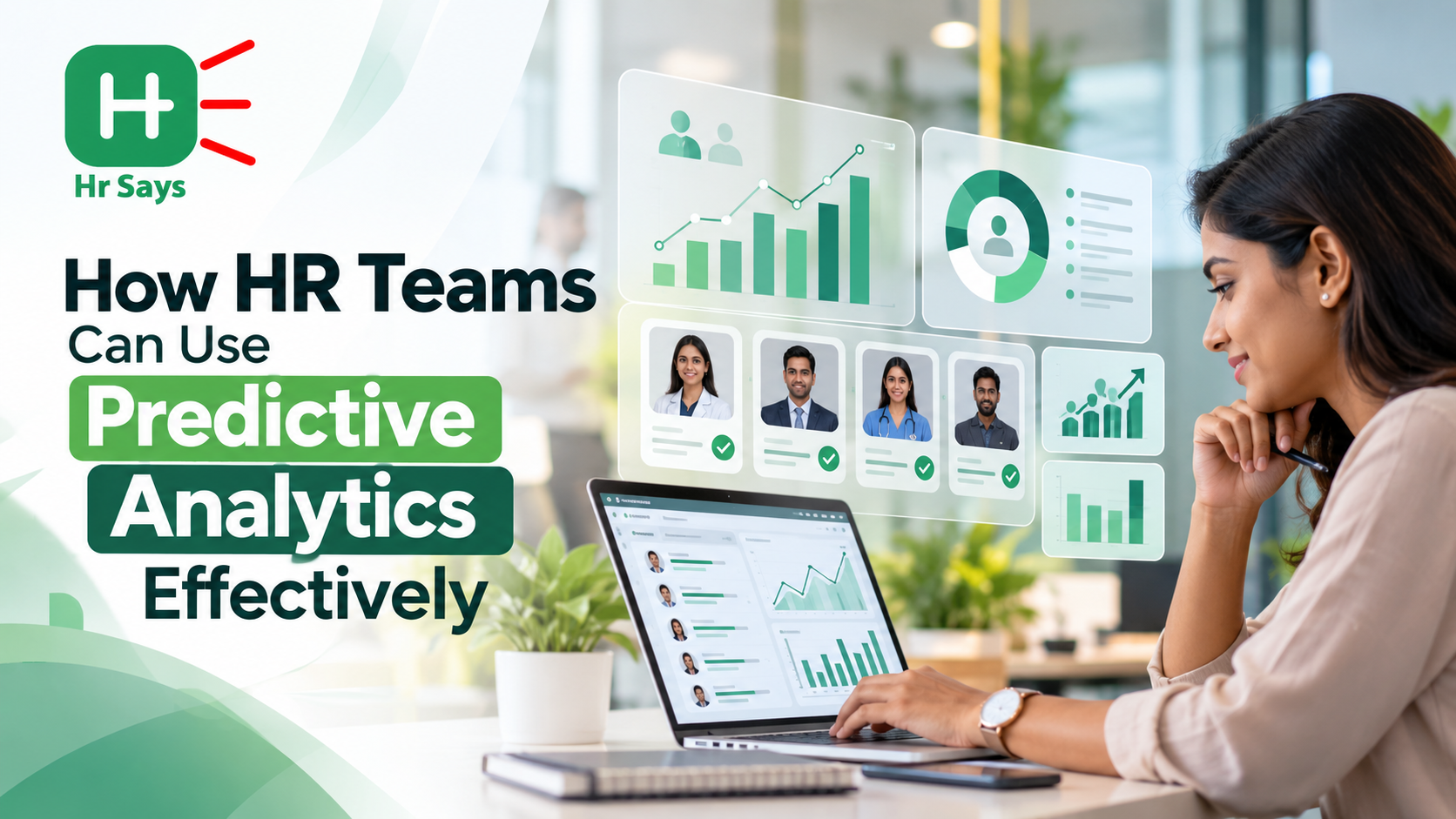
- Predictive analytics answers what is likely to happen next. Historical patterns can flag which teams or roles carry a higher risk of resignation in the coming quarter.
- Prescriptive analytics answers what should be done about it, recommending specific interventions such as revised compensation bands, manager coaching, or flexible work policies.
Most Indian organisations are still working primarily with descriptive and diagnostic analytics. A 2024 to 2025 industry study on people analytics maturity found that only about 22 percent of organisations rated themselves as highly effective at extracting value from their people data, which suggests there is considerable room for Indian companies to move up the maturity curve and gain a competitive advantage by doing so.
Why HR Analytics Has Become a Business Priority
Several forces are pushing HR analytics from a nice-to-have into a genuine business requirement for Indian organisations.
First, the cost of losing talent has become harder to ignore. Replacing an employee involves recruitment costs, lost productivity during the vacancy, and the time it takes a new hire to reach full performance. When multiplied across dozens or hundreds of exits a year, unmanaged attrition becomes a significant, quantifiable drag on profitability. Second, compliance complexity has increased substantially with the rollout of India's new labour codes and the Digital Personal Data Protection Act, both of which require organisations to maintain structured, auditable employee data rather than scattered spreadsheets. Third, hybrid and distributed work models, now standard across much of corporate India, make it harder for leaders to rely on hallway observation to gauge engagement, making data the more reliable signal.
Finally, boards and investors are increasingly asking for workforce metrics alongside financial ones, particularly in the context of ESG reporting and environmental, social, and governance disclosures where workforce diversity, safety, and turnover figures are now expected line items.
Key HR Metrics Every Business Leader Should Track
Business leaders do not need to track every metric an HR platform can generate. A focused set of indicators, reviewed consistently, delivers more value than a sprawling dashboard nobody reads. The following metrics are among the most useful starting points for Indian organisations.
- Voluntary turnover rate, which shows the percentage of employees who choose to leave and is often the clearest early signal of engagement or compensation issues.
- Time to hire and time to fill, which reveal how efficiently the recruitment pipeline is converting job openings into productive employees.
- Cost per hire, covering advertising, recruiter time, assessment tools, and onboarding, which helps leaders judge the financial efficiency of hiring.
- Employee net promoter score, a simple measure of how likely employees are to recommend the organisation as a place to work.
- Absenteeism rate, which can point to workload, wellbeing, or workplace culture issues before they escalate.
- Revenue per employee, a productivity indicator that connects workforce size directly to business output.
- Diversity and inclusion metrics, tracking representation across gender, tenure, and level, which matters increasingly for both compliance and employer branding in India.
For Indian business leaders, it is also worth tracking metrics tied to statutory compliance, including Provident Fund and Employee State Insurance contribution accuracy, and readiness for audits tied to the new labour codes. These figures rarely appear on standard HR analytics templates built for Western markets, yet they carry real financial and legal weight for companies operating in India.
HR Analytics Tools and How to Choose Them
HR analytics depends on both a system of record and a way to make sense of the data inside it. A Human Resource Information System, commonly called an HRIS, stores core employee data such as personal details, compensation history, and attendance. HR analytics is the layer that interprets that data to uncover trends and guide decisions. The two work together. Without a clean HRIS, analytics has little reliable data to work with. Without analytics, an HRIS remains a filing cabinet rather than a decision-making tool.
Indian organisations typically choose between global platforms and India-focused HRMS providers that build in local payroll, statutory compliance, and Tier 2 and Tier 3 city coverage as standard features. When evaluating tools, business leaders should look beyond feature lists and consider a few practical questions. Does the platform integrate cleanly with existing payroll and attendance systems? Does it offer real-time dashboards that a non-technical HR manager can actually use without extensive training? Does it support role-based access so sensitive employee data is only visible to those who need it, which matters given the DPDP Act's data governance requirements? And does the vendor provide India-specific compliance updates as labour codes continue to evolve through 2026?
For smaller organisations without the budget for enterprise platforms, general-purpose tools such as Excel, Power BI, or Tableau can support meaningful descriptive and diagnostic analytics, provided the underlying HR data is entered consistently. The tool matters less than the discipline of clean, structured data collection.
Using HR Analytics to Drive Strategic Decisions
The real value of HR analytics shows up when insights translate into action. A few examples illustrate how Indian business leaders are applying this in practice.
Reducing AttritionWhen a technology company in Hyderabad noticed a spike in resignations within a specific engineering pod, diagnostic analytics traced the pattern to a compressed project timeline and limited manager support, rather than compensation, as leadership had initially assumed. The fix involved redistributing workload and coaching the manager, which is a far less costly intervention than an across-the-board pay revision.
Improving Hiring EfficiencyCompanies scaling rapidly, particularly in sectors like e-commerce and fintech, use time-to-hire data broken down by role and location to identify which positions consistently take longer to fill. This often reveals bottlenecks in a specific interview stage or a mismatch between the advertised role and market compensation expectations, allowing recruitment teams to fix the actual constraint rather than simply adding more recruiters.
Supporting Workforce PlanningOrganisations expanding into Tier 2 cities increasingly use workforce analytics to model talent availability, expected compensation benchmarks, and attrition risk in new locations before committing to a facility, reducing the guesswork in expansion decisions.
Across each of these examples, the common thread is that analytics narrowed the problem down to something specific and solvable, rather than leaving leadership with a vague sense that something needed to improve.
Getting HR Analytics Implementation Right
Organisations that succeed with HR analytics tend to follow a similar, disciplined path rather than attempting to build a comprehensive analytics function overnight.
Start with a small, clearly defined set of goals. Rather than attempting to analyse everything at once, identify two or three business problems, such as high attrition in a specific function or slow hiring for a critical role, and build analytics around solving those first. Ensure data quality before investing in dashboards, since inconsistent data entry across departments or regional offices undermines even the most sophisticated analytics platform. Involve people with data skills, whether an in-house analyst or a vendor's implementation team, to help HR staff interpret findings correctly rather than drawing conclusions from correlation alone.
It is equally important to prepare the HR team itself. Many HR professionals in India are skilled at policy, compliance, and employee relations but have had limited exposure to data interpretation. Investing in basic analytics training pays off quickly, since it allows HR business partners to bring data-backed recommendations into conversations with department heads rather than anecdotal impressions.
Finally, treat legal and ethical use of employee data as a design requirement, not an afterthought. With the DPDP Act now in force, Indian organisations must be transparent about what employee data is collected, how long it is retained, and who can access it. Building this into the analytics rollout from day one avoids costly rework later and builds employee trust in how their data is used.
The Road Ahead for HR Analytics in India
HR analytics in India is moving quickly from basic reporting toward predictive and prescriptive capabilities, aided by AI-powered platforms that can flag attrition risk or skill gaps in near real time. Industry research suggests that a majority of HR leaders expect AI and automation to meaningfully reshape core HR functions in the near term, and Asia Pacific, with India as a significant contributor, is forecast to be the fastest-growing region globally for HR technology adoption.
For business leaders, the practical takeaway is straightforward. Waiting for a perfect, fully mature analytics function before starting is a mistake. The organisations gaining the most value today are the ones that began with a handful of consistent, well-understood metrics and built outward from there. HR analytics, used well, turns HR from a support function into a genuine strategic partner at the leadership table, and platforms like HRSays continue to track how Indian HR leaders are navigating this shift in practice.
Frequently Asked Questions
Q1: What is the difference between HR analytics and HR reporting?
HR reporting presents historical numbers, such as headcount or last year's attrition figure. HR analytics interprets that data to explain why the trend occurred and what action should follow.
Q2: Is HR analytics only useful for large companies in India?
No. Small and mid-sized Indian businesses can start with a few consistent metrics, such as attrition and time to hire, using tools as simple as a well-structured spreadsheet before scaling up to dedicated platforms.
Q3: Which HR metrics should Indian business leaders track first?
Voluntary turnover rate, time to hire, cost per hire, absenteeism rate, and employee net promoter score are practical starting metrics for most organisations.
Q4: How does HR analytics support compliance with Indian labour laws?
Structured HR data helps organisations track statutory obligations such as Provident Fund and Employee State Insurance contributions, supports readiness for audits under the new labour codes, and assists with data governance requirements under the DPDP Act.
Q5: What skills does an HR team need to work with analytics effectively?
A working knowledge of spreadsheets or business intelligence tools, basic statistical literacy, strong HR domain expertise, and the ability to translate numbers into a clear business narrative for leadership.
Resources
- Grand View Research, India HR Analytics Market Outlook, 2026 to 2033, market sizing and growth projections.
- Mordor Intelligence, HR Technology Market Size and Growth Drivers, regional and deployment trend analysis.
- HR.com, State of People Analytics Report, benchmark data on organisational analytics maturity.
- Ministry of Labour and Employment, Government of India, labour codes and statutory compliance references.
- Ministry of Electronics and Information Technology, Digital Personal Data Protection Act guidance for employers.
Interlinking Keywords:
HR technology trends India, employee attrition management, workforce planning strategies, HR compliance India, employee engagement metrics, people analytics maturity, HRMS for Indian businesses
Disclaimer:
This article is intended for general informational and educational purposes only and does not constitute professional HR, legal, financial, or compliance advice. While every effort has been made to ensure accuracy at the time of publication, HR policies, labour codes, and data protection regulations in India are subject to change. Readers are advised to consult a qualified HR consultant, legal advisor, or compliance professional before making decisions based on the information provided here. HRSays does not accept liability for any loss or damage arising from reliance on this content.