Sunday, September 20, 2026
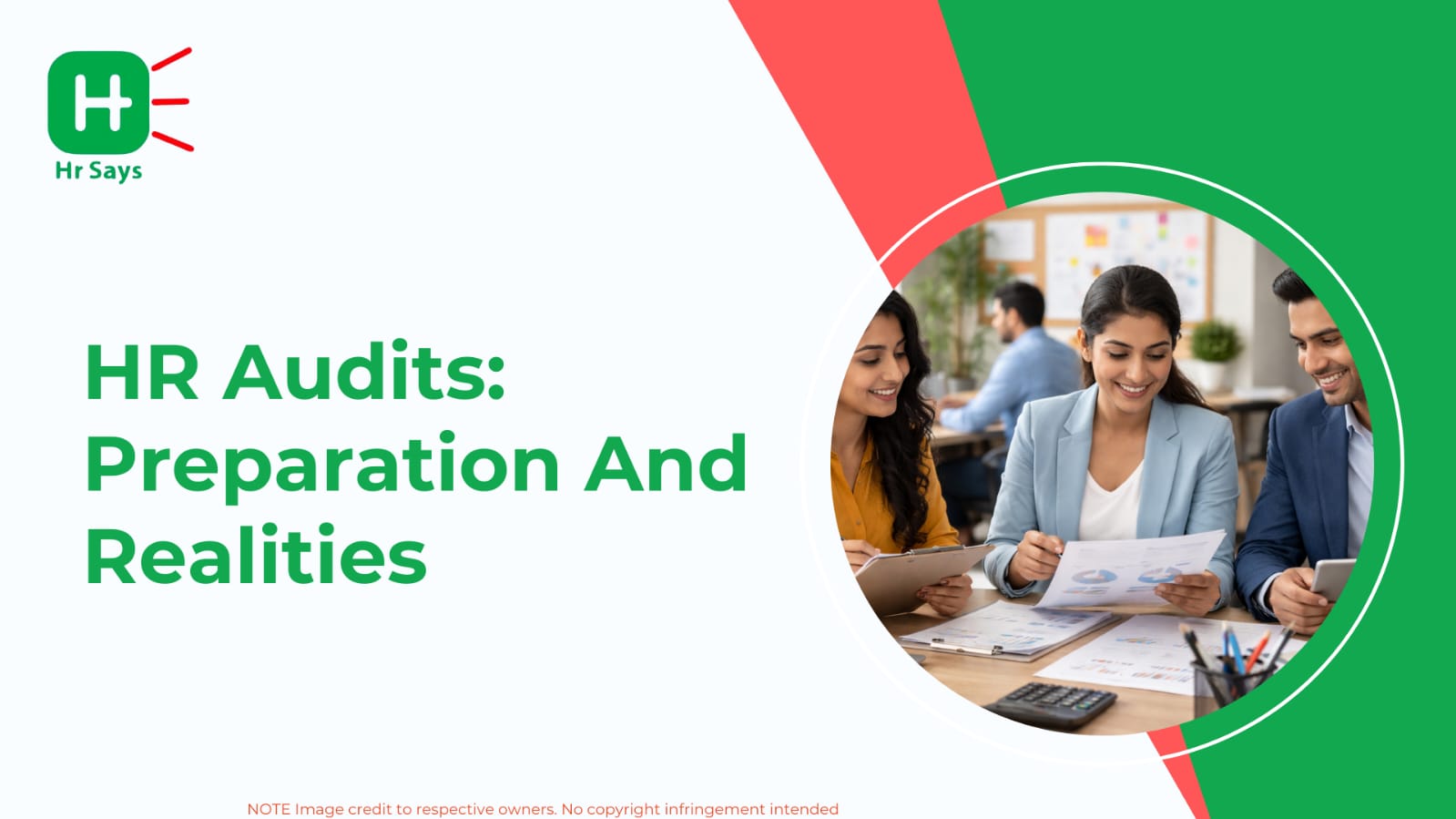
 HR audits help organisations assess compliance, consistency, and people processes. When
approached calmly, they reveal operational gaps and improvement areas. Preparation and
follow-through determine whether audits feel disruptive or quietly strengthen long-term HR
governance.
HR audits help organisations assess compliance, consistency, and people processes. When
approached calmly, they reveal operational gaps and improvement areas. Preparation and
follow-through determine whether audits feel disruptive or quietly strengthen long-term HR
governance.




An HR audit is thought to be an exercise that is filled with stress and documents. As a matter of fact, they are silent reflections put against the everyday practices of people. Slowly policies, habits, gaps are uncovered. Intentional preparation also means that audits cease to be like inspections, and begin to feel like required organisational pauses to gain clarity and comply.
Why HR Audits Are Taken Seriously Today
The workplace is being influenced by regular regulatory changes, hybrid working practices, and the ensuing growth in employee expectations. Consequently, HR audits are being regarded as risk management instruments as opposed to formalities. Gap areas in compliance are issued early. Costly disputes are avoided. Structured review strengthens the trust in systems.
Common triggers include
● Labour law amendments
● Investor or board reviews
● Mergers and internal restructuring
● Rising attrition or grievance patterns
What Gets Reviewed During An HR Audit
The scope is usually wider than expected. Documentation is examined, but intent and consistency are also evaluated. What is written and what is practiced are compared quietly.
Core areas that are reviewed
● Employee records and statutory registers
● Payroll accuracy and benefits compliance
● Leave, attendance, and overtime policies
● Hiring, onboarding, and exit processes
● POSH, DEI, and grievance mechanisms
Gaps are rarely dramatic. They are often procedural, repetitive, and overlooked over time.
Preparing Without Panic
Preparation is best handled as a process, not an event. Panic-driven cleanups tend to expose more issues. Calm alignment works better.
What preparation usually involves
● Policies are updated to reflect current laws
● Employee data is validated and organised
● Contracts and letters are reviewed for consistency
● Managers are briefed on process intent
Most corrections are administrative. Cultural issues surface only when patterns are ignored for long.
The Realities Organisations Often Face
HR audits rarely go exactly as planned. Some realities are quietly accepted during the process.
Common truths that emerge
● Policies exist but are not communicated
● Managers follow habit instead of process
● Compliance is partial, not absent
● Documentation lags behind operational growth
These findings are not failures. They are signs of scale and transition. What matters is how they are addressed after the audit closes.
What Happens After The Audit Matters More
An audit report is only useful when action follows. Recommendations are meant to be absorbed, not archived. Priorities are usually phased. Some fixes are immediate. Others are planned over quarters.
Follow-up actions often include
● Policy simplification
● HRMS or payroll automation
● Manager training on compliance basics
● Internal mini-audits at regular intervals
Over time, audits become smoother because systems mature.
Conclusion
HR audits are not about fault-finding. They are about alignment. When preparation is steady and expectations are realistic, audits become routine health checks. The real value lies in clarity, not compliance alone.