Sunday, September 20, 2026
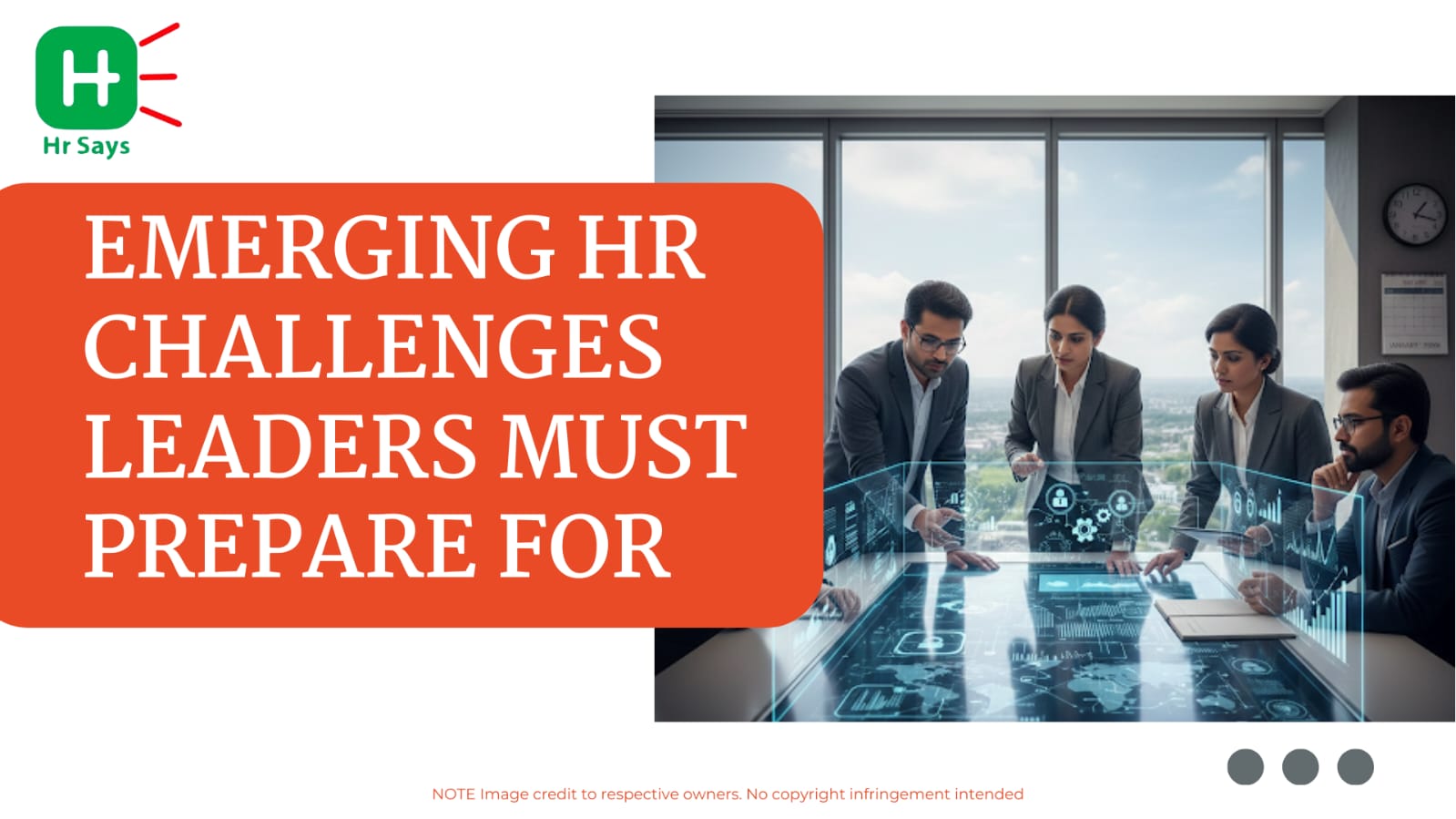
 Emerging HR challenges are being driven by hybrid work, employee wellbeing demands, AI
disruption, DEI accountability, and evolving compliance. Strategic preparation, ethical decision
making, and human centered leadership are becoming essential for sustainable workforce
management.
Emerging HR challenges are being driven by hybrid work, employee wellbeing demands, AI
disruption, DEI accountability, and evolving compliance. Strategic preparation, ethical decision
making, and human centered leadership are becoming essential for sustainable workforce
management.




It is like changing the shape of workplaces almost silently without any prior notice. What was perceived as being solid yesterday is being challenged every day. The expectations of the HR leaders are to react more quickly, think more profoundly, and plan in advance to the obstacles that have yet to be fully revealed. The job can no longer be supportive in itself. It has been made strategic, moral and very human.
Managing A Hybrid And Boundaryless Workforce
Working is no longer localized. Remote work team, cross border employee recruitment, and hybrid models of work are the norm. As a result of this change, consistency is being put to the test.
Redefining Productivity And Presence
Traditional performance metrics are being replaced slowly. Output, accountability, and collaboration are now measured beyond physical presence. Leaders are required to trust systems rather than surveillance.
Preventing Cultural Fragmentation
Company culture is being diluted when teams rarely meet. Shared values must be reinforced intentionally through communication, rituals, and leadership behavior.
● Clear remote work policies are being prioritized
● Asynchronous communication norms are being established
● Virtual inclusion practices are being refined
Rising Employee Wellbeing And Mental Health Expectations
Employee wellbeing is no longer a benefit. It is being viewed as a responsibility. Burnout, anxiety, and emotional fatigue are rising concerns across industries.
Moving Beyond Surface Level Wellness
Token initiatives are being questioned. Employees expect meaningful mental health support, psychological safety, and realistic workloads.
Training Managers For Empathy
People managers are being expected to notice early signs of distress. Emotional intelligence is being valued alongside technical skills.
● Mental health policies are being formalized
● Burnout prevention is being discussed openly
● Flexible scheduling is being normalized
Navigating AI, Automation, And Skills Disruption
Artificial intelligence in HR is expanding rapidly. Recruitment, performance reviews, and learning systems are being automated. With this growth, fear and confusion are also rising.
Reskilling Instead Of Replacing
Jobs are being redefined rather than eliminated entirely. Continuous learning is becoming essential for workforce stability.
Ethical Use Of HR Technology
Bias in algorithms and data privacy concerns are being scrutinized. Transparency is expected in how employee data is used.
● AI driven recruitment tools are being adopted cautiously
● Upskilling programs are being aligned with future roles
● Digital ethics frameworks are being introduced
Diversity, Equity, And Inclusion Under Real Scrutiny
DEI is being watched closely. Performative efforts are being challenged by employees and candidates alike.
From Statements To Systems
Inclusion must be reflected in hiring, pay equity, leadership pipelines, and daily decisions. Silence or inconsistency is being noticed quickly.
Handling Polarization And Conflict
Social and political differences are entering the workplace. HR leaders are being asked to balance free expression with respect.
● Inclusive leadership training is being expanded
● Pay equity audits are being conducted
● Psychological safety is being reinforced
Compliance In A Rapidly Changing Legal Landscape
Labor laws, data protection regulations, and workplace policies are evolving faster than before. Non compliance risks are increasing.
Staying Agile With Policies
Static handbooks are becoming outdated. Policies are being reviewed more frequently to match changing regulations and workforce expectations.
● Employment law updates are being tracked actively
● Data privacy compliance is being strengthened
● Gig and contract workforce policies are being clarified
Conclusion
The future of HR is being shaped by uncertainty rather than control. Leaders who prepare thoughtfully, listen carefully, and adapt steadily are more likely to build resilient workplaces where trust, relevance, and long term performance are sustained.