Sunday, September 20, 2026
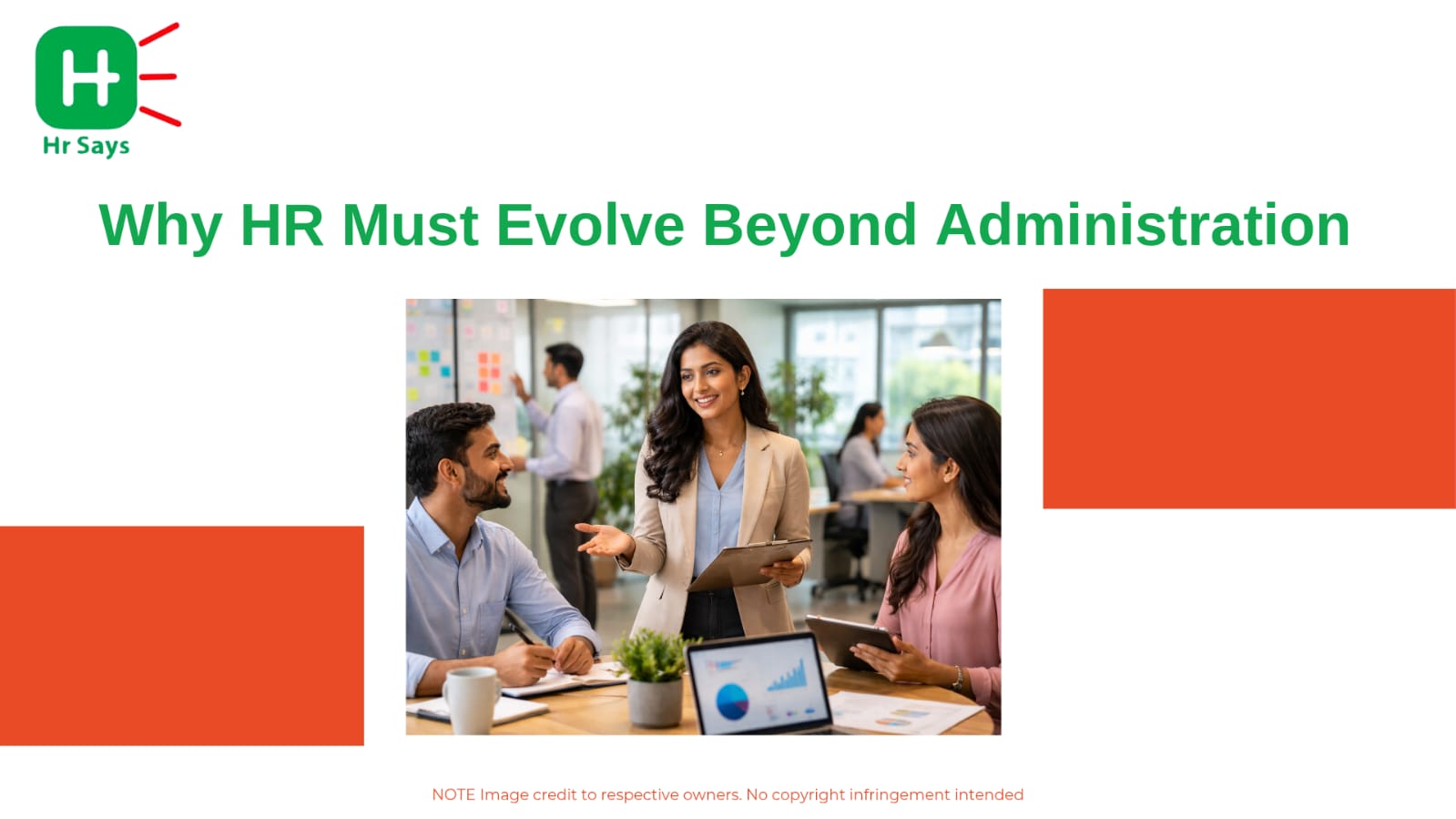
 HR must move beyond administration to remain relevant. Strategic involvement, employee experience design, data driven decisions, and culture building are reshaping HR into a function that quietly supports sustainable growth and meaningful work.




Over the years, the HR was regarded as the department that did file, policy, and payroll management. The same image is no longer appropriate in the modern day workplace. With work becoming digital, emotional and performance based, Hr is being forced to move into a position that influences persons, culture and business direction in the long run.
The Limits Of Administrative HR
The classic HR based itself on compliance and control. Forms were submitted and rules were implemented and problems addressed when they manifested themselves. This model is getting stressed out.
Why the old model falls short
● Employee expectations have shifted toward purpose and flexibility
● Hybrid and remote work have reduced visibility and control
● Talent shortages have increased the cost of disengagement
When HR is restricted to administration, people issues are treated as paperwork. Engagement, burnout, and attrition are noticed late. By then, damage has already been done.
HR As A Strategic Partner
HR is increasingly expected to sit closer to leadership decisions. Workforce planning, skills forecasting, and culture building are no longer optional extras.
Strategy is shaped through people
Business goals are achieved through people, not policies. When HR is involved early, hiring plans are aligned with growth, leadership pipelines are prepared, and teams are structured with intention.
Strategic HR allows:
● Data driven workforce decisions
● Alignment between business goals and talent strategy
● Early identification of skill gaps
Here, value is created quietly but consistently.
The Shift Toward Employee Experience
Work is no longer just about output. It is about how people feel while producing that output. This shift has placed employee experience at the center of HR’s evolving role.
Experience over enforcement
Policies still matter, but they are no longer enough. What stays with employees is how they are treated during moments that matter.
Key focus areas include:
● Onboarding that builds clarity and confidence
● Performance systems that encourage growth
● Feedback mechanisms that feel safe and useful
When experience is designed thoughtfully, trust is built. Productivity often follows.
HR And The Use Of People Analytics
Modern HR is being shaped by data. Decisions are no longer based only on instinct or precedent.
Insights instead of assumptions
With people analytics, patterns in engagement, turnover, and performance are revealed. Problems can be anticipated rather than reacted to.
This allows HR to:
● Predict attrition risks
● Measure engagement drivers
● Support leaders with evidence, not opinion
Administration becomes lighter. Insight becomes stronger.
Building Culture In A Changing Workplace
Culture is shaped daily, not announced once. As teams become distributed, HR plays a critical role in keeping values lived, not lost.
Culture as a continuous process
Culture is reinforced through communication, leadership behavior, and shared rituals. HR becomes the curator of these experiences.
When culture is ignored, confusion spreads. When it is nurtured, alignment grows quietly across teams.
Conclusion
HR can no longer remain a back office function. As work becomes more human and complex, HR is being asked to influence strategy, experience, and culture. Administration still exists, but it is no longer the core of the role.