Sunday, September 20, 2026
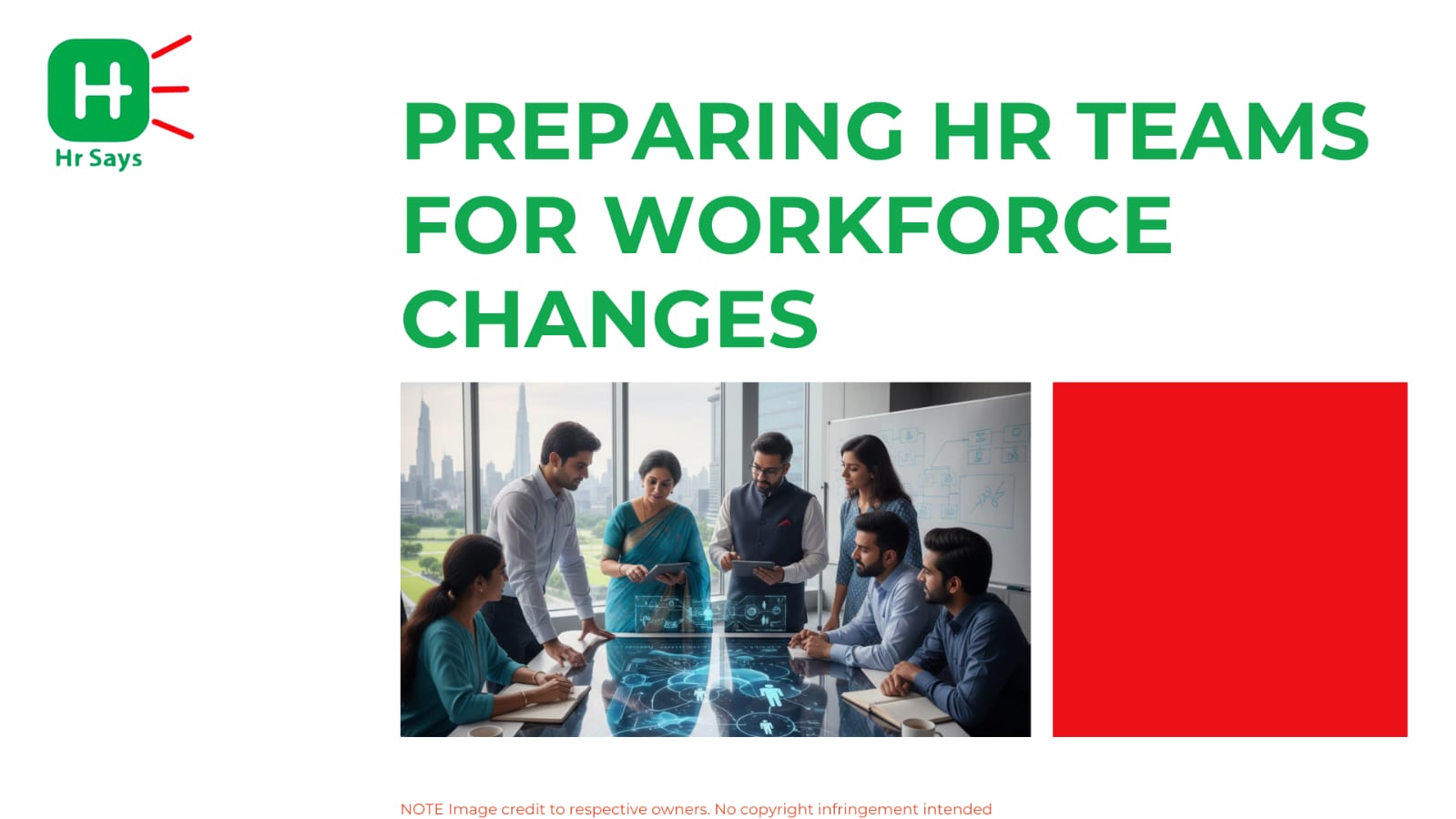
 Workforce change has become continuous rather than episodic. This blog explores how HR
teams can prepare through strategic alignment, skills development, communication, wellbeing
support, and data-driven planning to manage transitions with stability and clarity.
Workforce change has become continuous rather than episodic. This blog explores how HR
teams can prepare through strategic alignment, skills development, communication, wellbeing
support, and data-driven planning to manage transitions with stability and clarity.




Change of the work force is no longer a periodical discontinuity. It has already become a constant accompaniment to normal labor. Since automation to the hybrid format, changes are being encountered silently yet steadily. HR teams have been requested to make apparently silent adjustments, to plan without putting on tin foil, and become commanders without strict playbooks.
Understanding The Nature Of Workforce Change
The change in the workforce is not so abrupt nowadays. It tends to be progressive, stratified and determined by various forces simultaneously. The changing nature of employees, influences on employee expectations, demographics, and economic insecurity are transforming the way organizations are run today.
These shifts are experienced in most cases at people levels. Roles start to blur. Skills become outdated. Career trajectories appear less linear. The HR teams must be able to predict these movements before they manifest themselves as problems.
Aligning HR Strategy With Business Reality
HR strategy can no longer be created in isolation. It is now expected to move in step with business goals, market trends, and operational shifts. Workforce planning is being treated as a living process rather than a static document.
Key focus areas usually include
● Future skill requirements aligned with business growth
● Workforce agility and role flexibility
● Succession planning beyond leadership roles
When alignment is achieved, workforce changes are absorbed more smoothly and resistance is reduced.
Building Skills For A Changing Workforce
Upskilling and reskilling have become recurring priorities. However, learning programs are often underutilized when they feel disconnected from real work.
A more practical approach is being adopted
● Skills gaps are identified through ongoing performance data
● Learning is embedded into daily workflows
● Internal mobility is encouraged over external hiring
This allows employees to grow with the organization instead of feeling replaced by change.
Creating A Culture Of Continuous Learning
Learning cultures are rarely built through platforms alone. They are shaped by manager behavior, peer support, and psychological safety. When learning is normalized, change feels less threatening and more manageable.
Managing Change With Clear Communication
Change often fails not because of poor decisions, but because of unclear communication. Employees tend to fill silence with assumptions. HR plays a critical role in shaping the narrative.
Effective change communication is usually
● Consistent rather than frequent
● Honest about uncertainty
● Focused on impact, not just intent
When clarity is offered early, trust is preserved even during difficult transitions.
Supporting Employee Wellbeing During Transitions
Workforce change places invisible strain on employees. Job security concerns, role ambiguity, and workload shifts can quietly affect morale and productivity.
HR teams are increasingly focusing on
● Mental health support integrated into policies
● Manager training on emotional intelligence
● Flexible work arrangements during transitions
Wellbeing support is no longer viewed as a benefit. It is being recognized as a stabilizing force during change.
Using Data To Anticipate And Adapt
People analytics is being used not just for reporting, but for prediction. Attrition trends, engagement scores, and skill data are helping HR teams act earlier.
When decisions are informed by data, responses become measured rather than reactive. Change feels planned, even when conditions are uncertain.
Conclusion
Preparing HR teams for workforce changes is less about control and more about readiness. When adaptability is built into systems, skills, and culture, change stops feeling disruptive. It becomes part of how work naturally evolves.