Sunday, September 20, 2026
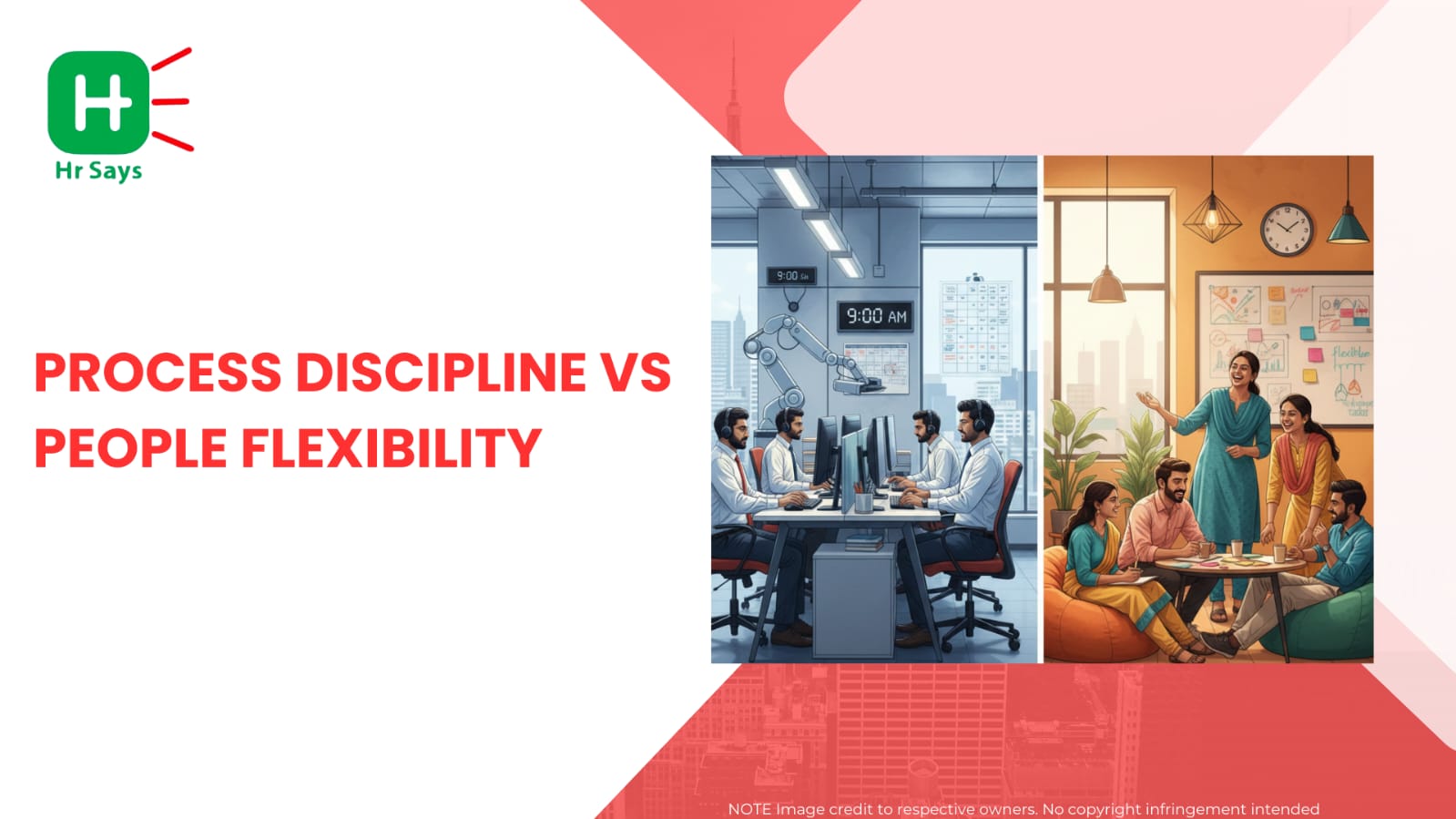
 Process discipline ensures consistency, while people flexibility allows adaptability. Sustainable
workplaces are shaped when structure guides decisions and human judgment fills the gaps,
creating balance, trust, and long term performance without rigidity or chaos.
Process discipline ensures consistency, while people flexibility allows adaptability. Sustainable
workplaces are shaped when structure guides decisions and human judgment fills the gaps,
creating balance, trust, and long term performance without rigidity or chaos.




The quiet tension usually prevails at workplaces. On the one hand, systems will be expected to work well. On the other hand, individuals are supposed to conform. Daily decisions between structure and sensitivity are made. This balance determines the manner of operation, performance and maintenance of the teams in the long run.
Understanding Process Discipline
Process discipline is designed on the basis of consistency, repeatability and control. Clear workflows are defined. Rules are documented. Standards of outcomes are measured. Such discipline is commonly used in the stable environments to minimize errors and enhance efficiency.
Predictability will be realized when processes are followed strictly. Teams are oriented towards the same expectations. Training becomes easier. There is a definition of accountability.
However, rigidity is also introduced.
● Creativity is often limited by fixed steps.
● Exceptions are treated as disruptions rather than signals.
● Human judgment is sometimes replaced by checklists.
In fast-changing industries, strict process discipline can begin to feel outdated. What was once efficient may slowly become restrictive.
Understanding People Flexibility
People flexibility is shaped around trust, adaptability, and context. Instead of rules leading behavior, judgment is encouraged. Individual strengths are considered. Situations are handled based on nuance rather than uniformity.
In flexible environments, employees are often empowered.
● Decisions are adjusted to real conditions.
● Innovation is more easily explored.
● Emotional intelligence is valued alongside skills.
Yet, flexibility carries its own risks. Without boundaries, inconsistency can emerge. Decisions may feel unfair. Performance may become difficult to measure. What works for one team member may confuse another.
Order can quietly dissolve if flexibility is left unchecked.
Where The Conflict Usually Appears
The conflict between process discipline and people flexibility is rarely theoretical. It appears in everyday moments.
A manager is asked to bend a rule for a high performer.
A deadline is missed due to personal constraints.
A process feels inefficient, but changing it requires approval layers.
In such moments, discomfort is felt. If discipline is enforced, morale may drop. If flexibility is allowed, standards may weaken.
This is where leadership maturity is tested.
Finding The Practical Balance
The solution is rarely found at extremes. Sustainable workplaces are built where processes guide, but people decide.
A few principles are often effective:
● Processes should define the baseline, not the ceiling.
● Flexibility should be intentional, not emotional.
● Exceptions should be reviewed, not normalized.
● Feedback loops should be built into systems.
When people understand why a process exists, compliance improves. When leaders explain why flexibility is granted, trust grows. Balance is not announced. It is practiced repeatedly.
In modern work cultures shaped by remote work, agile frameworks, and employee experience, this balance is becoming essential rather than optional.
Why This Balance Matters Long Term
Organizations are remembered less for their policies and more for how people felt within them. At the same time, performance is sustained only when systems are reliable.
When process discipline dominates, burnout is often reported. When people flexibility dominates, chaos is slowly introduced. Long term success is achieved when structure supports humans, not controls them.
This balance allows growth without confusion and care without compromise.