 Sunday, September 20, 2026
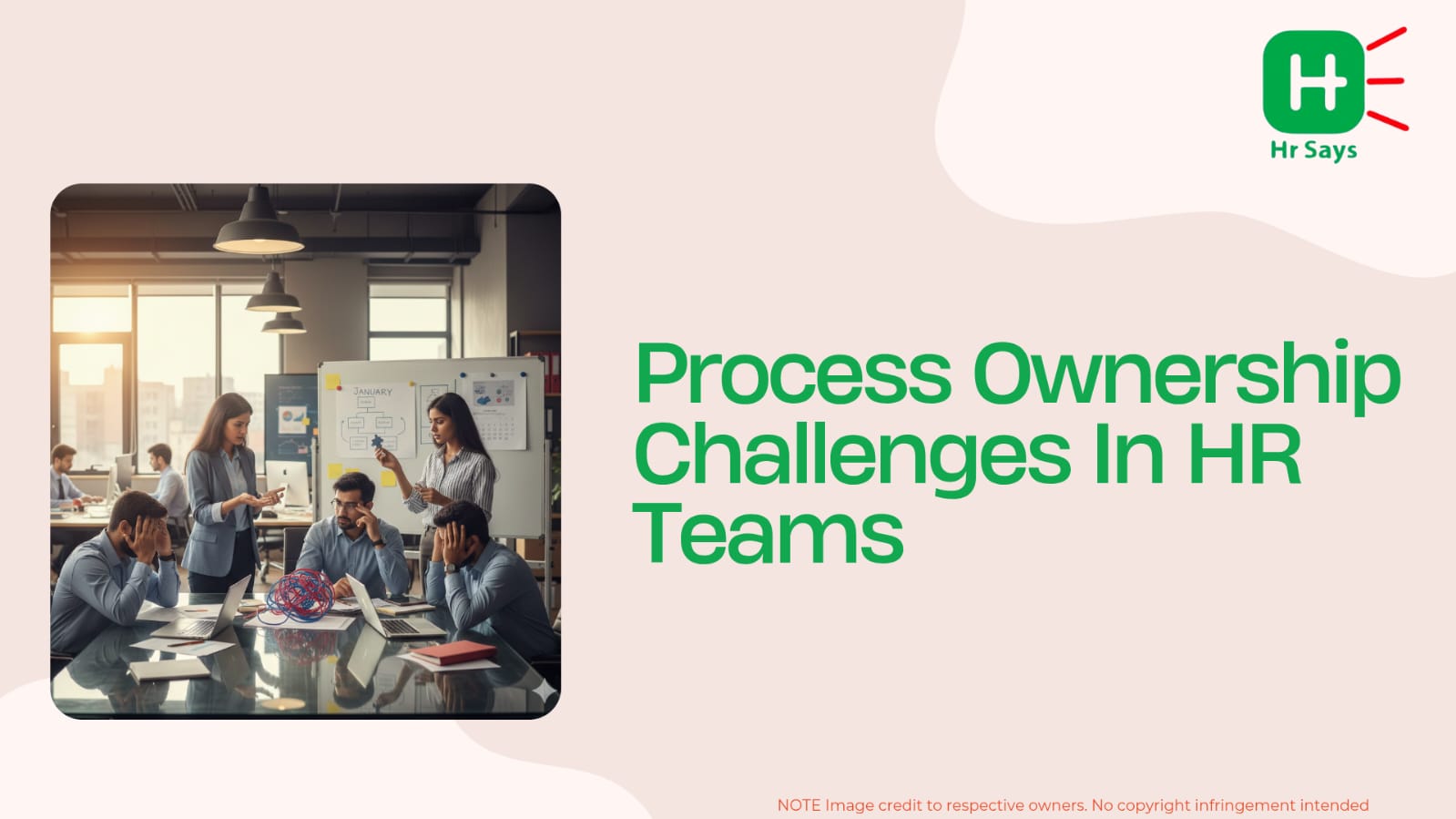
 Process ownership challenges in HR teams often arise from shared responsibilities and
frequent change. Clear accountability improves consistency, decision-making, and employee
experience while supporting scalable, efficient HR operations.
Process ownership challenges in HR teams often arise from shared responsibilities and
frequent change. Clear accountability improves consistency, decision-making, and employee
experience while supporting scalable, efficient HR operations.




Most processes in HR teams are developed with good reasons yet lack clarity in terms of ownership. So work keeps on going but there is a lot of blurred responsibility. This causes confusion, slowness and silent frustration, both on the part of the HR professionals as well as that of the employees over time.
Understanding Process Ownership In HR
Process ownership HR means having explicit ownership on designing, maintaining and refining people related workflow. The typical sharing of procedures is during recruitment, onboarding, payroll, performance management, and compliance procedures. The lack of definition of ownership results in the completion of tasks but lack of direction is common.
HR processes are supposed to be uniform, compliant and friendly to the employees. These expectations are watered down without having an identified owner. Decision making is delayed, small issues are never realised and improvement is seldom given priority.
Why Process Ownership Becomes Unclear
Shared Responsibilities Across Roles
In HR teams, responsibilities are often distributed to avoid silos. While collaboration is encouraged, ownership tends to get lost.
Common situations include:
● Recruitment tasks being split between HR, hiring managers, and external vendors
● Payroll processes being handled partly by finance and partly by HR
● Employee engagement initiatives being owned by everyone and no one
When everyone contributes, accountability is quietly assumed to belong elsewhere.
Frequent Policy And Leadership Changes
HR processes are deeply influenced by leadership vision, organisational growth, and regulatory updates. As policies change, ownership is rarely reassigned clearly. Processes are adjusted, but documentation and accountability lag behind.
Over time, teams are left managing workflows that no one fully owns or understands end to end.
Key Challenges Faced By HR Teams
Delayed Decision-Making
When ownership is unclear, approvals take longer. Decisions are passed across desks. Urgent employee issues are kept waiting, which impacts trust in HR systems.
Inconsistent Employee Experience
Processes handled by multiple people often lead to inconsistent outcomes. Onboarding experiences differ. Performance reviews feel uneven. Employees notice these gaps, even when intentions are good.
Process Breakdowns During Scaling
As organisations grow, informal processes stop working. What worked for a 50-person team struggles at 500. Without a clear process owner, scaling efforts feel reactive rather than planned.
Limited Process Improvement
Process improvement is usually driven by ownership. Without it, inefficiencies are tolerated. Manual work continues. HR technology adoption remains partial. Innovation slows quietly.
How Clear Ownership Strengthens HR Operations
Defined Accountability Builds Confidence
When a process owner is clearly defined, decisions are faster. Questions have a clear destination. Employees feel reassured knowing who to approach.
Better Alignment With HR Metrics
Ownership allows processes to be linked with HR analytics and KPIs. Time-to-hire, attrition, employee engagement, and compliance tracking become easier to monitor and improve.
Smoother Cross-Functional Collaboration
Clear ownership does not remove collaboration. It strengthens it. Stakeholders know who leads, who supports, and who decides. Confusion is reduced without creating rigid silos.
Practical Steps To Improve Process Ownership
Small steps are often enough to create clarity:
● Each core HR process should have one named owner
● Responsibilities should be documented and communicated
● Process reviews should be scheduled regularly
● Ownership should be updated when roles or structures change
Ownership does not mean control. It means accountability with shared input.
Conclusion
Process ownership challenges in HR teams often remain invisible until they cause disruption. Clarity, when introduced thoughtfully, strengthens trust, efficiency, and consistency. HR processes work best when someone is quietly but clearly responsible for keeping them on track.