Sunday, September 20, 2026
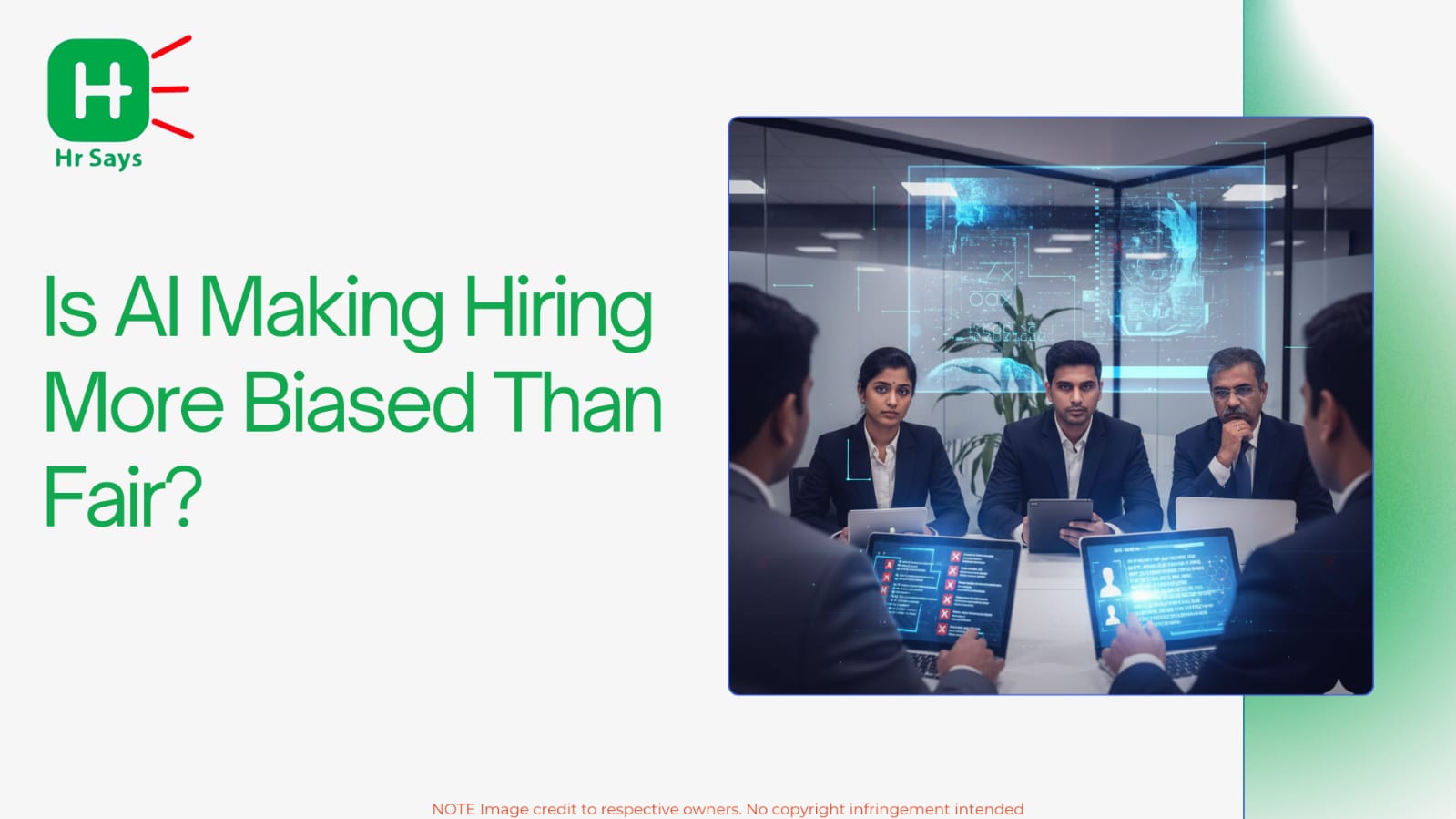
 AI has transformed hiring efficiency but raised concerns about fairness. Bias can be automated
through data and design choices. With oversight, audits, and human judgment, AI can assist fair
hiring rather than silently distort it.
AI has transformed hiring efficiency but raised concerns about fairness. Bias can be automated
through data and design choices. With oversight, audits, and human judgment, AI can assist fair
hiring rather than silently distort it.




Resumes, references and lengthy interviews were previously used to influence hiring. Algorithms are now being relied upon to shortlist, score and even reject applicants. The efficiency has gone up and fairness has been raised under the carpet. With AI joining recruitment pipeline, a very distracting question is being brought up. Is it decreasing bias, or being automated?
How AI Entered the Hiring Process
Volume redesigned recruitment. There were thousands of applicants presenting themselves in one position. In order to deal with this scale, artificial intelligence-based hiring technologies have been implemented. The resume screening machines, applicant track systems and predictive tests began to carry out the initial screening.
Key words matching, skill rating and rankings of candidates are now done automatically. Time is saved. Costs are reduced. However, these systems are conditioned with the history of hires. And historical information is usually manmade.
Where Bias Quietly Creeps In
Bias is rarely intentional in AI systems. It is inherited. Historical hiring patterns are used to train models. If those patterns favored certain genders, colleges, locations, or career paths, the same preferences are learned.
Several forms of bias are commonly seen:
● Resume gaps being penalized without context
● Non-traditional career paths being ranked lower
● Certain names or locations being deprioritized
● Soft skills being poorly evaluated by automated tests
What appears neutral on the surface may quietly reinforce inequality beneath.
The Illusion of Objectivity
AI is often described as objective. Numbers feel fair. Scores feel scientific. But algorithms reflect the assumptions built into them. Choices are made about what matters and what does not.
For example, productivity may be valued over adaptability. Speed may be rewarded over depth. Cultural fit may be defined too narrowly. These priorities are coded in advance and applied uniformly, even when nuance is needed.
As a result, unfairness can be scaled faster than ever before.
Can AI Actually Reduce Hiring Bias?
The answer is not entirely negative. When designed carefully, AI can reduce certain human biases. Blind resume screening can remove names and photos. Structured evaluations can limit gut-based decisions. Consistency can be improved.
However, this only works when systems are audited, updated, and questioned. Without human oversight, AI hiring tools can become black boxes. Decisions are accepted without explanation. Candidates are filtered out without feedback.
Fairness cannot be automated fully. It must be supervised.
What Fair AI Hiring Should Look Like
Responsible AI hiring requires intention, not blind trust. A few principles matter:
● Training data should be diverse and regularly reviewed
● Hiring criteria should be transparent and role-specific
● Human review should remain part of final decisions
● Bias audits should be conducted periodically
● Candidates should be given clarity, not silence
AI should assist judgment, not replace it.
The Human Role Still Matters
Hiring is not just about matching skills. Potential, growth, and context matter. These elements are difficult to quantify. When AI is treated as a decision-maker rather than a tool, fairness is compromised.
The future of hiring will likely be hybrid. Speed will be handled by machines. Wisdom must remain human.
Conclusion
AI is not making hiring biased on its own. Bias is being reflected, amplified, or reduced based on how systems are built and used. Fairness is still a choice. Technology can support it, but responsibility cannot be outsourced.