 Wednesday, September 23, 2026
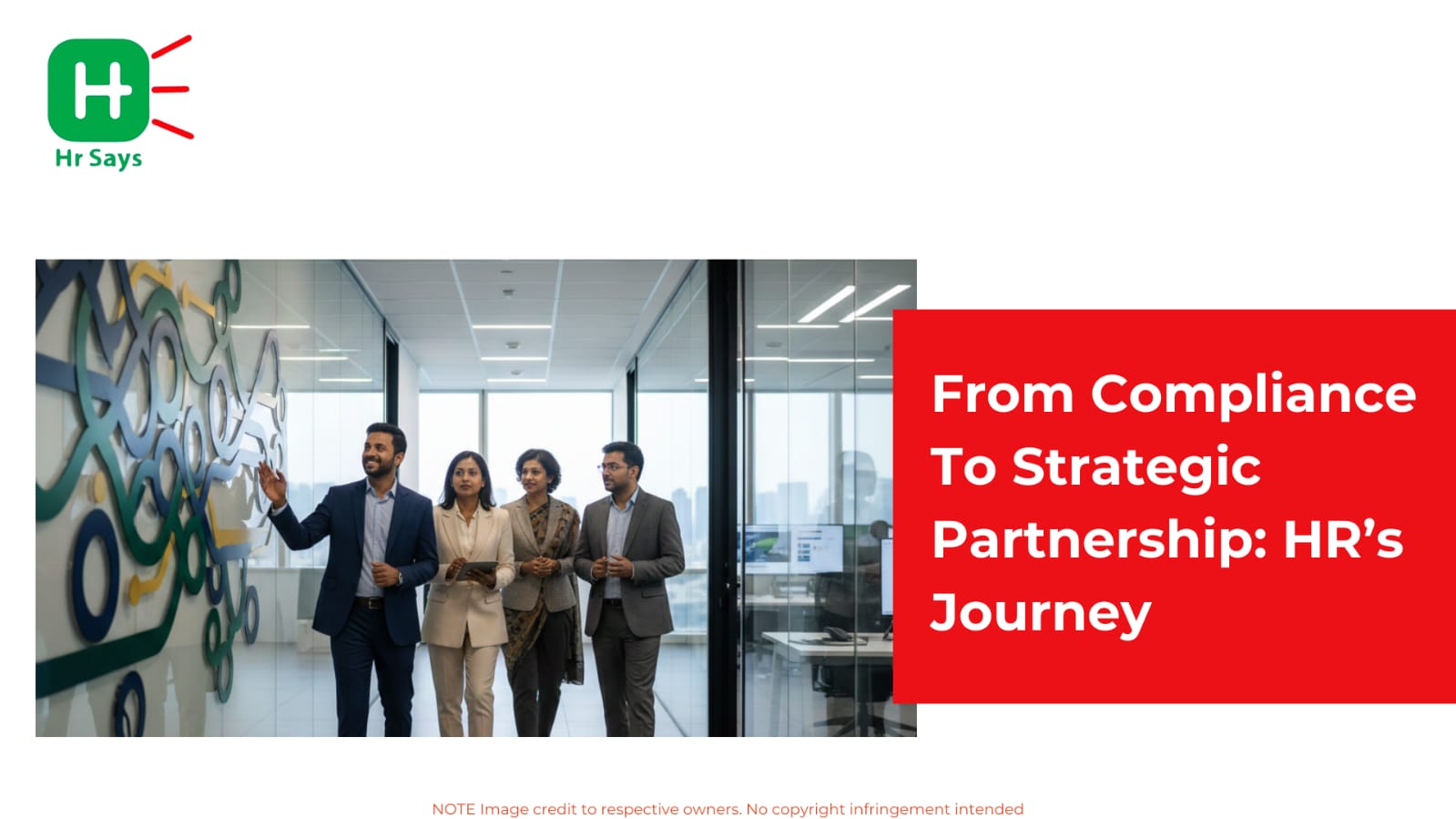
 HR has evolved from a compliance-focused function to a strategic business partner. This shift
has been driven by changing workforce needs, technology adoption, and a growing focus on
employee experience and long-term organizational performance.
HR has evolved from a compliance-focused function to a strategic business partner. This shift
has been driven by changing workforce needs, technology adoption, and a growing focus on
employee experience and long-term organizational performance.




Human Resources used to be perceived as checkpoint. Policies were implemented, documentation was done, and risks had been contained. As time progressed so did the expectations. HR is now being facilitated to think, impact, and define business results. That change was not made one day. It had been constructed, evenly and unobtrusively.
The Compliance-First Era
When first in its form, HR was mainly compliance based. Following was done since it was necessary to follow the rules. The fundamental tasks were viewed as employment regulations, accuracy of the payroll, attendance monitoring, and documentation.
Correctness was used to gauge the work and not impact. Not making any mistakes was success. The role remained in the background and could not be called upon very often in strategic discussion.
Why Compliance Alone Was No Longer Enough
As organizations grew more complex, people-related challenges could no longer be solved through policies alone. Talent shortages, rising attrition, workplace burnout, and shifting employee expectations started affecting performance.
It became clear that:
● Productivity was being shaped by culture, not just contracts
● Retention was being influenced by experience, not only compensation
● Business agility was being limited by outdated people processes
HR was expected to respond. A passive role was no longer sustainable.
The Shift Toward Strategic HR
Gradually, HR began to move closer to decision-making tables. People data started being analyzed, not just stored. Workforce planning was aligned with business forecasting. Employee engagement was treated as a growth driver.
This shift was marked by:
● HR analytics being used to guide hiring and retention decisions
● Talent management strategies being linked with long-term goals
● Learning and development being aligned with future skill demands
HR was no longer only supporting the business. The business was being shaped through HR.
Technology As a Catalyst
Digital HR tools accelerated this transition. Manual processes were automated. Insights were generated faster. Real-time feedback became possible.
With the adoption of HR technology, time was freed up. That time was redirected toward strategic thinking. Workforce trends were tracked. Employee experience platforms were introduced. Data-driven HR became more than a trend.
Still, technology did not replace human judgment. It amplified it.
HR As a Business Partner Today
In its current form, HR is being seen as a strategic partner. Collaboration with leadership is expected. Decisions around culture, capability building, and organizational design are being influenced by HR insights.
Modern HR contributions include:
● Advising leaders on change management and communication
● Shaping employer branding and employee value propositions
● Designing inclusive and flexible workplace policies
The role is not about control anymore. It is about alignment.
Challenges That Still Remain
Despite progress, the journey is ongoing. In many organizations, HR is still being pulled back into transactional work. Strategic intent exists, but execution is slowed by limited resources or unclear mandates.
The balance between operational efficiency and strategic contribution continues to be tested.
Conclusion
HR’s journey from compliance to strategic partnership reflects how work itself has evolved. People are no longer treated as resources alone. They are recognized as drivers of growth, resilience, and long-term value.