Thursday, October 01, 2026
 Manual HR processes rely on human effort, fragmented data, and outdated workflows. Over
time, this increases errors, compliance gaps, data security risks, and poor decision making,
quietly weakening organisational control and resilience.
Manual HR processes rely on human effort, fragmented data, and outdated workflows. Over
time, this increases errors, compliance gaps, data security risks, and poor decision making,
quietly weakening organisational control and resilience.




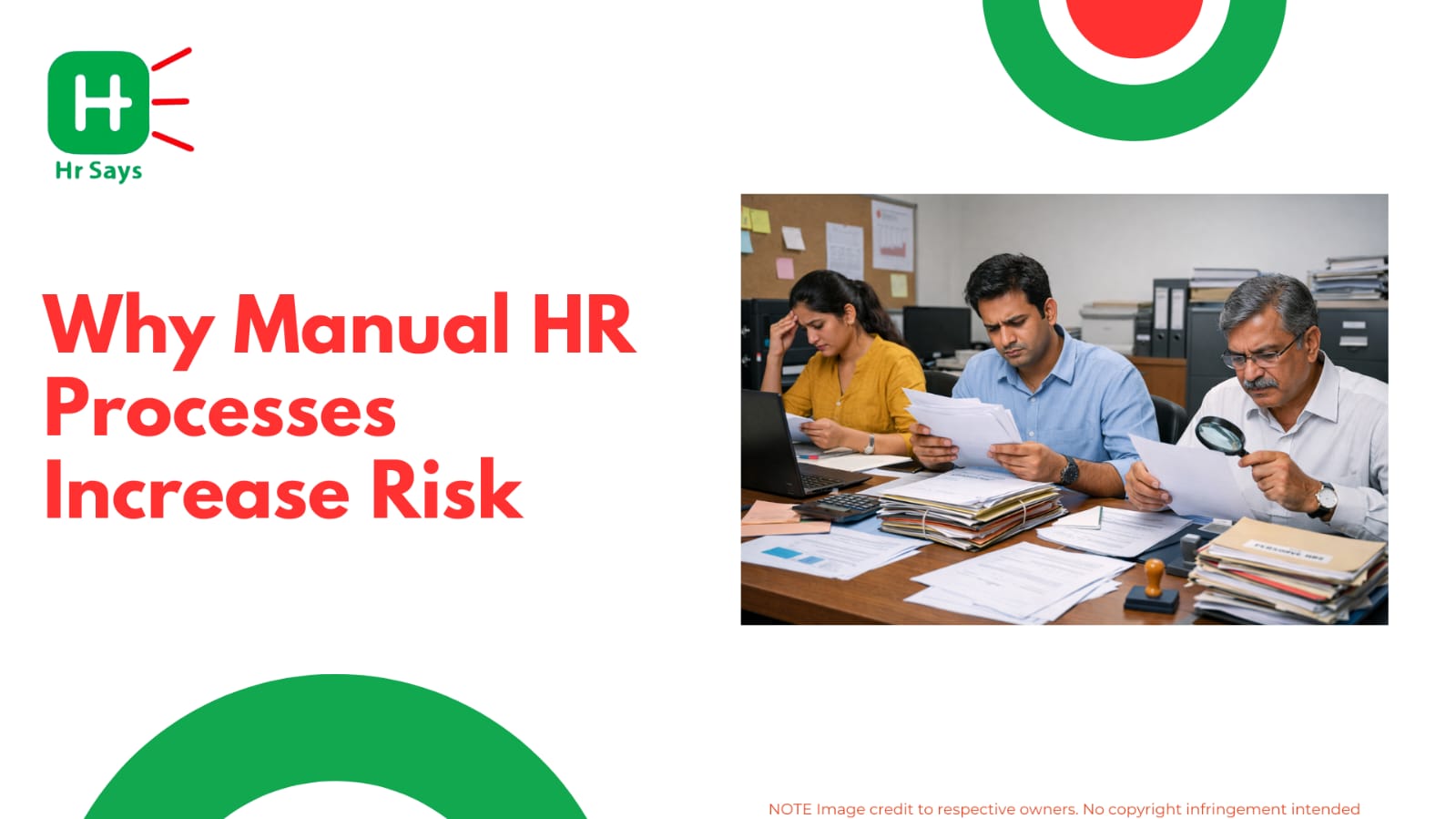
All organisations start with people and systems established around them. At most of the work places, the HR workstations are still performed in spreadsheets, emails, paper files, and memory. What is familiar is usually considered to be true. However, silent loopholes slowly widen and danger is gradually brought in to everyday activities.
Human Error Becomes a Business Risk
HR processes that are manual rely on people. Information is captivated, moved and revised manually. The mistakes are not uncommon in this arrangement. They are expected.
At first, small mistakes are usually ignored. An incorrect joining date, an old address or an inaccurately calculated leave balance could look insignificant. These mistakes accumulate with time and start interfering with the payroll accuracy, compliance reporting and employee trust.
Common issues created by manual handling include:
● Duplicate or missing employee records
● Incorrect salary or tax calculations
● Delayed updates to personal or role related data
When accuracy is left to memory and manual checks, risk is quietly normalised.
Compliance Gaps Are Easily Created
HR compliance requirements continue to expand. Labour laws, data protection rules, and statutory filings are updated regularly. In manual systems, tracking these changes is difficult.
Deadlines may be missed. Forms may be filled incorrectly. Required documentation may not be stored properly. These gaps are rarely intentional, but they are still treated as violations.
Key compliance risks often seen include:
● Late statutory filings
● Incomplete employee documentation
● Poor audit trails for HR decisions
When processes are not standardised or automated, compliance becomes reactive instead of controlled.
Sensitive Data Is Poorly Protected
HR teams handle highly sensitive information. Personal details, salary data, medical records, and performance notes are all part of daily work. In manual environments, this data is often stored across multiple files and systems.
Access control is rarely clear. Documents may be shared over email or stored on personal devices. Version control is lost, and accountability becomes unclear.
As data privacy laws tighten globally, such practices increase exposure to breaches, penalties, and reputational damage.
Productivity Loss Is Often Ignored
Manual HR work consumes time. Forms are followed up. Emails are searched. Records are cross checked repeatedly. While tasks are being completed, strategic work is delayed.
HR professionals are pulled into administrative loops instead of workforce planning, employee engagement, or talent development. Over time, HR is perceived as slow rather than strategic.
This operational drag is a risk in itself, especially in fast growing or people heavy organisations.
Decision Making Is Based on Incomplete Data
When HR data is spread across files and folders, insights are hard to generate. Reports are created manually and often reflect past situations rather than current realities.
Leadership decisions around hiring, attrition, performance, and cost are then based on partial information. Risk increases when decisions are made without reliable, real time data.
Conclusion
Manual HR processes do not fail loudly. They fail quietly. Risk builds through small inefficiencies, delayed actions, and invisible errors. As organisations scale and regulations tighten, what once worked begins to create exposure rather than stability