 Sunday, September 20, 2026
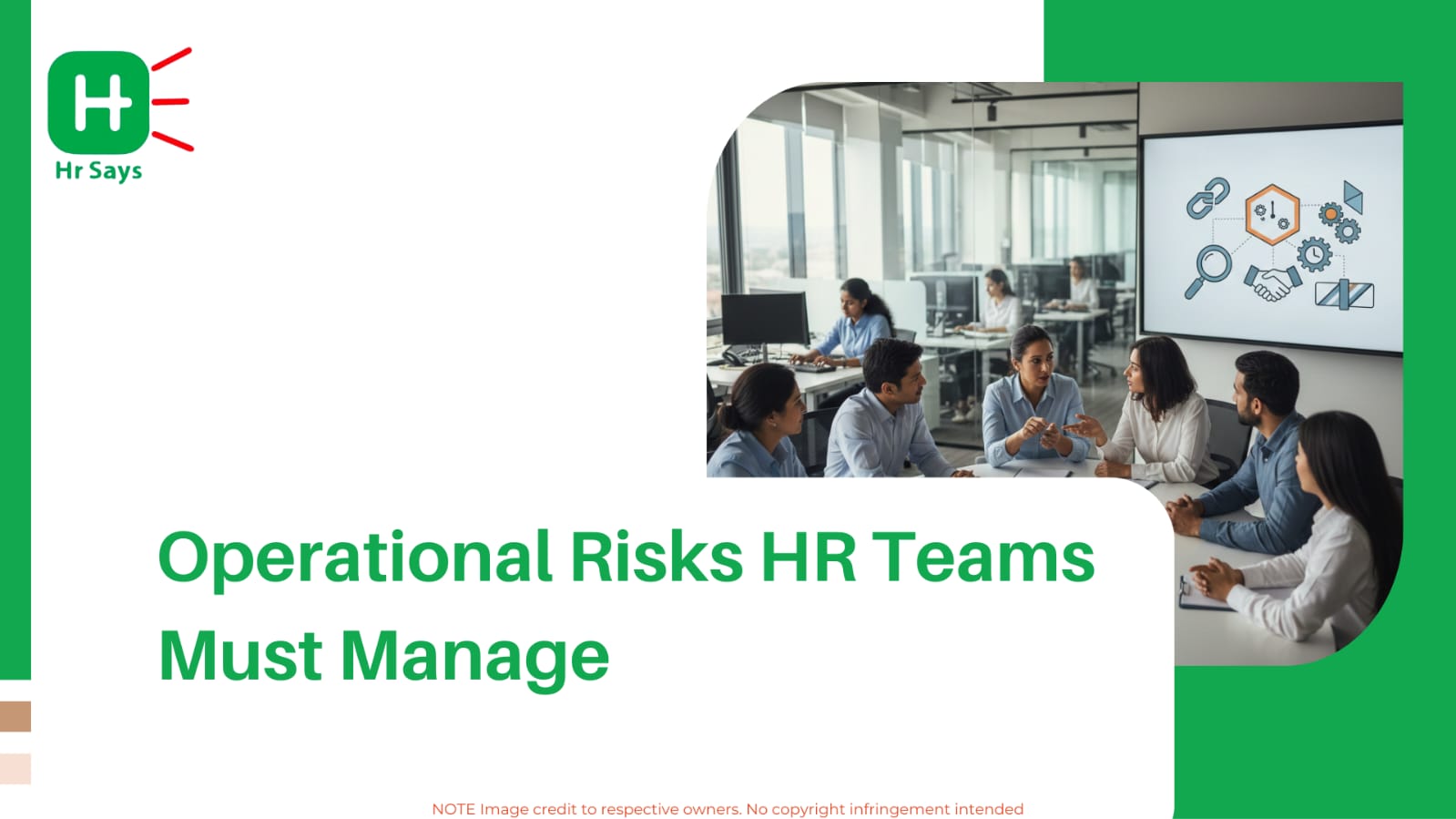
 Operational risks in HR affect compliance, workforce stability, data security, performance, and
continuity. This blog highlights key risk areas HR teams must manage proactively to protect
organizational resilience, employee trust, and long term operational effectiveness.
Operational risks in HR affect compliance, workforce stability, data security, performance, and
continuity. This blog highlights key risk areas HR teams must manage proactively to protect
organizational resilience, employee trust, and long term operational effectiveness.




The roles of modern HR are not just about hiring and paying. They are at the heart of the organizational stability. Operations risk is ignored, political processes become invisible and attitude becomes weak, and the trust among the employees is lost. Such risks are usually gradual in nature, which makes it difficult to notice before they can cause actual damages.
Compliance And Regulatory Risk
Regulations at the workplace still continue to transform in the areas of labor laws, data protection, and rights of the employees. In case compliance processes are not inspected actively, violations are frequently noticed in the wrong time.
Common risk areas include
● Misclassification of employees and contractors
● Incomplete statutory documentation
● Outdated workplace policies
● Inconsistent application of labor laws
Penalties, audits, and reputational damage are usually the visible outcomes. Preventive compliance checks are therefore treated as an operational necessity rather than a legal formality.
Workforce Planning And Talent Risk
Operational disruptions are frequently caused by poor workforce planning. Skill gaps are not always obvious until productivity slows or key employees exit.
This risk is heightened by
● High attrition rates
● Unplanned leadership exits
● Inadequate succession planning
● Overreliance on a few critical roles
When workforce data is not analyzed consistently, reactive hiring becomes the norm. Long term capability building is then compromised.
Employee Data And HR Technology Risk
HR systems store sensitive employee data. Any weakness in data governance creates serious operational exposure.
Typical risk triggers include
● Manual data handling errors
● Weak access controls
● Poor integration between HR tools
● Lack of regular system audits
Data breaches or payroll inaccuracies are often traced back to system neglect. With increasing focus on HR analytics and digital HR transformation, technology risks must be actively managed.
Performance Management And Productivity Risk
When performance frameworks lack clarity, productivity risks rise quietly. Expectations may be misunderstood, feedback cycles delayed, and accountability diluted.
This risk is often seen when
● Role responsibilities are unclear
● Goal setting lacks alignment
● Performance reviews are inconsistent
● Manager capability gaps exist
Over time, disengagement grows. Performance issues are then treated as people problems rather than structural ones.
Employee Relations And Workplace Culture Risk
Culture related risks are subtle but costly. Poor grievance handling, unresolved conflicts, and perceived bias can destabilize teams.
Warning signs include
● Rising employee complaints
● Declining engagement scores
● Increased absenteeism
● Low trust in leadership
When employee experience is not monitored carefully, small issues tend to escalate into formal disputes or attrition spikes.
Business Continuity And HR Operations Risk
HR plays a critical role in business continuity planning. Operational risks emerge when contingency plans are missing or outdated.
Key vulnerabilities involve
● Absence of remote work protocols
● Lack of backup for key HR processes
● Unclear crisis communication plans
During disruptions, HR systems are expected to function without delay. Preparation determines resilience.
Conclusion
Operational risks in HR rarely appear suddenly. They build through neglected processes, unclear ownership, and outdated systems. When addressed early, these risks are reduced quietly. When ignored, they tend to surface at the most inconvenient moments.