Saturday, October 24, 2026
 You know the birthdays, the anniversaries, the pet’s name and their son’s exam schedule. But when you cancel a meeting because you’re unwell, no one asks if you’re okay.




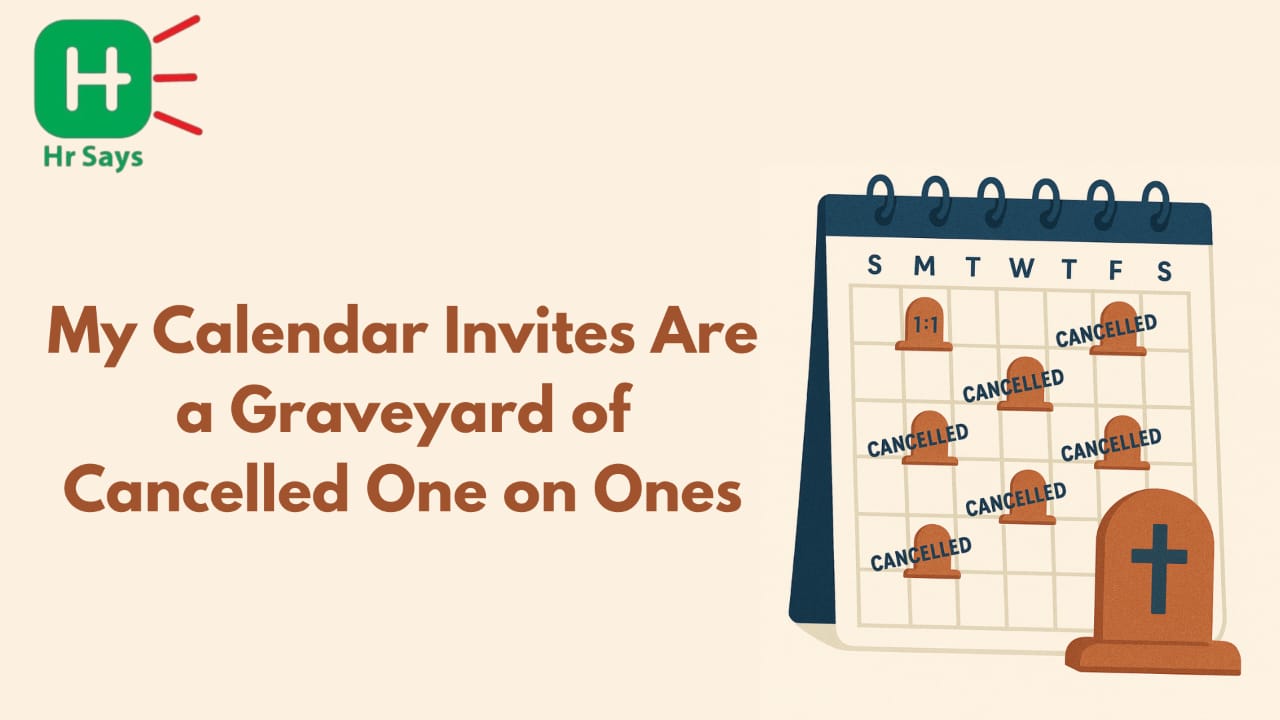
I’ve stopped expecting those little dings on my calendar to mean anything anymore. A dozen recurring one on ones, several check-ins, feedback sessions that were supposed to "never get postponed" and yet, there they sit. Faint grey boxes marked “rescheduled,” “cancelled,” or worse, just silent no shows. If my calendar were a diary, it would read like a love letter to broken promises.
HR isn't just about policies and payroll. It's about quiet, consistent presence. We’re the ones who say, “I’m here if you want to talk,” and mean it, even when no one knocks. But when every slot you reserved for someone else is wiped out by another “urgent client call” or a vague “running behind today,” it leaves behind something no one talks about, a strange hollowness. Not anger. Not frustration. Just a persistent invisibility that clings like humidity.
Being in HR is learning to be okay with never being the priority. Your meeting is always the one that gets bumped. You’re always the one who’ll “understand.” And yes, we do. That’s the job, isn’t it? Empathy on demand. But beneath that emotional intelligence is emotional erosion. The kind that doesn’t show up in burnout surveys because you’re still showing up.
Those one on ones, they weren’t just meetings. They were promises. A space to connect, support, reflect. They were chances to check if someone’s “I’m fine” was real or rehearsed. They were your backstage pass into the psychology of teams. And when they vanish, it’s not just the slot that goes it’s the trust thread you were trying to weave, one conversation at a time.
What’s ironic is that most of these meetings were set up at the request of the very people who now don’t have time for them. "I really want to talk more regularly," they’d say after a team conflict. "Can we block 30 minutes every two weeks?" And you’d nod, add it to the calendar, maybe even colour code it so it feels intentional. But somewhere between QBRs, client escalations, and endless status updates, your slot becomes the sacrificial lamb. You become optional.
And here’s the kicker, they still come to you when there’s a crisis. Because you’re reliable. You’ll be there, tissues in one hand, policy document in the other, navigating tears and terminations with the same calm voice. But you're rarely invited in for the good stuff like the growth moments, the high-fives, the spontaneous coffee chats where culture actually lives. You’re the backstage crew. Visible only when something’s on fire.
HR professionals in India, especially in growing startups and mid sized firms, often find themselves playing ten roles at once. Therapist, trainer, complaint box, walking policy manual. But what we rarely admit is how exhausting it is to always be the one holding space for others while having none reserved for yourself. That emotional fatigue doesn’t scream it whispers. In cancelled invites. In unread emails. In being left out of the “core team” offsite after you spent weeks planning it.
We’ve romanticized resilience in HR far too long. We celebrate being the “go to” person without realizing the toll it takes to always be available. Availability, in itself, has become a trap. You’re so easy to reach, you become easy to ignore. And the more you're skipped over, the more you start shrinking, not your work, not your output, but your voice.
The HR tech stack has evolved. We’ve got engagement tools, pulse surveys, dashboards that tell us who’s disengaged. But what about the HRs themselves? Who asks us how we feel when our only connection with the team becomes transactional? When every invite that vanishes chips away at our belief that we matter too?
It’s a strange place to be, known by everyone but deeply connected to no one. You know the birthdays, the anniversaries, the pet’s name, the son’s exam schedule. But when you cancel a meeting because you’re unwell, no one asks if you’re okay. The calendar just breathes a little easier.
This isn’t a plea for sympathy. It’s a mirror. For every HR who has stared at an empty slot and still followed up with, “Happy to reschedule,” we see you. For every People Ops professional who has watched their carefully curated one on ones turn into one off check ins, your effort wasn’t wasted. The impact of your consistency may not show in KPIs, but it echoes in culture.
But maybe, it’s also time we reframe this quiet erosion. Maybe, as HRs, we need to stop waiting for validation in the form of attended meetings. Maybe we start reclaiming that time. Not with bitterness, but with clarity. A cancelled invite can be a nudge to check in with yourself instead of someone else. It can be space to write that policy you’ve been postponing. Or to simply do nothing. Yes, nothing because holding space for others shouldn’t cost you your own.
Maybe we need to stop being too available. To honour our own time as much as we honour everyone else's. To say, “No worries,” a little less and “This time was blocked for something important” a little more. Because it was. It was blocked for human connection, for emotional health, for culture building that doesn’t come with a deadline.
So yes, my calendar looks like a graveyard some weeks. But maybe I’m done grieving. Maybe those grey boxes are not just reminders of missed conversations maybe they’re now boundaries I’ll protect. Because being available doesn’t mean being invisible. And showing up for others starts with showing up for yourself. And to every HR professional quietly staring at another “Declined” notification you are not alone. And you are not optional.