 Thursday, October 01, 2026
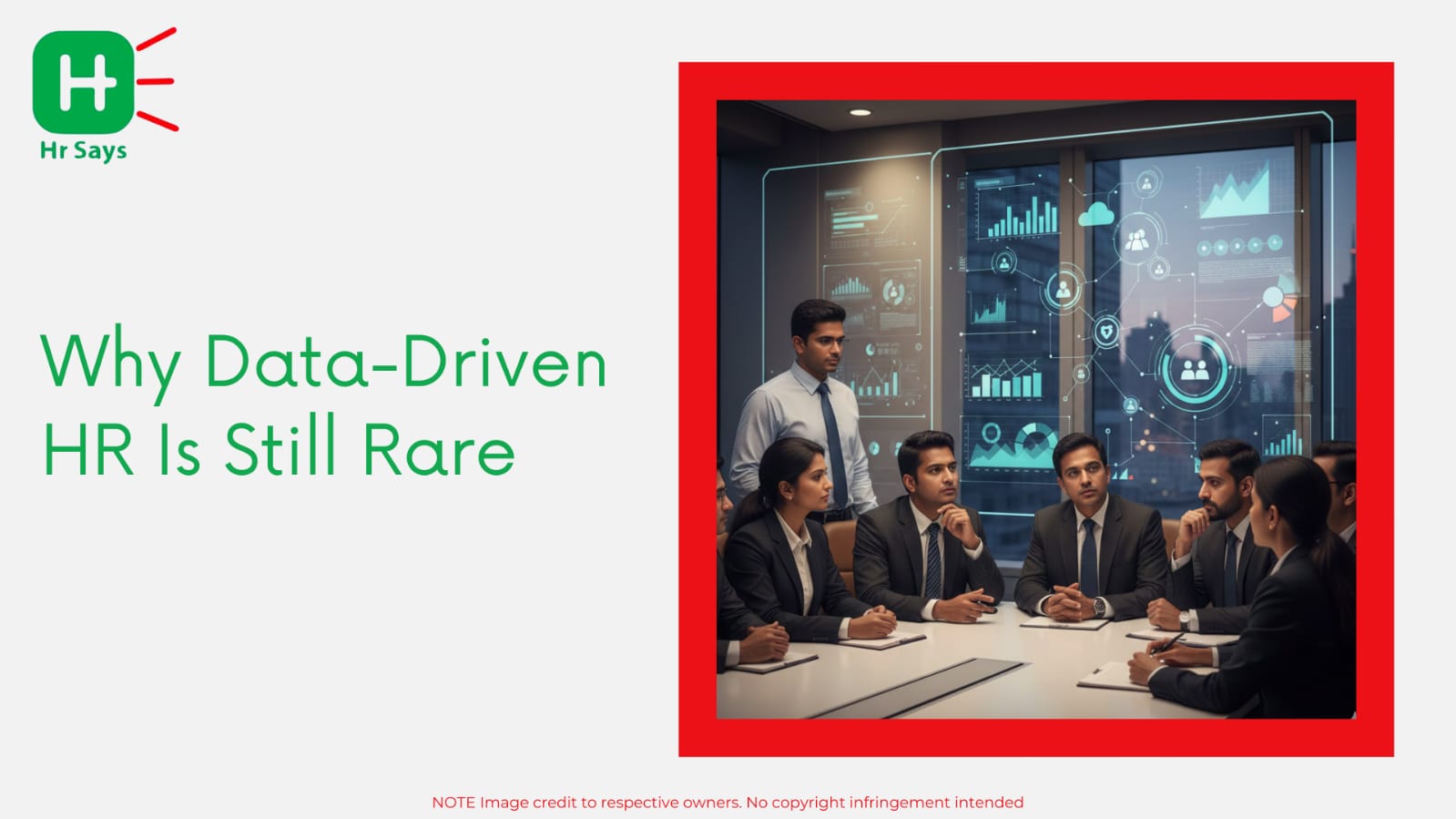
 Data-driven HR remains uncommon due to cultural resistance, fragmented data, skill gaps, and weak leadership alignment. The challenge is less about technology and more about mindset, trust, and the willingness to evolve how people decisions are made.




Data is everywhere. Dashboards exist. Tools are available. Nevertheless, HR judgments continue to be made out of instinct rather than of insight. Data-based HR is still postponed somewhere in between between spreadsheets and people stories. The motives are muffled than we would have thought, and much more human.
The Promise Everyone Talks About
It is claimed that data-driven HR is the future of people management. Better hiring. Smarter retention. Planning of workforce that is predictable. The idea sounds simple. Apply HR analytics, quantify things that matter and take reasonable action. Factually, this commitment remains largely on slides, but not systems.
The gap is not about ambition. It is about execution.
Comfort With Intuition Runs Deep
HR has always been people-first. That strength also became a limitation. Decisions were shaped by experience, conversations, and emotional intelligence. These still matter. But when numbers enter the room, discomfort follows.
Data feels cold. People feel complex. The balance is rarely taught.
Many HR professionals quietly fear that data may reduce empathy. That fear slows adoption, even when tools are available.
Data Exists, But It Is Scattered
HR data lives in fragments. Recruitment software holds one part. Payroll another. Performance tools sit elsewhere. None of it talks smoothly.
Without clean, connected data, analytics becomes guesswork. Dashboards look impressive but lack trust. When data quality feels weak, decisions return to instinct.
The problem is not the absence of data. It is the absence of structure.
Skills Gap Is Rarely Admitted
Data literacy is still uneven across HR teams. Terms like predictive analytics, workforce metrics, or attrition modeling sound intimidating. Training is often optional. Time is limited. Support is minimal.
Instead of saying “we need help,” silence is chosen.
This keeps HR analytics limited to reporting, not insight.
Leadership Often Sends Mixed Signals
Executives ask for data-backed decisions. At the same time, they reward speed over depth. When insights take time, pressure builds. When numbers challenge beliefs, they get ignored.
This sends a clear message. Data is welcome only when it agrees.
Under such conditions, data-driven HR cannot grow.
Technology Alone Does Not Fix It
New HR tech platforms promise transformation. Tools are purchased. Logins are created. Adoption stays shallow.
Technology without mindset change becomes digital paperwork. Data gets stored, not used. Insights remain untouched.
True transformation needs patience, clarity, and consistent intent.
What Quietly Holds HR Back
Several subtle barriers continue to exist.
● Fear of losing the human touch
● Poor data integration across systems
● Limited analytics training
● Low confidence in data accuracy
● Weak leadership commitment
None of these are dramatic. Together, they slow progress.
The Way Forward Feels Uncomfortable
Data-driven HR is not about replacing judgment. It is about strengthening it. Numbers do not remove empathy. They sharpen it.
Progress begins when curiosity replaces fear. When questions are encouraged. When HR is allowed to learn, fail, and try again.
The shift is cultural, not technical.
Conclusion
Data-driven HR remains rare because it challenges habits, comfort, and identity. Tools are ready. Data exists. What lags behind is confidence, capability, and consistent belief that people decisions deserve the same rigor as business ones.