 Thursday, October 01, 2026
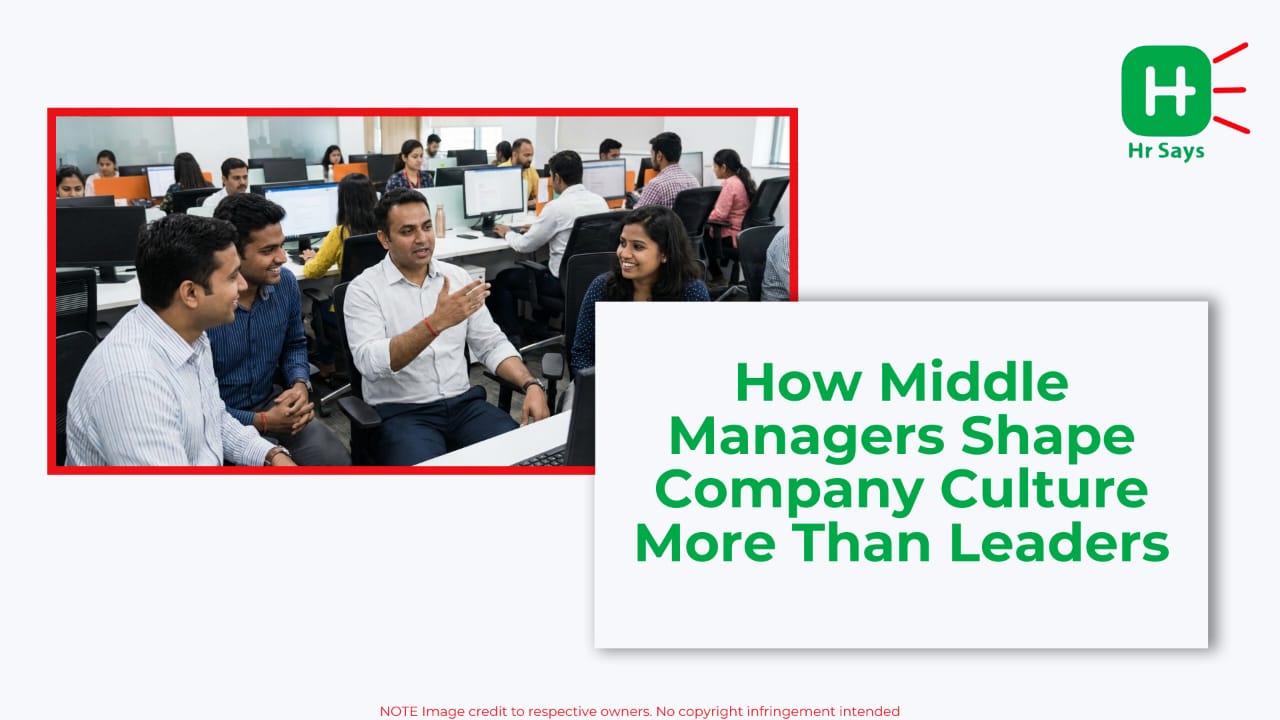
 Middle managers shape company culture through daily decisions, behaviours, and team
interactions. Their proximity to employees gives them greater influence than senior leaders in
defining trust, engagement, and lived workplace values.
Middle managers shape company culture through daily decisions, behaviours, and team
interactions. Their proximity to employees gives them greater influence than senior leaders in
defining trust, engagement, and lived workplace values.




Culture does not often have a construction in boardrooms. It is constructed through lengthy meetings, hasty feedback and decisions that are quietly established. In as much as leaders map vision, culture is a daily lived process through the operationalization of middle managers. Such influence is not taken into account most of the time.
Culture Is Experienced, Not Announced
Mission statements and town halls do not impart culture. It is acquired in day-by-day experiences. Middle managers make strategy a reality. How work can actually feel depends on their tone, priorities and behaviour. The normalcy of what they do is accepted. The reward they give is repeated.
In cases when policies seem far-fetched, managers turn them into a reality. In the cases where values are abstract, managers make them meaningful. It is in this place that culture in the workplace can find its place.
The Power of Proximity
Middle managers sit closest to employees. That proximity gives them unique cultural power.
Daily Behaviour Sets the Standard
Small actions matter more than big speeches.
● How feedback is delivered
● How mistakes are handled
● How deadlines are negotiated
● How fairness is practiced
These moments shape employee experience. Leadership culture may inspire. Managerial behaviour sustains or erodes it.
Psychological Safety Is Built Here
Trust is rarely created by senior leaders directly. It is built when managers listen, protect their teams, and allow honesty. A culture of psychological safety grows when employees feel seen without fear. This depends heavily on middle management.
Where Strategy Meets Reality
Leaders define company values. Managers decide how those values are applied under pressure.
Values Are Tested in Constraints
When targets are tight, values are tested. Middle managers choose whether speed beats ethics, or empathy beats efficiency. These choices quietly redefine company culture.
If inclusion, work life balance, and transparency are compromised at this level, culture shifts regardless of leadership intent.
Alignment Or Disconnect
Strong middle management aligns teams with business goals. Weak alignment creates confusion. Mixed signals lead to disengagement. This is why employee engagement trends often reflect manager quality more than leadership vision.
Culture Spreads Sideways
Culture is contagious across teams. Middle managers influence peers as much as subordinates.
Informal Influence Matters
Managers share norms through conversations, expectations, and reactions. These informal cues travel faster than formal communication. Over time, they create a shared sense of what really matters.
This is how company culture becomes consistent or fragmented.
Why This Is Often Overlooked
Middle managers are expected to execute, not shape. That assumption is flawed.
They are culture carriers. They balance pressure from above and needs below. Without support, they pass stress downward. With training and trust, they build resilient teams.
Investing in leadership development at this level directly improves workplace culture, retention, and performance.
Conclusion
Company culture is shaped in everyday moments. Middle managers control those moments. Their influence is constant, personal, and practical. When empowered thoughtfully, they become the strongest force behind a healthy, sustainable organisational culture.