 Thursday, October 01, 2026
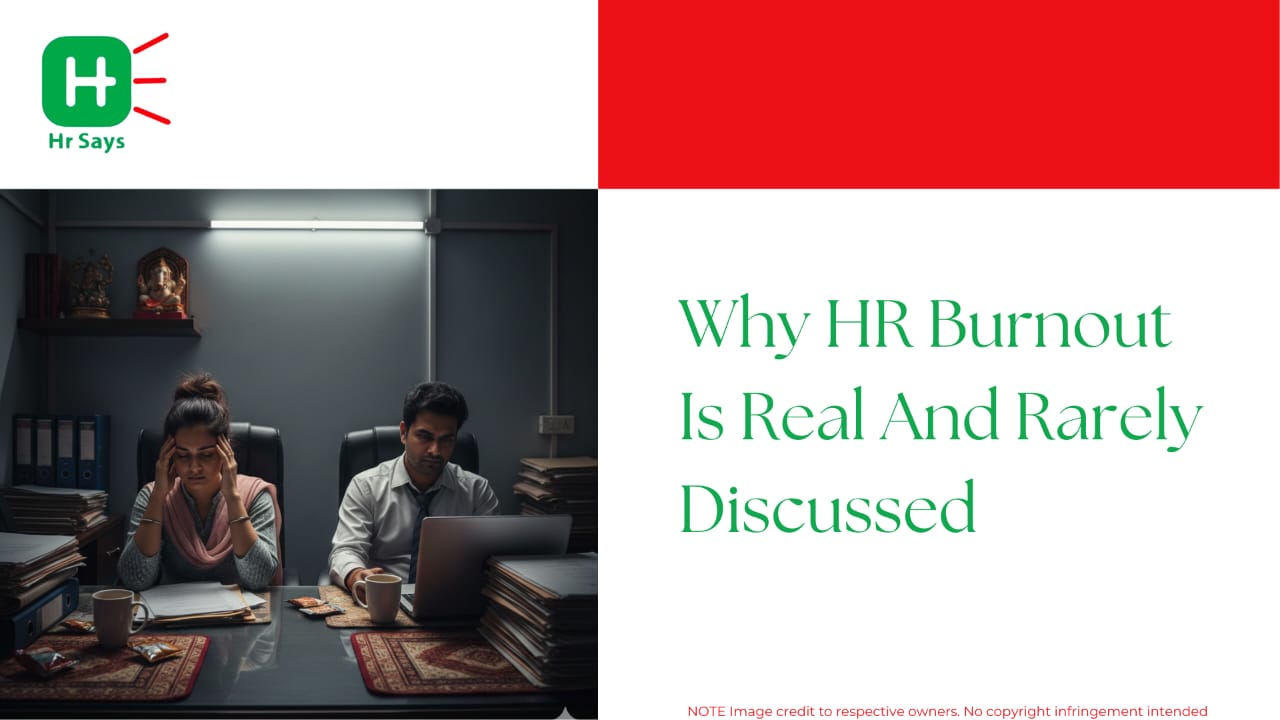
 HR burnout is real, systemic, and often hidden behind professionalism. Emotional labour, limited
support, and role conflict contribute to quiet exhaustion. Addressing this burnout is essential for
sustainable culture and effective people management.
HR burnout is real, systemic, and often hidden behind professionalism. Emotional labour, limited
support, and role conflict contribute to quiet exhaustion. Addressing this burnout is essential for
sustainable culture and effective people management.




HR is considered to be the cool hub of the working environment. Policies are explained. Conflicts are resolved. Culture is protected. The rest that is hardly viewed is the silent weariness behind the role. HR burnout is in place, though it is hardly mentioned or legitimized to emerge.
The Emotional Weight No One Sees
Emotional labour is what the work of Human Resources is premised on. It deals with people problems that are done on a daily basis. Sadness, fury, anxiety, fear and disappointment are taken in unison. The support is supposed to be continuous even in times when capacity is nearing low.
Unlike other occupations, HR professionals are meant to be unbiased even though they have to bear emotional responsibilities that do not belong to them.
Common pressures include:
● Listening to personal crises without relief
● Enforcing decisions that feel misaligned with empathy
● Being available while feeling unseen
Over time, emotional fatigue is created, but it is rarely named.
Stuck Between People And Power
HR is positioned in the middle of employees and leadership. This space is uncomfortable and often isolating. Trust is expected from employees, while alignment is demanded by management.
Boundaries are blurred. Decisions are questioned. Intent is misunderstood. The role is framed as supportive, yet authority is limited.
This tension is where burnout quietly grows. When advocacy is restricted and accountability is one sided, mental exhaustion is slowly built into daily work.
Always Responsible, Rarely Supported
HR is expected to fix culture, improve employee experience, reduce attrition, and manage compliance. These responsibilities are vast, but support systems are minimal.
Burnout prevention programmes are launched for others, while HR teams are excluded from the same care.
The role is often treated as resilient by default. As a result, rest is delayed, stress is normalised, and overload is accepted as part of the job.
Why The Conversation Is Avoided
Burnout in HR is rarely discussed because the role itself represents stability. Admitting exhaustion is seen as weakness. Confidentiality also plays a role. There is no safe place to speak without feeling exposed or unprofessional.
Silence is chosen, not because the problem is small, but because the cost of honesty feels high.
This silence leads to:
● Quiet disengagement
● Loss of purpose
● High turnover in people operations roles
What Needs To Change
Burnout in HR should not be treated as irony. It should be treated as risk. Sustainable workplaces cannot be built by burned out teams.
Recognition must be followed by action. Emotional labour must be acknowledged. Workloads must be realistic. Psychological safety must include the very people tasked with protecting it.
Small changes create impact:
● Clear role boundaries
● Shared accountability with leadership
● Access to mental health support for HR teams
Conclusion
HR burnout is not a personal failure. It is a structural issue shaped by expectation, silence, and imbalance. When the caretakers are cared for, workplaces become healthier for everyone involved.