 Thursday, October 01, 2026
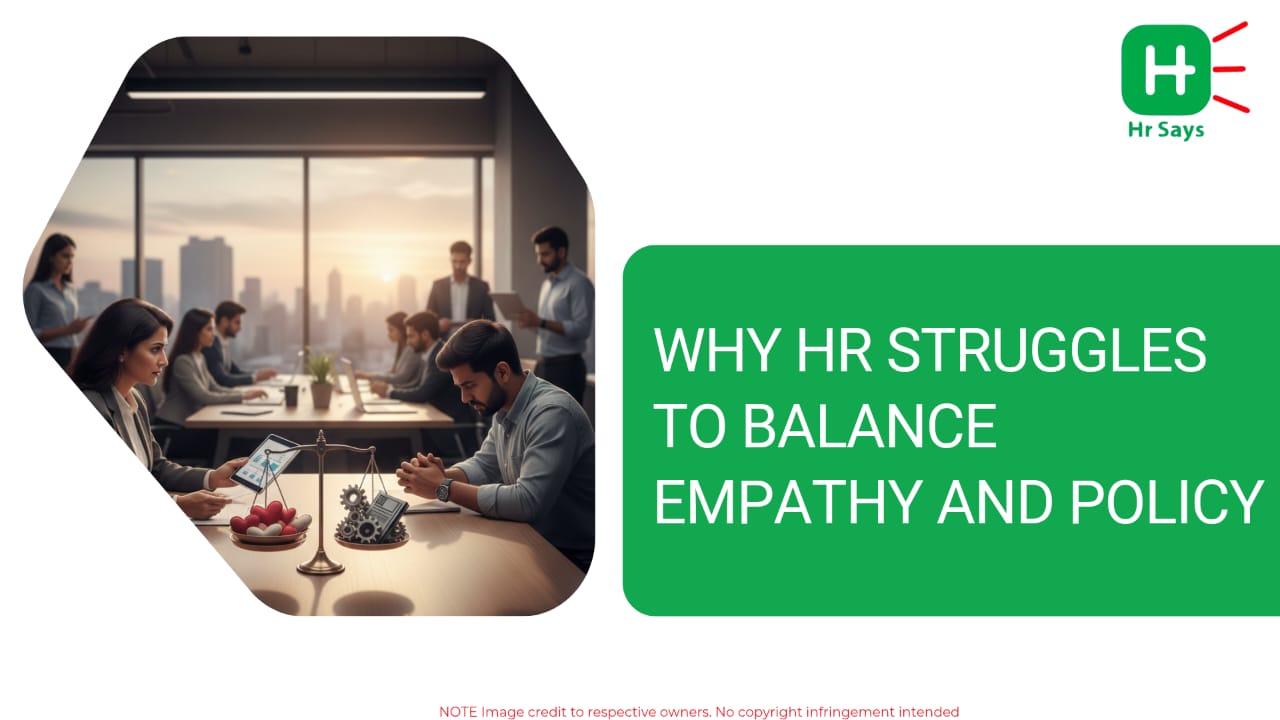
 Balancing empathy and policy remains one of HR’s hardest challenges. Emotional labour, compliance pressure, and perception gaps pull HR in opposite directions. Sustainable balance depends on clarity, boundaries, and shared responsibility across organisations.




HR rooms are seldom peaceful. Emotions, expectations, rules, which were written many years earlier, encumber the conversation. In between a lamenting staff member and a policy manual hard decisions are drawn. Such tension does not go away.
When People Come Before Paper
Empathy is expected from HR. Employees come in with personal challenges, burn out narratives, health problems and child crisis. It is no hypothetical thing that there are such moments. They are real and immediate. The immediate listeners are usually the HR professionals who do not react emotionally in response. Nevertheless, compassion is not enough to solve all the problems and decisions made should be reasonable, congruent and justifiable. Once made an exception, another request is soon forthcoming. Balance begins to creep.
The Weight Of Policies And Compliance
Policies are designed to protect organisations. Labour laws, workplace ethics, data privacy, and compliance rules sit heavily on HR shoulders. Every action taken is expected to align with documented processes. Deviations can trigger legal risks, internal disputes, or claims of bias. Even when empathy feels justified, policy gaps are rarely forgiving. This is where HR struggles most. Human understanding often clashes with structured governance.
Why Policies Cannot Bend Easily
Policies are written for consistency.
They are meant to prevent favouritism.
They exist to ensure equality across roles.
They act as legal shields during disputes.
Once empathy overrides policy too often, trust in the system weakens. HR is then seen as emotional rather than reliable.
Emotional Labour Nobody Talks About
HR performs silent emotional labour daily. Listening without judging. Supporting without promising. Caring without crossing boundaries. This invisible work rarely gets acknowledged. Over time, emotional fatigue sets in. Compassion begins to feel transactional. Burnout in HR roles is rising quietly, especially in people operations and employee relations functions. Empathy is expected endlessly, yet support structures for HR teams remain limited.
The Perception Problem Inside Organisations
HR is often misunderstood. Employees may see HR as either too rigid or too soft. Leadership may expect strict policy enforcement without reputational risk. This dual expectation creates friction. When empathy is shown, HR is questioned for inconsistency. When policy is enforced, HR is labelled insensitive. This perception gap adds pressure and erodes trust from both sides.
Where Misalignment Begins
Leadership focuses on risk management.
Employees seek emotional validation.
HR stands in the middle, translating both.
This middle ground is uncomfortable and rarely stable.
Finding A Sustainable Middle Ground
Balance is not achieved through perfect answers. It is built through clarity, communication, and boundaries. Policies can be explained with context. Empathy can be expressed without promises. Training managers to handle people conversations reduces pressure on HR. Flexible frameworks work better than rigid rules, especially in modern workplaces shaped by remote work, mental health awareness, and evolving employee expectations.
Conclusion
HR struggles to balance empathy and policy because both demand loyalty. People need understanding. Organisations need structure. Holding space for both is complex, exhausting, and often thankless. Yet, this struggle defines the true value of HR.