Sunday, September 20, 2026
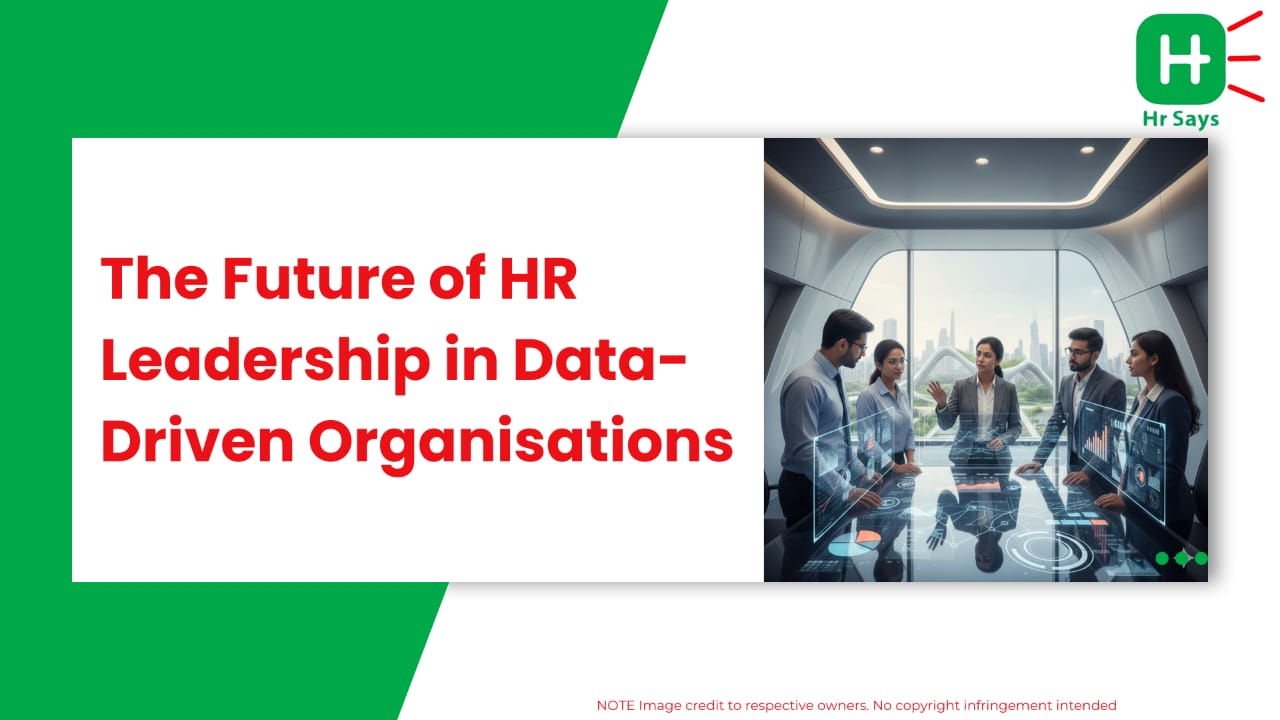
 HR leadership in data-driven organisations is evolving toward insight-led, ethical, and human-centred decision-making. This blog explores emerging skills, responsibilities, and the balance between analytics and empathy shaping the future of HR.




The instinct is no longer the driving force behind people decisions. Monitors are illuminated with dashboards, measurements and designs. Between the emotional side of a human being and the machine wisdom, the HR leadership is getting quietly reinvented. The future is of those that are able to read people or data without losing either.
From People-Centric to People-Intelligent HR
People have always been the focus of HR. That truth has not changed. What has changed is the lens. HR analytics, predictive insights, and real-time reporting are now applicable in assisting the workforce decisions in a data-driven organisation. It is no longer a guess to hire, retain, improve performance and engage. They are informed choices.
Yet this shift is not about replacing empathy with numbers. It is about strengthening judgment. Data highlights trends, but interpretation still rests with leaders. HR leadership today is expected to balance emotional intelligence with analytical thinking. That balance defines credibility in the modern workplace.
The New Skill Set HR Leaders Must Build
Data-driven HR leadership demands skills that were once optional. Now they are essential. Technical fluency is expected, not mastery, but comfort. Key capabilities shaping the future include:
● Understanding HR metrics like attrition rate, time to hire, and engagement scores
● Asking the right questions of data instead of accepting surface insights
● Translating analytics into actions that employees can feel
● Working closely with data teams, finance, and leadership
The strongest HR leaders will not become data scientists. They will become smart interpreters. Meaning will matter more than volume.
Ethics, Trust, and Human Judgment
With data comes responsibility. Employee data privacy, bias in algorithms, and ethical use of AI in HR are growing concerns. These are not technical issues alone. They are leadership issues. HR leaders will increasingly act as ethical gatekeepers. Decisions driven purely by data can feel cold if context is ignored. A resignation trend might signal burnout, not disloyalty. A performance dip might reflect poor systems, not poor people.
Trust will depend on transparency. Employees need to know how data is used and why. When handled carefully, data can strengthen trust instead of weakening it.
HR as a Strategic Voice at the Table
In data-driven organisations, HR is moving closer to the core of business strategy. Workforce planning, future skills mapping, and succession planning now rely on workforce analytics. HR leaders who speak the language of data are heard differently.
Conversations shift from opinions to evidence. Budget discussions become grounded. Long-term talent strategies gain clarity. This is where HR leadership evolves from support function to strategic partner. Influence grows quietly, backed by insight.
Leading Change Without Losing the Human Core
Technology will continue to advance. AI in recruitment, people analytics platforms, and automation will become standard. What must not be automated is care. Future-ready HR leaders will lead change gently. They will use data to listen better, not to control more. They will create systems that support fairness, growth, and wellbeing. The most successful data-driven organisations will not be those with the most dashboards. They will be those where data helps people feel seen.
Conclusion
The future of HR leadership is not about choosing between data and humanity. It is about holding both steadily. When insight meets empathy, decisions become wiser. That is where modern HR leadership quietly earns its place.