Thursday, October 01, 2026
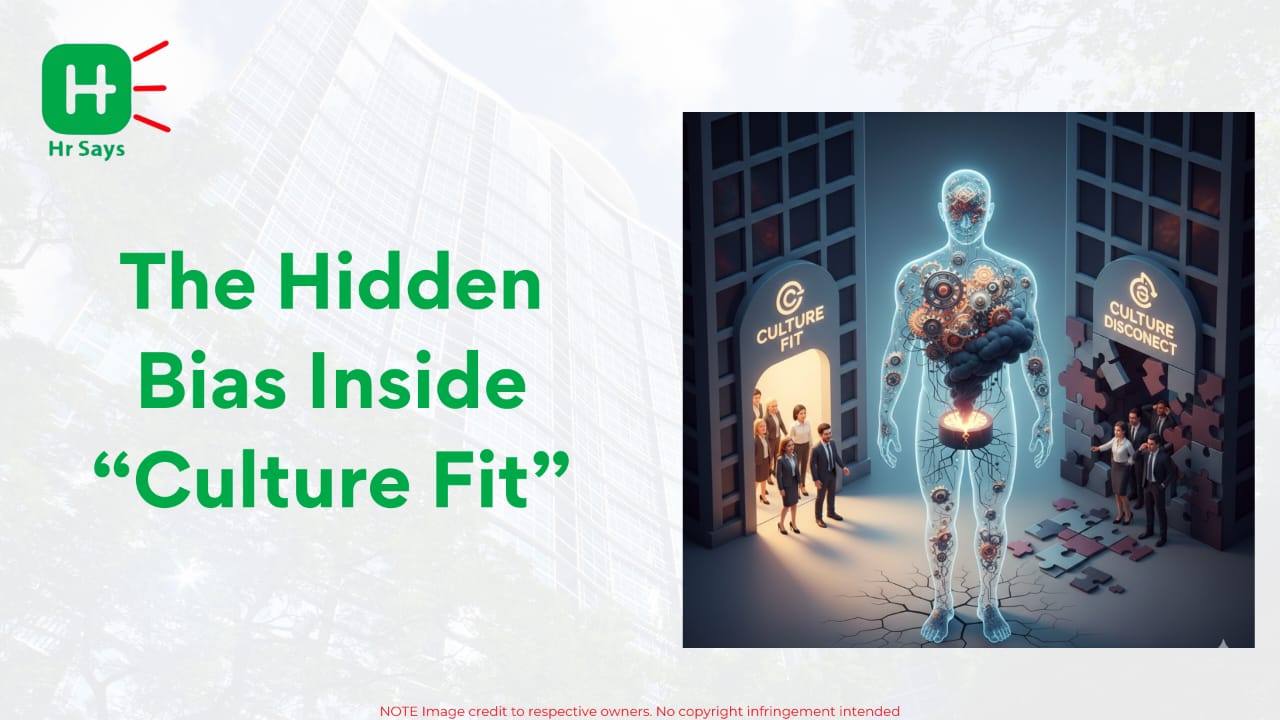
 Culture fit often masks unconscious bias in hiring. This blog explores how familiarity replaces
fairness, why neutral language hides exclusion, and how reframing culture fit into culture add
supports inclusive, skill based decision making.
Culture fit often masks unconscious bias in hiring. This blog explores how familiarity replaces
fairness, why neutral language hides exclusion, and how reframing culture fit into culture add
supports inclusive, skill based decision making.




The phrase sounds harmless. Even welcoming. Culture fit is understood as having a way to safeguard harmony and values within the team. However, under that smooth veneer, there is the work of other patterns. Decisions get shaped. Doors get closed. They all without a manifestation being recognized.
When Culture Fit Became a Hiring Shortcut
Culture fit was not initiated as an issue. It came about as a result of an authentic need to create congruent teams. It became, however, after some time, a convenient filter. The expeditious means of not questioning. The words made the blow softer and the result remained steady.
Prospective employees were not judged based on talent or ability alone. They were evaluated in terms of familiarity. On comfort. On likeness to that which was already there.
Familiarity Often Gets Mistaken for Merit
Humans are wired to trust what feels known. In hiring, that instinct quietly takes control. Similar communication styles feel safer. Shared humour feels easier. Comparable backgrounds feel reliable.
But similarity is not performance.
When culture fit dominates evaluation, the following patterns tend to appear:
● Unconventional thinkers are screened out early
● Neurodivergent communication is misread as misalignment
● Different socio economic or cultural backgrounds are seen as risk
● Potential is overlooked in favour of polish
The decision may feel objective. The bias remains subjective.
Bias Works Best When It Sounds Neutral
Bias rarely announces itself anymore. It hides inside professional language. Culture fit has become one of its most effective carriers. The term is vague by design. It allows instinct to replace structure.
Common rejections sound reasonable:
● Not the right fit for our environment
● Communication style may not align
● Team dynamics could be affected
None of these are measurable. All of them are powerful.
The Cost to Innovation and Inclusion
Teams built on sameness tend to move safely. Innovation slows. Healthy disagreement fades. New ideas struggle to breathe. Diversity initiatives fail quietly, not because of intent, but because of unchecked filters.
Inclusive hiring trends now focus on skills based assessment, structured interviews, and bias aware recruitment. Yet culture fit continues to override these efforts when left undefined.
The loss is not only ethical. It is strategic.
Reframing the Question That Gets Asked
The problem is not culture. It is how culture is used.
A shift is needed from culture fit to culture add. This reframing changes the evaluation lens. Instead of asking who blends in, the question becomes who expands us.
Helpful hiring adjustments include:
● Defining values in observable behaviours
● Using consistent evaluation criteria
● Separating comfort from competence
● Encouraging dissent as a strength
Culture should guide behaviour, not police identity.
What Fairer Hiring Quietly Requires
Fair hiring is rarely loud. It is built through small, disciplined choices. Bias training alone does not fix it. Structure does.
Awareness does. Accountability does. Culture fit feels easy. That is precisely why it deserves scrutiny.