 Sunday, September 20, 2026
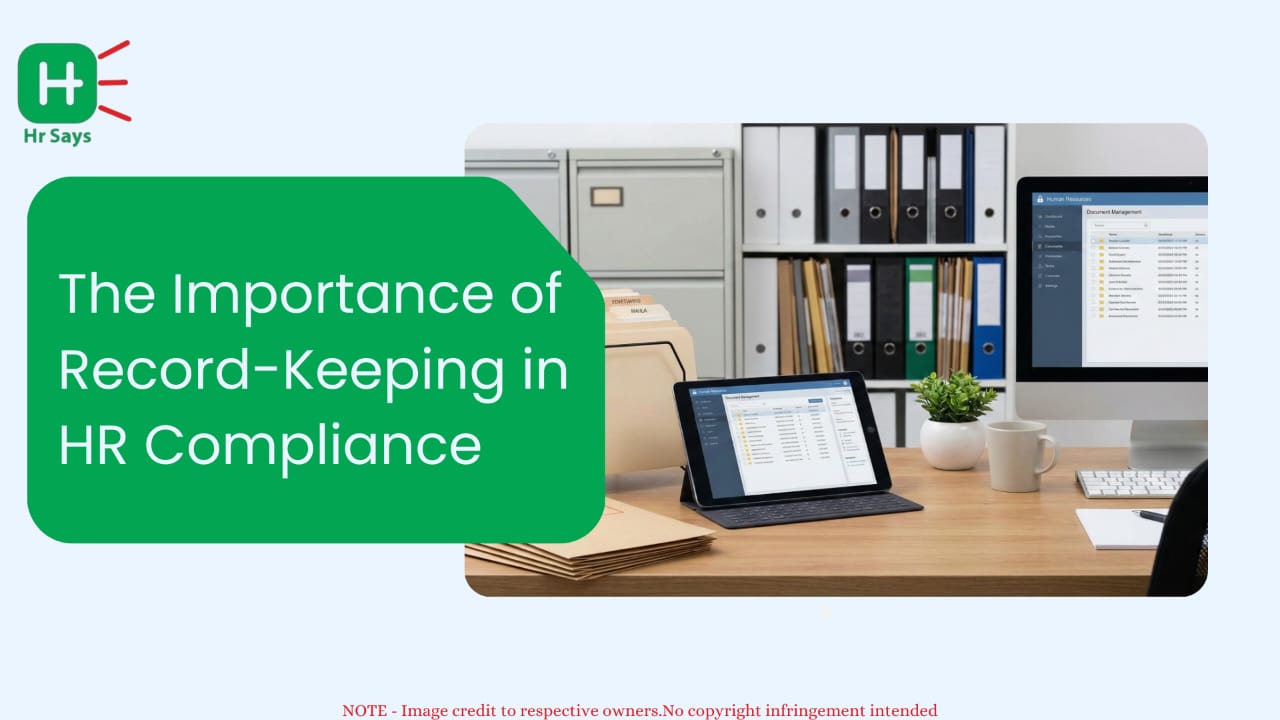
 Strong HR record-keeping protects organisations, supports employees, and reduces compliance risks. Clear documentation improves audits, enhances decision-making, and strengthens overall workforce compliance in a structured and dependable manner.




The HR teams have policies, audits, employee questions, and changing labour laws to contend with. Understood, precise books have everything straightened. One simple file has the potential to safeguard a business, help its employees, and minimize the risks of compliance in case the situation becomes too complicated.
Why HR Record-Keeping Matters
Good records keeping is the pillar of compliance management. Documentation on time is essential in every organisation as it assists the organisation in monitoring the decisions made, demonstrating fairness and preventing conflict. The analytics of the workforce and alignment of the policies with employment regulations also rely on clean data.
Key areas shaped by strong records
● Employee onboarding documents
● Performance reviews and feedback notes
● Attendance logs and leave records
● Payroll and statutory filings
● Workplace safety and training reports
How compliance risks get reduced
Clear records help HR teams respond faster during audits. Old decisions can be traced. Policy gaps can be identified early. Managers also avoid legal complications because every action is documented with care.
Essential Records HR Must Maintain
A few documents tend to hold the highest compliance value. They support both internal processes and external checks. Good records add clarity during performance discussions and legal enquiries.
Mandatory documentation
● Employee contracts and policy acknowledgements
● PF, ESI, and tax-related records
● Grievance and disciplinary action reports
● Background verification data
Additional records that strengthen HR operations
H3 size 14
Accurate training logs
These logs help track learning programs. They show skill progress and help during safety audits.
H3 size 14
Performance data
Stored reviews allow pattern analysis. Trends can be studied. Bias can be reduced.
H3 size 14
Exit documentation
Clear exit data supports compliance checks. Benefits can be processed without delays.
Benefits of Strong HR Record Systems
Good record systems improve organisational transparency. Employees feel safer when processes remain consistent. HR teams also gain more confidence during legal or compliance checks. Trending HR keywords fit well here, such as digital HR transformation, HR automation tools, audit readiness, and workforce compliance.
Practical advantages
● Faster data retrieval
● Fewer disputes during audits
● Better tracking of statutory deadlines
● Higher accuracy in payroll and benefits
● Stronger employee trust
Impact on decision-making
Leaders make informed choices when records remain clean. Performance trends become clearer. Attrition drivers are easier to find. HR strategies become more grounded.
Building a Future-Ready Record-Keeping System
Modern HR moves toward digital documentation. Cloud platforms, automated trackers, and compliance dashboards support error-free record storage. Access remains controlled. Retrieval becomes faster. The entire HR lifecycle benefits.
Steps to enhance record accuracy
● Use secure digital tools
● Set retention timelines
● Audit records regularly
● Train managers on documentation standards
Conclusion
Record-keeping stays central to HR compliance. Every document supports legal protection, operational clarity, and employee trust. When systems stay disciplined, HR performs with stability and fewer risks.