 Sunday, September 20, 2026
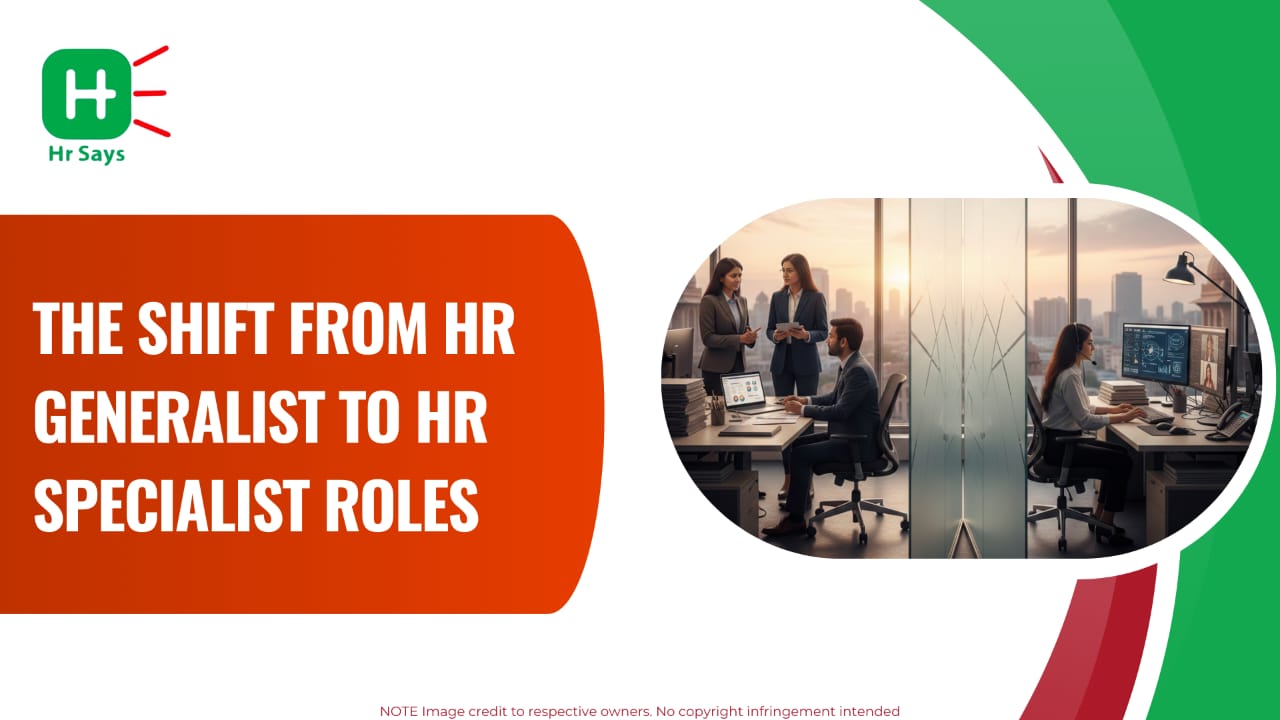
 This blog explores why HR generalists increasingly move into specialist roles. It covers drivers,
benefits, challenges, and practical steps for transition. It offers clear insights that reflect current
HR trends and evolving workplace demands.
This blog explores why HR generalists increasingly move into specialist roles. It covers drivers,
benefits, challenges, and practical steps for transition. It offers clear insights that reflect current
HR trends and evolving workplace demands.




There is continued change in modern workplaces. This change is felt by the HR professionals. Numerous individuals who previously had to do it all shift to niche and specialist jobs. It has been a natural growth, a strategic transition, and a transition that has happened in line with how organisations grow and evolve.
Why HR Generalist Roles Are Changing
Hiring, onboarding, compliance, staff relations and culture-building included a generalist role. Due to the increased organisations, the workload also expanded. This was accelerated by trends towards data-driven HR, automation and strategic workforce planning. Generalists are also experiencing escalating demands that act to push them in their line of practice where they should demonstrate greater professionalism and expertise.
What Drives the Move Toward Specialisation
Hiring markets demand expertise. Talent acquisition specialists focus on sourcing. Learning and development experts build capability programs. Compensation specialists analyse pay structures. These roles improve precision. They also support organisational goals.
Key reasons this shift occurs
● Growing demand for advanced HR analytics skills
● Increased focus on employee experience
● Rising need for structured talent pipelines
● Clearer career paths through focused expertise
The shift becomes smoother when professionals embrace new tools, certifications, and niche knowledge.
Benefits of Becoming an HR Specialist
Career clarity improves. A specialist knows exactly what to solve. Expertise builds faster. Work becomes more strategic, measurable, and valued.
How it adds value
● Better alignment with industry trends
● Stronger negotiation ability for roles and salaries
● Deep mastery of one domain
● Higher impact on organisational outcomes
Specialist roles also suit professionals who enjoy detail-oriented, analytical, or creative problem-solving work.
The Transition Process and What to Expect
The shift starts with understanding strengths. Some enjoy recruitment. Others enjoy people
analytics or training design. A roadmap helps. Small learning steps shape confidence.
Helpful actions during the shift
● Identify skills that match specialist roles
● Take short, relevant courses
● Shadow experts in chosen domains
● Build portfolios through small internal projects
The transition feels steady when supported by research and aligned with natural strengths. HR careers grow stronger through clarity.
Challenges HR Professionals Might Face
Specialisation requires commitment. Some fear losing the breadth they enjoyed. Others worry about reduced flexibility. These concerns ease when the chosen domain fits personal interests. The market currently supports diverse HR niches. Many organisations prefer hybrid roles that balance depth and versatility.
Conclusion
The shift from HR generalist to HR specialist roles reflects a changing HR landscape. Workforces grow. Talent needs become complex. Specialisation enables deeper impact. HR professionals benefit from embracing learning, clarity, and focused growth.