Sunday, October 04, 2026
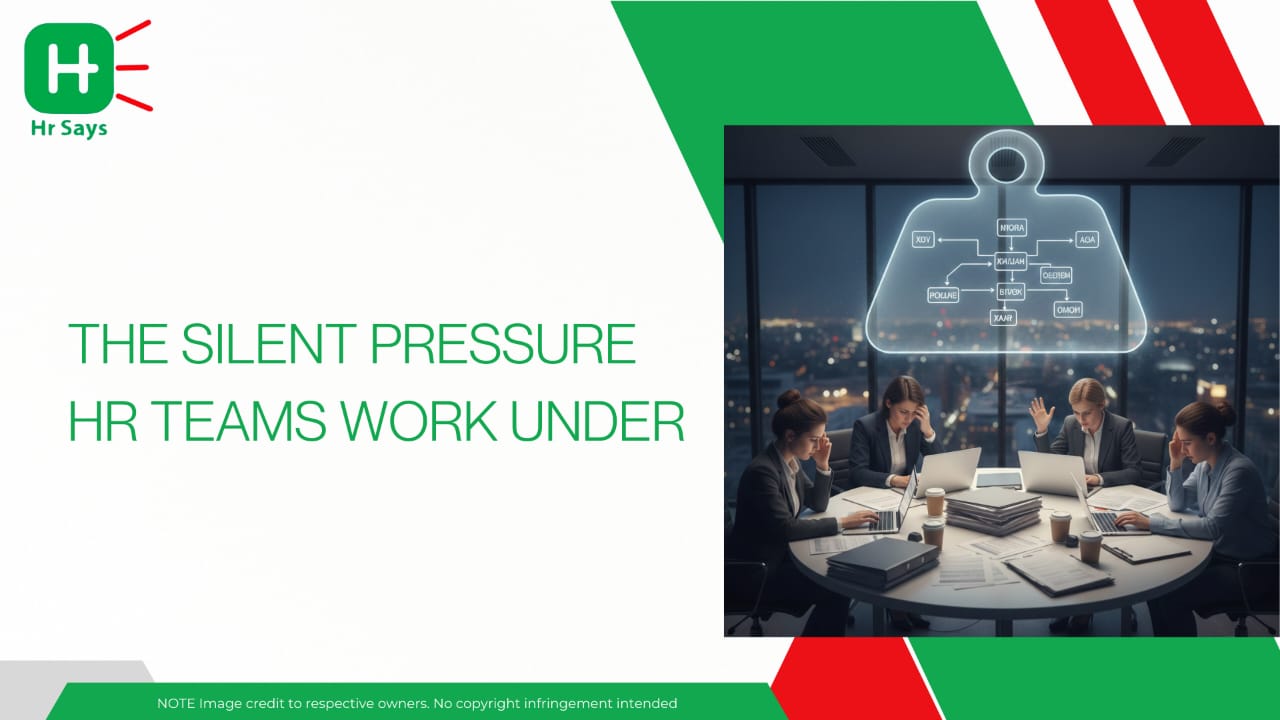
 HR teams manage expectations, emotions, compliance, and culture while staying largely unseen. This blog explores the quiet pressure they carry daily and why acknowledging it is essential for healthier, more balanced organisations.




Stopping all the examples of smooth onboarding, all the non-stressful exit interviews, all the culture posts which sound promising, some pressure is being quietly sipped. The HR teams are sometimes expected to hold the organisations together without being seen. The work does not rest much and the burden does not receive much recognition.
The Expectations That Never Slow Down
HR is supposed to be omnipresent and everywhere simultaneous. Recruitment process should remain responsive, procedures should remain equal, audits should remain transparent and individuals should be motivated. The expectations are not engraved somewhere and even exist daily.
Other teams are concerned with results, in contrast to HR that wants to deal with emotions, systems, as well as risks. Mistakes are remembered. Efforts are quietly assumed.
When People Problems Become Personal
Workplace issues are not spreadsheets. They are conflicts, anxieties, burnout, and personal loss. HR professionals are expected to listen with empathy while staying neutral and professional. Over time, emotional labour is accumulated. Most conversations are confidential, which means the burden cannot be shared openly. Stress gets processed alone. Support is often offered outward, rarely inward.
Compliance Without Applause
Policies, labour laws, audits, and documentation sit heavily on HR shoulders. One missed update can create legal trouble. One delayed response can escalate into risk. This work is largely invisible when done right. No appreciation is offered for problems that never occurred. Compliance becomes a silent success metric that no one celebrates.
The Culture Gap HR Is Asked To Fix
Organisational culture is often discussed as a shared responsibility, yet HR is expected to fix it. Engagement drops are questioned. Attrition spikes are examined. Morale issues are redirected. Culture is influenced by leadership, workload, and clarity, but HR is asked to patch gaps with
initiatives, surveys, and workshops. Results are expected quickly, even when root causes are slow and structural.
Constant Availability, Limited Authority
HR is expected to be approachable at all times. Messages arrive after hours. Emergencies appear without warning. Boundaries are quietly crossed because people issues feel urgent. At the same time, decision making power is often limited. Recommendations may be given, but final calls sit elsewhere. Responsibility remains high, while control remains partial.
The Quiet Burnout Nobody Notices
Burnout in HR does not always look dramatic. It shows up as emotional numbness, delayed responses, and constant mental fatigue. Passion is replaced with survival mode. Because HR is seen as the support system, signs are ignored. After all, if HR is struggling, who is supposed to notice?
What Often Helps, Even Slightly
• Clear leadership backing during people decisions
• Realistic hiring and performance expectations
• Mental health support extended to HR teams too
• Recognition for invisible work
• Space to disconnect without guilt
Conclusion
The silent pressure HR teams work under is real, layered, and persistent. It is carried quietly so others can work smoothly. Recognising this pressure is not a courtesy. It is a necessity for sustainable workplaces.