Saturday, October 24, 2026
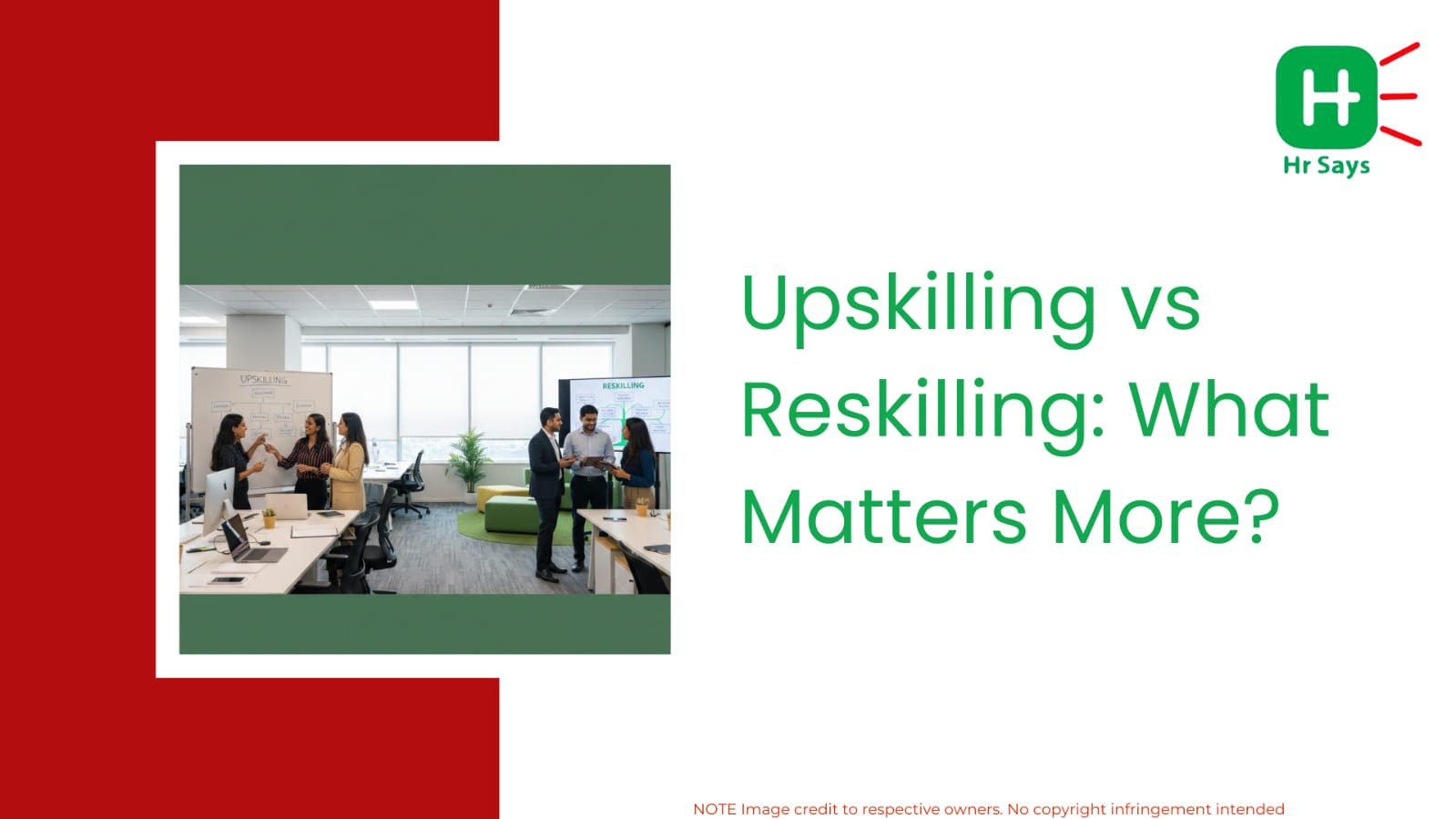
 Upskilling enhances existing competencies, while reskilling enables career transitions. In a
rapidly evolving job market shaped by automation and digital transformation, both strategies are essential. Continuous learning is being positioned as the most reliable path to long-term employability
Upskilling enhances existing competencies, while reskilling enables career transitions. In a
rapidly evolving job market shaped by automation and digital transformation, both strategies are essential. Continuous learning is being positioned as the most reliable path to long-term employability




Automation, adoption of AI and digital transformation are remaking workplaces, the roles are changing silently and, in some cases, even more rapidly than one could have ever imagined. The question which frequently arises in this changing environment among both professionals and employers is as follows: is it better to up-skill the existing talent or res-skill to completely different positions?
Understanding Upskilling in The Age of Digital Transformation
Upskilling can be described as the process by which the current skills can be improved to fit into new requirement within the same job or the industry. It can generally be observed in industries where technology adoption is expanding fast like digital marketing, data analytics, HR technologies, and remote work systems.
Since it is inevitable that artificial intelligence and automation tools enter the workflow, employees must evolve. New software is introduced. Decisions that are made on the basis of data are valued. Collaboration platforms based on the cloud are utilized. When this is the case, the basic knowledge is retained but more competencies are developed.
Why Upskilling Is Being Prioritized
In many organizations, upskilling programs are being implemented because they are cost-effective and sustainable. Instead of hiring externally, internal talent is strengthened.
The following outcomes are often observed:
● Improved productivity through advanced digital skills
● Higher employee engagement and retention
● Faster adaptation to technology trends
● Stronger workforce agility
For professionals, upskilling is often viewed as career acceleration. Certifications in AI tools, SEO optimization, project management software, or cybersecurity fundamentals are being pursued to remain relevant. The risk of skill gaps is reduced gradually.
However, upskilling assumes that the core role will continue to exist. That assumption is not always safe.
Reskilling in a Rapidly Changing Job Market
Reskilling refers to learning entirely new skills to transition into a different role or industry. It becomes essential when certain job functions are phased out due to automation, economic shifts, or market disruptions.
In industries heavily impacted by digital disruption, traditional roles are being replaced. Manual processes are automated. Customer service is supported by chatbots. Data entry tasks are minimized. When a role becomes redundant, upskilling may not be enough.
When Reskilling Becomes Necessary
Reskilling is often required in the following situations:
● Job displacement due to automation
● Industry decline or restructuring
● Organizational pivot toward new technology
● Personal career reinvention
For example, a professional moving from administrative support to data analytics would undergo reskilling. A marketing executive shifting into UX design would do the same. The transition may feel demanding, yet it allows long-term employability.
Governments and organizations are increasingly investing in workforce reskilling initiatives to prepare for the future of work. Online learning platforms, micro-credentials, and hybrid training models are being adopted widely.
Still, reskilling requires time, mental flexibility, and often financial commitment. It involves stepping outside familiar territory.
What Matters More in 2025 and Beyond
The debate between upskilling and reskilling may appear binary, but in reality, both strategies are interconnected. The modern job market demands continuous learning.
Upskilling matters when industries are evolving but not disappearing. It strengthens existing expertise. It sharpens competitive advantage.
Reskilling matters when structural shifts occur. It protects employability. It enables career transition.
A practical approach can be considered:
● If your role is evolving, prioritize upskilling.
● If your role is shrinking, explore reskilling.
● If uncertainty exists, build adaptable skills such as digital literacy, critical thinking, and communication. Career growth is no longer linear. Learning is no longer optional. It is quietly becoming a professional responsibility.
Conclusion
In the long run, the question may not be which one matters more. The real question is whether learning is being treated as a continuous process. Professionals who adapt, whether by upskilling or reskilling, are likely to remain relevant in a technology-driven economy.