 Sunday, October 25, 2026
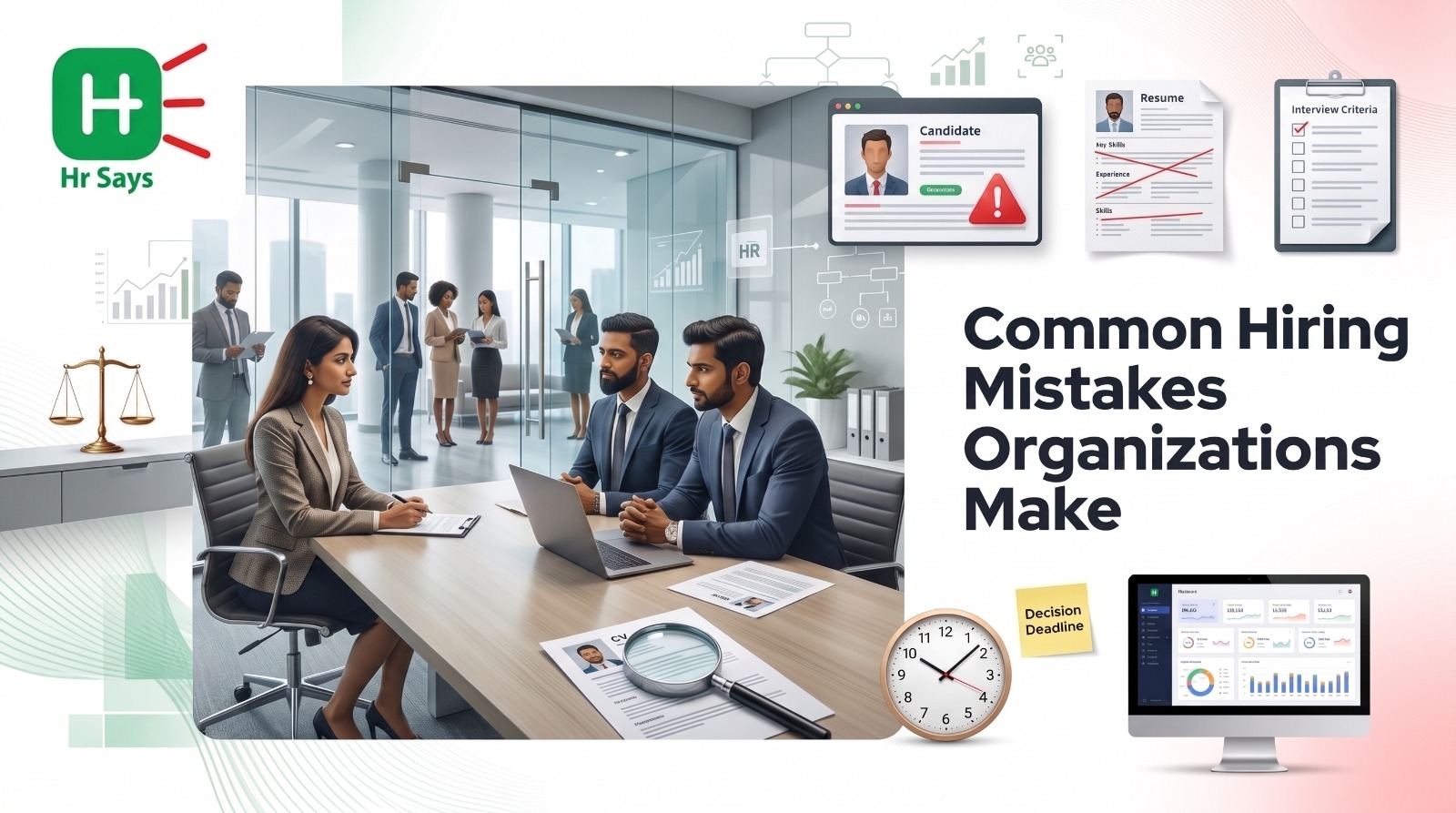
 Common hiring mistakes, from vague job descriptions to skipped reference checks, quietly cost Indian organizations lakhs in lost productivity, turnover, and rehiring, but structured, consistent processes can prevent most of them.





Hiring decisions shape an organization more than most leaders realize. A single wrong hire does not just create a vacancy to refill later. It disrupts team morale, slows down projects, and quietly drains budgets that rarely show up as a clear line item anywhere. Yet across Indian companies, from early-stage startups in Bengaluru and Gurugram to established manufacturing units in Pune, the same hiring mistakes repeat year after year.
This is not because HR teams and hiring managers lack effort. It is because hiring mistakes are usually process failures, not judgment failures. A rushed job description, an unstructured interview, or a skipped reference check rarely feels like a big decision in the moment. But these small process gaps compound, and the cost shows up months later in the form of attrition, missed targets, or a team that has quietly stopped trusting the hiring process.
This article breaks down the most common hiring mistakes organizations make, why they happen even in well-run companies, and what HR leaders and business owners can do differently. The goal is practical clarity, not theory, because hiring well is one of the few HR functions that directly protects both people and profitability.
Why Hiring Mistakes Cost More Than Most Leaders Assume
Most organizations track cost-per-hire and time-to-fill closely, but very few calculate the cost of a bad hire until it has already happened. Industry research on this subject, including analysis referenced by SHRM India, points to bad hires costing anywhere between thirty percent and two hundred percent of the employee's annual salary once recruitment fees, onboarding time, lost productivity, and the cost of restarting the search are factored in. For a mid-senior role in India, that can easily translate into several lakhs of rupees, and for leadership positions, the number climbs further once team disruption and delayed decision-making are included.
The financial cost is only part of the picture. A poor hire in a client-facing role can damage a relationship that took years to build. A disengaged hire on a small team can quietly lower the performance of otherwise strong colleagues. And in India's current talent market, where overall attrition has been gradually easing from around seventeen percent in 2025 toward a projected mid-teens figure in 2026 according to Aon's Annual Salary Increase and Turnover Survey, sectors like e-commerce and IT still see attrition well above the national average. Every avoidable bad hire adds directly to that number.
Understanding this cost is not meant to create anxiety around hiring. It is meant to justify the fifteen or twenty extra minutes it takes to fix a job description properly, or the one additional reference call that most recruiters are tempted to skip when a role feels urgent.
Mistake One: Starting With an Outdated or Vague Job Description
Almost every hiring mistake traces back to this one. Teams reuse last year's job posting, or worse, a template borrowed from another company, without pausing to ask whether the role has actually changed. Responsibilities shift, tools evolve, and reporting lines move, yet the job description often stays frozen in time.
When a job description does not reflect what the role genuinely requires today, the effects ripple through the entire hiring cycle. Recruiters source against the wrong criteria. Hiring managers interview candidates who look right on paper but cannot perform the actual tasks. Candidates accept offers based on expectations that do not match reality, which frequently shows up later as early attrition.
The fix does not require an elaborate process. Before opening any requisition, the hiring manager and recruiter should spend fifteen to twenty minutes reviewing what the role looks like right now: which tasks have genuinely changed, which responsibilities no longer belong in the role, and what outcomes the person needs to deliver in the first six to twelve months. This small recalibration prevents months of misalignment later.
Mistake Two: Running Unstructured, Inconsistent Interviews
In many Indian organizations, especially smaller ones, interviews still depend heavily on the individual interviewer's style. One panel member asks about technical depth, another focuses on culture fit, and a third simply has a friendly conversation. Candidates end up evaluated on different criteria entirely, which makes comparing them close to impossible.
This inconsistency also opens the door to a well-documented human tendency: forming an impression of a candidate within the first few minutes of meeting them, often based on likability or confidence rather than actual job competence. A charming, articulate candidate can outscore someone with stronger technical ability simply because the interview never tested the right things.
Structured interviews solve this without making the process feel robotic. A simple set of core competency-based questions, asked consistently across interviewers, still leaves room for natural follow-up conversation. What it removes is the guesswork. Interviewers should also be trained, not assumed to already know how to interview well. Even experienced managers benefit from a short session on asking open-ended, behavioral questions and using a shared scorecard.
Mistake Three: Ignoring Bias in the Screening and Interview Process
Bias in hiring is rarely intentional, which is exactly what makes it hard to catch. It can appear in something as subtle as a job description favoring certain phrasing, or a recruiter unconsciously screening in candidates who resemble the existing team. Over time, this narrows the talent pool and can quietly work against an organization's own diversity goals.
A related version of this mistake is overweighting pedigree, meaning giving disproportionate credit to a well-known previous employer or a prestigious educational background. A candidate from a recognizable company is not automatically the stronger hire, and pedigree-based shortlisting often filters out capable candidates from non-traditional backgrounds who would perform just as well, if not better.
Organizations that want to reduce this risk typically define what qualified means before reviewing any applications, use standardized scoring criteria, and periodically audit job postings for language that might unintentionally discourage strong candidates from applying. None of this requires expensive tools. It requires a habit of pausing before finalizing a shortlist and asking whether the same standard was applied to every candidate.
Mistake Four: Skipping or Rushing Reference Checks
When a hiring timeline feels tight, reference checks are often the first step to get compressed or skipped entirely. This is a costly shortcut. References frequently reveal patterns that never surface in an interview, such as how someone handles pressure, works within a team, or follows through on commitments.
The mistake is not just skipping references altogether. It is treating them as a formality, calling one reference the candidate personally selected, and asking a single generic question like whether they would rehire the person. A more useful approach involves speaking to at least two references per finalist and asking specific, behavior-based questions tied to how the candidate actually performed in past roles. If a reference raises a genuine concern, that information deserves real consideration rather than being brushed aside because the role needs filling urgently.
Mistake Five: Letting the Process Drag On Too Long
Speed and quality are often treated as opposing forces in hiring, but a process that drags on for months usually damages quality too. Strong candidates in India's competitive job market, particularly in sectors like technology, BFSI, and e-commerce, rarely stay available for long. Extended interview rounds, delayed approvals, and slow feedback loops give competing employers, or the candidate's current organization through a counteroffer, enough time to intervene.
This does not mean rushing critical evaluation steps. It means removing friction wherever possible. Combining interview rounds where feasible, setting clear internal deadlines for feedback after each stage, and keeping candidates informed about where they stand all help maintain momentum without compromising the depth of evaluation. When a decision genuinely needs more time, a short proactive update to the candidate explaining the delay goes a long way toward preserving their interest and the organization's reputation.
Mistake Six: Leaving Candidates Without Feedback
Very few things damage an employer's reputation as quickly as silence after an interview. Candidates in India increasingly share their hiring experiences on platforms like Glassdoor and LinkedIn, and a pattern of unresponsive communication can quietly discourage future applicants, including strong ones who might have otherwise applied.
Closing the loop does not need to be elaborate. Sharing a realistic timeline before the interview ends, sending a brief update if a decision is delayed, and thanking every candidate once a final decision is made are small gestures that take minutes but meaningfully shape how candidates, and by extension the broader talent market, perceive the organization.
Mistake Seven: Not Reassessing Internal Talent Before Hiring Externally
Organizations frequently default to external hiring without first checking whether someone internally could grow into the role. This overlooks a person who already understands the company's systems, culture, and stakeholders, and it can send an unintended signal to existing employees that growth opportunities are limited.
Internal mobility does not mean automatically promoting from within regardless of fit. It means giving internal candidates the same structured evaluation as external ones, being transparent about the criteria, and communicating clearly with those who are not selected so they understand what would strengthen their candidacy for future opportunities.
Mistake Eight: Never Measuring What Happens After the Hire
Perhaps the most overlooked mistake is treating the hiring process as complete the moment an offer is accepted. Without tracking what happens next, whether the employee is still in the role and performing well at ninety days, six months, or a year, organizations have no real feedback loop to understand which parts of their hiring process actually work.
Tracking retention and performance by sourcing channel and by interviewer can reveal patterns that are otherwise invisible. Perhaps one sourcing channel consistently produces longer-tenured employees, or a particular interview stage correlates strongly with later performance. This data transforms hiring from a series of one-off decisions into a process that genuinely improves over time.
Building a Better Hiring Process, Not Just Avoiding Mistakes
Most of the mistakes covered here share two root causes: unclear expectations at the start of the process, and a lack of structured evaluation throughout it. Fixing the job description brief and introducing consistent, evidence-based interview practices addresses a large share of these problems at their source.
This is where a platform like HRSays adds genuine value, not as a vendor selling a fix, but as a space where HR leaders, recruiters, and business owners can learn from how other organizations have addressed these exact challenges. Reading about how peers have restructured their intake process or reduced time-to-feedback offers a kind of practical, field-tested knowledge that generic hiring advice often misses.
Ultimately, avoiding hiring mistakes is less about finding a perfect system and more about building consistent habits: a clear brief before sourcing begins, a structured interview format, honest reference checks, timely communication, and a willingness to look at what happens after the offer is signed. Organizations that build these habits consistently do not just avoid costly bad hires. They build hiring processes that candidates trust and that genuinely support long-term organizational growth.
Frequently Asked Questions
Q1: What is the most common hiring mistake organizations make?
The single most common hiring mistake is starting recruitment with a vague or outdated job description. When the hiring manager and recruiter are not aligned on what the role actually requires, every step that follows, from sourcing to interviewing, moves in the wrong direction.
Q2: How much does a bad hire cost an Indian company?
Estimates vary by role and seniority, but industry research suggests a bad hire can cost anywhere between thirty percent and two hundred percent of the employee's annual salary once recruitment fees, onboarding, lost productivity, and replacement hiring are accounted for. For mid to senior roles in India, this figure often runs into several lakhs of rupees.
Q3: How can small and mid-sized companies avoid hiring mistakes without a large HR team?
Small and mid-sized organizations do not need elaborate systems. A clear job description, a simple structured interview format, one reference check per finalist, and a habit of tracking who stays and who leaves after ninety days can prevent most common hiring mistakes.
Q4: Is unconscious bias really a factor in hiring decisions?
Yes. Research on hiring consistently shows that interviewers form impressions within the first few minutes of meeting a candidate, often based on likability or communication style rather than job-relevant competence. Structured interviews and written evaluation criteria help reduce this effect.
Q5: Why do candidates drop out of the hiring process in India?
Common reasons include long or unpredictable interview timelines, lack of communication after interviews, unclear compensation expectations, and counteroffers from current employers during extended notice periods. Faster, more transparent processes reduce drop-off significantly.
Resources
- SHRM India: Research and commentary on the cost and impact of bad hires in Indian organizations
- Aon Annual Salary Increase and Turnover Survey: India-specific attrition benchmarks across sectors
- Society for Human Resource Management (SHRM) Human Capital Benchmarking Reports: Employee replacement cost research
- U.S. Department of Labor, Employment and Training Administration: Turnover cost modeling and workforce guidance
- Ministry of Labour and Employment, Government of India: Labour market and employment data
Interlinking Keywords
structured interview process, cost of a bad hire in India, employee attrition in India, unconscious bias in hiring, reference checks best practices, internal mobility strategy, candidate experience, quality of hire metrics
Disclaimer:
This article is intended for general informational and educational purposes only and does not constitute professional HR, legal, or business consulting advice. While every effort has been made to ensure accuracy using publicly available research and industry data at the time of writing, hiring practices, labour laws, and compliance requirements can vary by organization, industry, and jurisdiction, and may change over time. Readers are advised to consult a qualified HR professional, legal advisor, or relevant regulatory authority before implementing any hiring policy or process changes based on this content. HRSays does not guarantee specific outcomes, including cost savings, retention improvements, or hiring success, as a result of applying the practices discussed here.