 Sunday, September 20, 2026
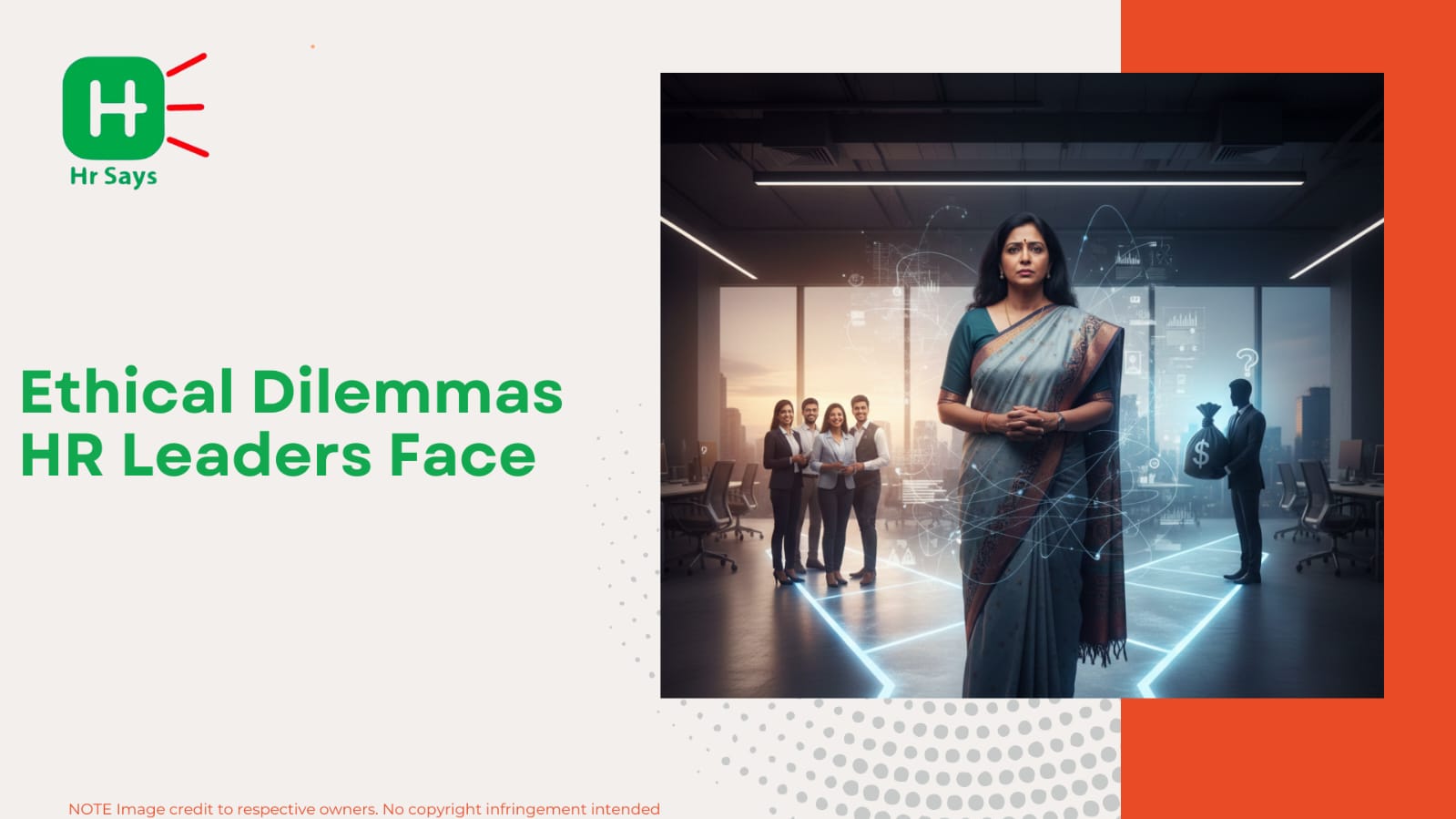
 HR leaders face ethical dilemmas involving privacy, fairness, power, and wellbeing. These
challenges require careful judgment, empathy, and consistency. Ethical choices may be
uncomfortable, but they shape organizational trust and long-term workplace culture.
HR leaders face ethical dilemmas involving privacy, fairness, power, and wellbeing. These
challenges require careful judgment, empathy, and consistency. Ethical choices may be
uncomfortable, but they shape organizational trust and long-term workplace culture.




Human Resources has silent relocated as a support aspect to moral compass within organizations. Daily decisions are made, which impact upon livelihood, trust, and culture. In many cases, these decisions are not blatantly good or bad, but extremely uncomfortable, and this is the starting point of the ethical dilemmas, and this is where the HR leadership is the most put to the test.
Balancing Business Goals With Employee Wellbeing
The most demanding dilemma that is never easily resolved is the one that deals with the conflicts between human impact and the company performance, also, emphasis is usually made on cost control, productivity goals and restructuring schemes, but emotional, psychological implications are set aside.
Workforce Reduction Decisions
When layoffs are planned, fairness is expected but rarely simple.
● Selection criteria may appear objective but feel personal.
● Transparency is demanded, yet legal risk encourages silence.
● Empathy is expected, even when decisions are already finalized.
The tension between protecting the company and respecting employee dignity is constantly felt.
Privacy Versus Surveillance in the Digital Workplace
With remote work, HR technology, and people analytics becoming common, employee data is being collected at an unprecedented scale. Ethical boundaries often feel blurred.
Monitoring Employee Behavior
Productivity tools and monitoring software are justified in the name of efficiency.
● Personal boundaries may be crossed without intent.
● Consent is often implied, not clearly given.
● Trust can be damaged quietly, without immediate signs.
Here, ethical HR practices are judged not by policy alone, but by restraint.
Fairness in Hiring, Promotions, and Performance Reviews
Bias, both conscious and unconscious, continues to shape people decisions. Even well-designed systems can quietly disadvantage certain groups.
Inclusion Versus Cultural Fit
Hiring for cultural fit is frequently promoted, yet it can exclude diversity.
● Similar backgrounds may be favored unconsciously.
● Performance reviews may reflect perception, not contribution.
● Equal opportunity policies may exist only on paper.
Ethical leadership is shown when uncomfortable patterns are acknowledged, not ignored.
Handling Misconduct by High Performers or Leaders
When ethical complaints involve senior leaders or top performers, pressure builds from multiple sides. Silence is often encouraged indirectly.
Power and Accountability
● Complaints may be delayed or softened.
● Victims may be advised to stay quiet for stability.
● Reputation may be protected at the cost of trust.
In such moments, HR credibility is either strengthened or permanently weakened.
Managing Mental Health Without Overstepping
Workplace mental health is now openly discussed, yet ethical confusion remains. Support is expected, but intrusion is risky.
Support or Control
● Burnout data may be tracked without context.
● Wellness initiatives may feel performative.
● Genuine care may conflict with performance management.
Respecting autonomy while offering help remains a delicate balance.
Conclusion
Ethical dilemmas in HR rarely announce themselves loudly. They appear in emails, meetings, and quiet decisions. The role demands courage, reflection, and consistency. When ethics guide people decisions, trust grows slowly but lasts longer.